



Abstract
Evidence across species supports a relationship between health and social relationships, which may have important welfare implications for intensively housed animals. We evaluated how individual and group-level health factors are related to social behavior of group-housed dairy calves, using social network analysis. Holstein dairy calves (heifer: n = 55; bull: n = 32) were grouped (9 groups; 10 calves/group) at 2 weeks of age until after weaning from milk at 8 weeks of age. To generate social networks, calf positions were recorded continuously using an ultra-wideband positioning system generating undirected pairwise proximity estimates. Individual status and group-level prevalence of clinical respiratory disease, gastrointestinal illness, and lung consolidation were characterized weekly using standard approaches. Mixed-model analysis, following an information theoretic-approach to select predictor values, revealed reduced strength and higher closeness in calves in groups with a higher prevalence of respiratory disease or lung consolidation, whereas individual health status was not a significant predictor. However, eigenvector centrality was lower in calves with lung consolidation during weaning, which was predicted by pre-weaning co-occurrence of respiratory disease and lung consolidation. These results suggest nuance in how multiple health factors, at the individual and group level, influence social network structure in dairy calves.
Introduction
Evidence across species supports a bidirectional relationship between individual health and social behavior, where social relationships can provide health benefits (e.g., social support reduces infection risk by buffering the susceptibility or transmission of infectious disease1) and risks (e.g., social contact increases infection risk through contact-mediated transmission of pathogens2). Further, changes in social interactions have been observed as a component of sickness behavior across species (e.g., in rats3 and dairy calves4). The relationship between social behavior and health is of particular importance in intensively managed populations of animals. In the dairy industry, there may be a perceived conflict between providing benefits of natural social interaction and increasing disease risk of young calves5.
Social housing of neonatal dairy calves is gaining popularity given broad benefits for behavioral development and welfare, including reduced stress during weaning6, accommodation of motivated social contact7, and opportunity to form social bonds8. However, health management is a challenge associated with social housing, given a possible increased risk of respiratory illness in larger groups of calves9,10and reduced opportunity for visual monitoring of individual calves by farm personnel. Dairy calves experience high prevalences of gastrointestinal disease/diarrhea (morbidity and mortality rates of 56% and 32%, respectively11) and clinical respiratory disease (e.g., 20% to 40%12,13), with further evidence of widespread subclinical respiratory disease (evident in thoracic ultrasounds revealing lung consolidation14). Disease in young dairy calves is a costly animal welfare issue with long-term consequences for dairy cattle productivity15. Understanding the relationship between social behavior and health status in intensively housed livestock may provide a basis for improved management decisions and evaluation of health risk factors related to social contact.
In recent years, social behavior of intensively managed livestock has been increasingly explored through the application of social network analysis, largely drawing on automated measures of collecting positional data16,17,18,19. Relationships between health and social network position are evident in wild populations in both experimental studies (e.g., lipopolysaccharide challenge reduces centrality in vampire bats, Desmodus rotundus20) and observational studies (e.g., parasite load correlates with social network connectivity and use of shared spaces in lizards, Tiliqua rugosa21). In cattle and other intensively managed agricultural animals, social interactions may have important implications for health22,23and productivity24. In dairy calves, health status has been related to aspects of social behavior, including social proximity4,25and social grooming4. While only limited research to date has specifically evaluated how social networks may relate to health factors in dairy calves, reduced network centrality was observed in group-housed dairy calves experimentally infected with Mannheimia haemolytica(a pathogen associated with bovine respiratory disease26), and both calf age and health status were related to network centrality in an observational study18.
Critically, group level disease prevalence has additional implications for social behavior of dairy calves which remain unexplored to date. Prevalence of both clinical respiratory disease and diarrhea is variable10and disease prevalence may affect all calves within a group, given that healthy animals may reduce social behavior if sick group members are less active27. While variability in social network structure between groups of intensively housed livestock has received limited attention to date, group-level factors are well known to influence individual expression of social behavior in other social species28. Our recent findings suggest considerable variability between identically-managed pens of dairy calves in strength, as well as variability between groups in changes over time between rearing stages19, suggesting that social behavior is highly variable at the group level.
The objective of this study was to explore the relationship between individual and group level health status and the expression of social behaviors in group housed dairy calves using network centrality measures. We hypothesized that individual health status, including clinical respiratory disease, would be negatively associated with centrality in the social network, and that group-level disease prevalence may further influence individual expressions of social behavior.
Results
Prevalence of health conditions at the individual and group level
During the pre-weaning period, 43% of calves were classified with clinical respiratory disease, 41% of calves were classified with lung consolidation, and 21% of calves were classified with gastrointestinal infection. During weaning, 42.2% of calves were classified with clinical respiratory disease and 44.4% of calves were classified with lung consolidation. Average prevalence of each health condition by week at the individual and group level is summarized in Table 1.
Lung consolidation coincided with clinical respiratory disease in approximately one third of individual cases (30.7% in week 2, 36.7% in week 4, 34.8% in week 5, and 34.6% in week 6) and was a weak predictor of respiratory disease status during pre-weaning (estimate = 0.74; SE = 0.42; p = 0.08; odds ratio (OR) = 2.1) but not weaning (estimate = 0.22; SE = 0.38; p = 0.56; OR = 1.3). During pre-weaning, clinical respiratory disease was more common in calves that also had a gastrointestinal infection (45.2 vs. 21.7%; estimate = 1.1; SE = 0.51; p = 0.017; OR = 3.1). Group-level prevalence of lung consolidation and clinical respiratory disease were not correlated during any week (p > 0.39).
Pre-weaning co-occurrence of clinical respiratory disease and lung consolidation predicted lung consolidation during weaning; 71.1% of calves classified with both lung consolidation and clinical respiratory disease during pre-weaning had lung consolidation during weaning, which was greater than prevalence of post-weaning lung consolidation in calves with pre-weaning lung consolidation alone, clinical respiratory disease alone, or neither condition during pre-weaning (30.6, 11.7, and 18.3%, respectively; SE = 6.0; p < 0.01; OR > 5.6). Occurrence of clinical respiratory disease during weaning was also greater in calves with pre-weaning lung consolidation (37.4 vs. 20%; SE = 9.4; p = 0.033; OR = 2.4) but not significantly predicted by pre-weaning respiratory disease status (estimate = 0.55; SE = 0.37; p = 0.14; OR = 1.7). At the group-level, prevalence of lung consolidation was correlated between pre-weaning and weaning stages (Rs = 0.68; p = 0.044) and there was a weak correlation between pre-weaning and weaning group-level prevalence of clinical respiratory disease (Rs = 0.61; p = 0.079). These trends are visualized in Fig. 1, which indicates classification with clinical respiratory disease and lung consolidation, by group, calf, and week.

Classification of calves with clinical respiratory disease (red), lung consolidation (shaded), or both conditions (shaded red), shown by group (groups 1–9; 10 calves/pen), with vertical columns illustrating individual calves within each group, and horizontal rows indicating each of 4 observation weeks in chronological order descending from top to bottom (pre-weaning period: weeks 2 and 4 post-grouping, weaning period: weeks 5 and 6 post-grouping).
Effects of health status on network centrality
During the pre-weaning period, we found that strength centrality was negatively and significantly related to group-level prevalence of clinical respiratory disease (M1: ß ± SE = −1.12 ± 0.21, Z = −5.25, p < 0.01; Table 2; Fig. 2) and presence of lung consolidation (M1: ß ± SE = −0.45 ± 0.21, Z = −2.11, p = 0.03; Table 2) in the top model (AIC = 129.20; models developed using an information theoretic-approach to select predictor values). Closeness centrality was positively and significantly related to group-level prevalence of clinical respiratory disease (M1: ß ± SE = 0.64 ± 0.09, Z = 6.79, p = < 0.01) and presence of lung consolidation (M1: ß ± SE = 0.35 ± 0.09, Z = 3.72, p = < 0.01) in the top model (AIC = −136.60; Table 2). In addition, calves experiencing a bout of gastrointestinal illness (M4: ß ± SE = −0.16 ± 0.08, Z = −1.96, p = 0.05) and those in groups with a higher prevalence of gastrointestinal disease (M2: ß ± SE = −0.26 ± 0.15, Z = −1.77, p = 0.07) had marginally lower strength centrality (Table 2). We found no significant effect of individual disease status or group-level disease prevalence on eigenvector centrality during the pre-weaning period.

Strength centrality shown by group (9 pens of 10 calves/group) for the two pre-weaning observation weeks (weeks 2 and 4 after grouping, shown in adjacent box plots for each group), with group-level prevalence of clinical respiratory disease shown with the color gradient (lowest prevalence in blue, highest prevalence in red).
During the weaning period, calves with lung consolidation had lower eigenvector centrality (M1: β ± SE = −0.03 ± 0.01, Z = −1.98, p = 0.05; Fig. 3) in the top model (AIC = −288.30; Table 3), with no other significant predictors. We found no significant relationships between group-level disease prevalence and social network measures during the weaning period in any of the top models for eigenvector, strength, and closeness centrality (Table 3).

Network representation of eigenvector centrality and lung consolidation shown for a subset of groups (n = 3) during the weaning period (week 5 after grouping). Individual calves (nodes) are represented by circles; size is based on eigenvector centrality; color is based on individual lung consolidation (grey circles marked in red outline); lines represent the weighted interactions among groupmates.
Discussion
In this observational study, we examined the relationship between social behavior and both individual and group-level health status in dairy calves using social network analysis. In general, our results provide evidence that sickness negatively affects network strength among group-housed calves. This finding aligns with reduced connectedness associated with calves inoculated with Mannheimia haemolytica, a main component of bovine respiratory disease, in both directed and undirected networks26as well as findings that both younger and clinically sick calves had reduced connectedness18. However, our findings suggest that as disease prevalence varies between groups and over time, associations between health status and network centrality are likely to vary with calf age and depend on group-level factors. The present study is the first to describe how multiple health factors, at both the individual and group level, may influence social network structure in group-housed dairy calves.
In this study, we focused on respiratory disease, evaluating both clinical symptoms and lung consolidation, and gastrointestinal illness. Our observed prevalence of respiratory disease (~ 40%) aligns with studies in similar climates (~ 30%; ranging from 0 – 56%13), although reported rates in colder climates may be lower (~ 20%14,29). Our results of group-level differences in disease prevalence align with survey work revealing variable herd-level prevalence of disease (1.8 to 38% for diarrhea; 4.5 to 49.6% for respiratory disease10 differences which may be attributed to both the social environment and management practices.
A major finding of our study is that calves in groups with a higher prevalence of illness had lower centrality, suggesting that behavior of healthy calves is affected by sick animals in the group. Social withdrawal or lethargy in sick calves may reduce social opportunities for healthy calves; for example, play behavior of a healthy calf shifted towards individual locomotor play and less frontal pushing (a component of social play) when a companion calf was less healthy27. Further, evidence across species suggests that healthy individuals may actively avoid sick conspecifics (e.g., infection risk drives social avoidance in bullfrogs; Rana catesbeiana30). Although no previous study of dairy calves has looked at the effect of group-level factors on centrality, group-level factors have been related to centrality in other species. For example, the presence of pups in small social groups of marmots (Marmota flaviventris) was associated with lower aggression28. In dairy calves, social behavior may be affected by various group-level management factors (e.g., group size31, age range within the group32, sex composition23, and space allowance33). Previous findings suggest that calf age within the group can be a strong predictor of centrality in groups with a wider age range18than the present study, and these group dynamics could mediate both group-level differences and effects of health status on individual centrality within a network. Sex was not related to social network centrality in the present experiment; however, it has previously been shown to influence the social interactions of group-housed calves (e.g., higher degree of interaction for male calves in mixed-sex groups23). Therefore, the varied composition of each group in the present study may play a role in shaping individual social networks.
Critically, we found that individual lung consolidation, a subclinical condition, was the primary predictor of centrality in calves during weaning, a health factor which has not previously been related to social behavior. Lung consolidation is associated with impaired performance (average daily weight gain34), yet behavioral changes associated with lung consolidation have received minimal study. However, lung consolidation, as well as both clinical respiratory disease and gastrointestinal disease, has been associated with reduced calf willingness to approach a human or novel object35, suggesting that other behavioral changes in the home pen may also be evident in calves with lung consolidation. Clinical respiratory disease has been more widely studied, with a demonstrated relationship with feeding behavior36and activity37and use of predictive models to detect changes in behavior days before diagnosis38. In the present study, we found that lung consolidation during weaning was strongly predicted by pre-weaning co-occurrence of lung consolidation and clinical symptoms of respiratory disease, suggesting that reduced centrality in calves with lung consolidation during weaning may be a consequence of prolonged, chronic illness influencing the development of social behavior.
Further research is needed to assess how chronic health conditions in dairy calves may influence behavioral development and predict future behavior. There is limited research on the relationship between chronic disease during early life and behavioral ontogeny. Exposure to endotoxins results in permanent changes to hypothalamic–pituitary–adrenal axis activity in neonatal rats39, suggesting lasting changes in stress responsivity. In dairy cattle, most studies to date have examined individual characteristics other than health to predict short-term social contact (i.e., two weeks17), while none have considered the potential impact of social context. Longer-term work examining health and group dynamics could reveal how early experiences may shape social interactions later in life. It is possible that relationships between sickness behavior and social network centrality may vary as calves age; previously, we described decreased strength during weaning despite stable eigenvector centrality, suggesting that calves became more selective in social interactions with time19. Our findings additionally suggest a potential to evaluate early social networks as a potential predictor of future health or productivity, given that lung consolidation in calves is associated with impaired future reproductive outcomes and increased culling rate40and lower milk production41.
Automated approaches to continuous location tracking provide rich opportunity to characterize dyadic spatial associations and construct social networks on a scale not previously feasible, yet proximity-based networks are limited in that they fail to capture the direction (i.e., avoidance versus withdrawal) or nature of social contact while animals are in proximity. While changes in social behavior influence spatial associations, as captured in the present study, more detailed observation in other group-living animals suggests nuance in how illness may affect social interactions. For example, animals have been shown to both limit social contact42and seek out affiliative interactions with familiar conspecifics43 in response to an infection. Further, vampire bats (Desmodus rotundus) reduce allogrooming directed at disease-challenged conspecifics, but this decrease is mediated by pairwise level of familiarity44. Dairy calves have also been shown to both reduce4,26and increase26social interactions while sick, depending on the nature of direction of social behavior measured. Sick calves interacted with fewer conspecifics and spent less time in social contact yet initiated more contact than they received26. Further, social networks based on social lying duration were not affected by a disease challenge26, suggesting that active social interactions are more sensitive to health status, whereas passive social rest may not be, potentially because it is less energetically costly. Managed housing systems may also restrict isolation, which complicates the expression and detection of sickness behavior22. Future work describing direction and context of social interactions may provide further insight into how sickness behavior and group-level disease prevalence affect social behavior.
In summary, our results suggest that disease coincides with reduced social proximity in group-housed dairy calves. In younger, pre-weaned calves, our findings revealed reduced strength and higher closeness in calves in groups with a higher prevalence of clinical respiratory disease or lung consolidation, whereas individual health status was not a significant predictor. During the weaning stage, eigenvector centrality was lower in calves with lung consolidation. Our results provide novel insight into a nuanced relationship between individual sickness behavior and social network position, which depends on the nature of the health condition and appears to depend strongly on social context, which is affected in turn by group-level disease prevalence. These findings additionally reveal promising avenues for future work, examining influences of group-level factors in social networks and factors that influence the development and long-term predictive value of social networks in young dairy calves.
Materials and methods
This study was approved by the University of Florida Animal Care and Use Committee (protocol no. 201910860) with all animal management conducted in accordance with institutional guidelines.
Animal management
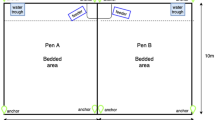
We enrolled a total of 9 pens of Holstein dairy calves, reared in groups of 10 calves [(90 calves total; including both heifers (n = 57) and bulls (n = 33)] at the University of Florida Dairy Unit (Hague, FL, USA) from January 2021 to September 2022. Calves were pair housed within the first 24 h of life. At approximately 2 weeks of age (15.1 ± 2.9 d of age; mean ± SD; range 6 – 21 d), groups were formed of 10 calves born within the same week (within-group age range 4.6 ± 1.4 d; mean ± SD; range 3 – 7 d). All groups contained both heifer and bull calves (groups were 60 ± 10% female; mean ± SD; range 50 – 90%). Group pens (7.4 × 8.0 m; 5.9 m2/calf) were located under an open-sided barn with overhead fans for air circulation and deep-bedded with sand (4 identical pens available at a time). Each pen provided a water trough, a feed tray supplying ad libitum access to pelleted calf starter (22% CP and 2% fat; Ampli-Calf Starter Warm Weather, Purina Animal Nutrition LLC, Shoreview, MN, USA) and an automated milk feeder (DeLaval CF1000X, DeLaval, Kansas City, MO) supplying calves with 8 L/d of milk replacer (28% CP and 15% fat; Southeast Milk, Inc., Mayo, FL, USA). Calves were weaned gradually over 10 d, beginning at 43 ± 2 d of age.
Data collection
Individual and group-level health classification
During each week, calves were individually classified with clinical respiratory disease, gastrointestinal infection, and/or lung consolidation, as defined below, and weekly group-level prevalence of these three health categories was additionally calculated. Classification with clinical respiratory disease and/or gastrointestinal infection was based on clinical health exams performed twice weekly (by a single trained researcher with veterinary oversight), with all calves within the group scored on the same day. Clinical health scores were based on an established scoring system which assigns points from 0 (normal) to 3 (severely abnormal) for the following categories: rectal temperature, cough, nasal discharge, eye discharge, ear position, and fecal score45. These scores were used to individually classify calves during each observation week with respiratory disease and/or a gastrointestinal infection, the two most prevalent diseases affecting dairy calves, which are associated with behavioral changes in group-housed calves35.
Calves were categorized with clinical respiratory disease for an observation week if either clinical health exam yielded a score ≥ 2 in at least 2 categories describing respiratory disease symptoms (nasal, eye, ear, cough, or rectal temperature), aligning with current recommendations for interpreting this clinical scoring chart to best detect bovine respiratory disease13,46. Calves were categorized with clinical gastrointestinal infection if presenting with diarrhea (fecal score = 3; describing watery feces) and at least moderately abnormal rectal temperature (rectal temperature ≥ 38.9 °C), a more conservative benchmark than is sometimes used to characterize neonatal calf diarrhea alone12, which was intended to capture calves experiencing diarrhea with signs of systemic infection47. Per standard facility procedures, calves were provided electrolytes if experiencing diarrhea for ≥ 2 d with reduced appetite, and antibiotic treatment of respiratory disease was administered as needed per independent veterinary exams conducted weekly (based on clinical health scores only).
Given evidence that dairy calves commonly experience lung consolidation in the absence of clinical respiratory symptoms14,48, thoracic ultrasounds were performed weekly by a single trained researcher to characterize lung consolidation, according to the protocol designed by Ollivett and Buczinski (2016). Briefly, each intercostal space (ICS) on both the right and left thorax was scanned with a linear rectal ultrasound probe starting at the level of the scapula from the 6th to the 1st ICS. The probe was moved ventrally toward the sternum until appropriate landmarks were visualized. 70% isopropyl alcohol was used as a transducing agent. Areas of consolidated lung tissue were counted and measured. We initially characterized calves with lung consolidation if a lesion ≥ 1 cm in depth was present, according to a simplified scoring system for describing lung consolidation46. Based on observations in our specific study population and previous evidence of negative long-term effects associated with any lung consolidation (lung lesions of any size40), we subsequently included an additional small subset of calves which had substantial small areas of consolidation (≥ 2 lesions ≥ 0.5 cm) with severe diffuse comet-tailing artifacts (pleural roughening) in our classification of lung consolidation.
Characterization of social networks
Upon entry to group housing, calves were fitted with collar-based tags (54 × 40 × 14 mm, 26 g) using a real-time location tracking platform (TrackLab, Noldus Information Technology, Wageningen, the Netherlands), which utilizes SEWIO ultra-wideband (UWB) technology49and has been validated for calves and cows in similar environments18,50. During each week, we selected consecutive 4-day periods of data where > 80% of calves in the group had no missing data to maintain the reliability of the social network metrics without significantly affecting their accuracy51. Calves (n = 10) in 6 (out of 9 groups) had missing data for one or more 4-day periods. Positional data cleaning protocol and generation of the social networks has been previously described19. Briefly, positional data were converted using spatial (1 m threshold) and temporal (3 min threshold) grouping of individual calves using the spatsoc52package in R (version 4.3.2)53. Calves within this spatial and temporal threshold were assigned to the same group and assumed to be in association. We then generated non-directed weighted proximity based social networks from these group by individual matrices and calculated nodal metrics using the asnipe and igraph packages52,54,55. Individual calves’ networks were characterized with three centrality measures: closeness (number of steps to nearest neighbors), strength (sum of an individual’s edge weights), and eigenvector (sum of the centralities of an individual’s direct and indirect connections)55. We applied these three measures because they have proved relevant in describing other dairy calves’ social networks6, while strength has been shown to be a reliable measure for small networks56.
Statistical analysis
To characterize the relationship between individual health and group-level health factors and social networks, data were analyzed separately during the milk-feeding and weaning, given differences during these rearing periods with respect to feeding management and disease prevalence, and previous evidence of changes in social network centrality between rearing stages19. During the pre-weaning period, we selected weeks 2 and 4 following grouping for observation, excluding the initial week following grouping (during which calves are trained to use the automated milk feeder, and consequently study personnel may disturb normal behavior throughout the day) and week 3 following grouping (during which calves were subject to hot iron disbudding per routine farm management practice, which is painful and may have short-term effects on social behavior57, despite adherence to pain mitigation best practices). Both weeks during weaning (weeks 5 and 6 following grouping) were included in the analysis. Two calves which were euthanized due to chronic illness or injury (from different groups) were fully excluded from analysis and positional data was missing completely for one heifer.
Descriptive analysis of prevalence of health conditions
For descriptive analysis (conducted using SAS vs. 0.4; SAS Institute, Cary, NC, USA), associations between group-level prevalence of different health categories (between health categories and stages) were explored using Spearman rank-order correlation. At the individual level, we tested associations between concurrent health status classifications (e.g., whether respiratory disease status predicted lung consolidation) separately for the pre-weaning and weaning period, using generalized linear mixed models (GLIMMIX procedure, fit with a binary distribution) with observation week as a repeated measure (calf as subject) and group as a random effect. Using a similar model, we additionally tested whether any occurrence of a health classification during the pre-weaning period predicted health classification during the weaning period.
Analysis of relationship between health status and network centrality
We used an information theoretic-approach to compare a sequence of models58 to determine which best explained the patterns of variation in individual centrality (the response variable). Data were analyzed separately by pre-weaning and weaning periods, considering differences in management (milk feeding) and common disease risks during these different developmental periods. For the pre-weaning period, predictor variables describing health included individual disease status (for the three categories of clinical respiratory disease, gastrointestinal infection, or lung consolidation) and group-level measures of disease prevalence for the same three conditions for the pre-weaning period. For the weaning period, predictor variables excluded gastrointestinal infections (individual status and group-level measures) due to low occurrence of this health event. Our control variables included sex and age, with group and calf as nested random effects. We calculated Akaike Information criterion (AIC), delta AIC and AIC weights with the MuMIn package59. Of all the models, we considered the best-approximating ones as those with an ΔAIC < 2 (see Table S1 in Supplementary Material).
We fit a series of generalized linear mixed models using the package lme460to help interpret the results of our best-approximating models. Social network data is inherently relational, violating the assumption of independence required for most statistical tests61. To control for non-independence in the data, we used parametric regression in lieu of permutation-based tests, given our centrality metrics were regressed against nodal covariates, calves were sampled equally through automated observational methods, and were restricted to their respective group pens62. Assumptions (i.e., residual normality distribution plots) were visually checked using the performance package63. Response variables were log transformed when normality assumptions were not met (i.e., closeness centrality). We tested for multicollinearity of the independent factors by calculating the variance inflation factor “vif” in package car64. There was no evidence of multicollinearity between factors (maximum variance inflation factor = 2.09).
Data availability
The data used in this study is available upon request (please contact the Corresponding Author: emillerc@ufl.edu).
References
-
Uchino, B. N. Social support and health: a review of physiological processes potentially underlying links to disease outcomes. J. Behav. Med. 29, 377–387 (2006).
-
Balasubramaniam, K., Beisner, B., Vandeleest, J., Atwill, E. & McCowan, B. Social buffering and contact transmission: Network connections have beneficial and detrimental effects on Shigella infection risk among captive rhesus macaques. PeerJ 4, e2630 (2016).
-
Crestani, F., Seguy, F. & Dantzer, R. Behavioural effects of peripherally injected interleukin-1: Role of prostaglandins. Brain Res. 542, 330–335 (1991).
-
Hixson, C. L., Krawczel, P. D., Caldwell, J. M. & Miller-Cushon, E. K. Behavioral changes in group-housed dairy calves infected with Mannheimia haemolytica. J. Dairy Sci. 101, 10351–10360 (2018).
-
Doyle, S. B., Wickens, C. L., Van Os, J. M. C. & Miller-Cushon, E. K. Producer perceptions of dairy calf management, behavior, and welfare. J. Dairy Sci. https://doi.org/10.3168/jds.2023-24363 (2024).
-
Bolt, S. L., Boyland, N. K., Mlynski, D. T., James, R. & Croft, D. P. Pair housing of dairy calves and age at pairing: effects on weaning stress, health, production and social networks. PLoS ONE 12, e0166926 (2017).
-
Ede, T., Weary, D. M. & von Keyserlingk, M. A. G. Calves are socially motivated. JDS. Commun. 3, 44–48 (2022).
-
Lindner, E. E., Gingerich, K. N., Burke, K. C., Doyle, S. B. & Miller-Cushon, E. K. Effects of social housing on dairy calf social bonding. Animals (Basel) 12, 821 (2022).
-
Svensson, C., Lundborg, K., Emanuelson, U. & Olsson, S.-O. Morbidity in Swedish dairy calves from birth to 90 days of age and individual calf-level risk factors for infectious diseases. Prev. Vet. Med. 58, 179–197 (2003).
-
Svensson, C. & Liberg, P. The effect of group size on health and growth rate of Swedish dairy calves housed in pens with automatic milk-feeders. Prev. Vet. Med. 73, 43–53 (2006).
-
Urie, N. J. et al. Preweaned heifer management on US dairy operations: Part V. Factors associated with morbidity and mortality in preweaned dairy heifer calves. J. Dairy Sci. 101, 9229–9244 (2018).
-
Windeyer, M. C. et al. Factors associated with morbidity, mortality, and growth of dairy heifer calves up to 3 months of age. Prev. Vet. Med. 113, 231–240 (2014).
-
Decaris, N. et al. Diagnostic accuracy of Wisconsin and California scoring systems to detect bovine respiratory disease in preweaning dairy calves under subtropical environmental conditions. J. Dairy Sci. 105, 7750–7763 (2022).
-
Ollivett, T. L. & Buczinski, S. On-Farm Use of Ultrasonography for Bovine Respiratory Disease. Vet. Clin. North Am. Food Anim. Pract. 32(19), 35 (2016).
-
Buczinski, S., Achard, D. & Timsit, E. Effects of calfhood respiratory disease on health and performance of dairy cattle: A systematic review and meta-analysis. J. Dairy Sci. 104, 8214–8227 (2021).
-
Boyland, N. K., Mlynski, D. T., James, R., Brent, L. J. N. & Croft, D. P. The social network structure of a dynamic group of dairy cows: From individual to group level patterns. Appl. Anim. Behav. Sci. 174, 1–10 (2016).
-
Marina, H. et al. New insight into social relationships in dairy cows and how time of birth, parity, and relatedness affect spatial interactions later in life. J. Dairy Sci. 107, 1110–1123 (2024).
-
Vázquez-Diosdado, J. A., Occhiuto, F., Carslake, C. & Kaler, J. Familiarity, age, weaning and health status impact social proximity networks in dairy calves. Sci. Rep. 13, 2275 (2023).
-
Burke, K. C., Gingerich, K. & Miller-Cushon, E. K. Factors associated with the variation and consistency of social network position in group-housed calves. Appl. Anim. Behav. Sci. 271, 106169. https://doi.org/10.1016/j.applanim.2024.106169 (2024).
-
Ripperger, S. P., Stockmaier, S. & Carter, G. G. Tracking sickness effects on social encounters via continuous proximity sensing in wild vampire bats. Behavior. Ecol. 31, 1296–1302 (2020).
-
Sih, A., Spiegel, O., Godfrey, S., Leu, S. & Bull, C. M. Integrating social networks, animal personalities, movement ecology and parasites: A framework with examples from a lizard. Anim. Behaviour. 136, 195–205 (2018).
-
Proudfoot, K. L., Weary, D. M. & von Keyserlingk, M. A. G. Linking the social environment to illness in farm animals. Appl. Anim. Behav. Sci. 138, 203–215 (2012).
-
de Freslon, I., Martínez-López, B., Belkhiria, J., Strappini, A. & Monti, G. Use of social network analysis to improve the understanding of social behaviour in dairy cattle and its impact on disease transmission. Appl. Anim. Behav. Sci. 213, 47–54 (2019).
-
Fadul-Pacheco, L., Liou, M., Reinemann, D. J. & Cabrera, V. E. A preliminary investigation of social network analysis applied to dairy cow behavior in automatic milking system environments. Animals (Basel) 11, 1229 (2021).
-
Bushby, E. V., Thomas, M., Vázquez-Diosdado, J. A., Occhiuto, F. & Kaler, J. Early detection of bovine respiratory disease in pre-weaned dairy calves using sensor based feeding, movement, and social behavioural data. Sci. Rep. 14, 9737 (2024).
-
Burke, K. C., do Nascimento-Emond, S., Hixson, C. L. & Miller-Cushon, E. K. Social networks respond to a disease challenge in calves. Sci. Rep. 12, 9119 (2022).
-
Bertelsen, M. & Jensen, M. B. Does dairy calves’ motivation for social play behaviour build up over time?. Appl. Anim. Behav. Sci. 214, 18–24 (2019).
-
Panaccio, M., Ferrari, C., Bassano, B., Stanley, C. R. & von Hardenberg, A. Social network analysis of small social groups: Application of a hurdle GLMM approach in the alpine marmot (Marmota marmota ). Ethology 127, 453–464 (2021).
-
Louie, A. P., Rowe, J. D., Love, W. J., Lehenbauer, T. W. & Aly, S. S. Effect of the environment on the risk of respiratory disease in preweaning dairy calves during summer months. J. Dairy Sci. 101, 10230–10247 (2018).
-
Kiesecker, J. M., Skelly, D. K., Beard, K. H. & Preisser, E. Behavioral reduction of infection risk. Proc. Natl. Acad. Sci. USA 96, 9165–9168 (1999).
-
Jensen, M. B. & Budde, M. The effects of milk feeding method and group size on feeding behavior and cross-sucking in group-housed dairy calves. J. Dairy Sci. 89, 4778–4783 (2006).
-
De Paula Vieira, A., de Passillé, A. M. & Weary, D. M. Effects of the early social environment on behavioral responses of dairy calves to novel events. J. Dairy Sci. 95, 5149–5155 (2012).
-
Marin, M. B. U., Gingerich, K. N., Wang, J., Yu, H. & Miller-Cushon, E. K. Effects of space allowance on patterns of activity in group-housed dairy calves. JDS Commun. https://doi.org/10.3168/jdsc.2023-0486 (2024).
-
Sáadatnia, A. et al. Effect of ultrasonographic lung consolidation on health and growth in dairy calves: A longitudinal study. J. Dairy Sci. 106, 8047–8059 (2023).
-
Cramer, M. C. & Stanton, A. L. Associations between health status and the probability of approaching a novel object or stationary human in preweaned group-housed dairy calves. J. Dairy Sci. 98, 7298–7308 (2015).
-
Cramer, C., Proudfoot, K. & Ollivett, T. Automated feeding behaviors associated with subclinical respiratory disease in preweaned dairy calves. Animals (Basel) 10, 988 (2020).
-
Ramezani Gardaloud, N. et al. Early detection of respiratory diseases in calves by use of an ear-attached accelerometer. Animals (Basel) 12, 1093 (2022).
-
Cantor, M. C., Casella, E., Silvestri, S., Renaud, D. L. & Costa, J. H. C. Using machine learning and behavioral patterns observed by automated feeders and accelerometers for the early indication of clinical bovine respiratory disease status in preweaned dairy calves. Front. Anim. Sci. https://doi.org/10.3389/fanim.2022.852359 (2022).
-
Shanks, N. et al. Early-life exposure to endotoxin alters hypothalamic-pituitary-adrenal function and predisposition to inflammation. Proc. Natl. Acad. Sci. USA 97, 5645–5650 (2000).
-
Teixeira, A. G. V., McArt, J. A. A. & Bicalho, R. C. Thoracic ultrasound assessment of lung consolidation at weaning in Holstein dairy heifers: Reproductive performance and survival. J. Dairy Sci. 100, 2985–2991 (2017).
-
Dunn, T. R. et al. The effect of lung consolidation, as determined by ultrasonography, on first-lactation milk production in Holstein dairy calves. J. Dairy Sci. 101, 5404–5410 (2018).
-
Lopes, P. C., Block, P. & König, B. Infection-induced behavioural changes reduce connectivity and the potential for disease spread in wild mice contact networks. Sci. Rep. 6, 31790 (2016).
-
Willette, A. A., Lubach, G. R. & Coe, C. L. Environmental context differentially affects behavioral, leukocyte, cortisol, and interleukin-6 responses to low doses of endotoxin in the rhesus monkey. Brain Behav. Immun. 21, 807–815 (2007).
-
Stockmaier, S., Bolnick, D. I., Page, R. A. & Carter, G. G. Sickness effects on social interactions depend on the type of behaviour and relationship. J. Anim. Ecol. 89, 1387–1394 (2020).
-
McGuirk, S. M. Disease management of dairy calves and heifers. Vet. Clin. North Am. Food Anim. Pract. 24, 139–153 (2008).
-
Cramer, M. C. & Ollivett, T. L. Growth of preweaned, group-housed dairy calves diagnosed with respiratory disease using clinical respiratory scoring and thoracic ultrasound-A cohort study. J. Dairy Sci. 102, 4322–4331 (2019).
-
Peek, S. F., Mcguirk, S. M., Sweeney, R. W. & Cummings, K. J. Infectious diseases of the gastrointestinal tract. In Rebhun’s diseases of dairy cattle 249 356 (Elsevier, 2018). https://doi.org/10.1016/B978-0-323-39055-2.00006-1.
-
Lowie, T. et al. Differences in the association of cough and other clinical signs with ultrasonographic lung consolidation in dairy, veal, and beef calves. J. Dairy Sci. 105, 6111–6124 (2022).
-
Spink, A., Locke, B., Van der Aa, N. & Noldus, L. TrackLab: An innovative system for location sensing, customer flow analysis and persuasive information presentation. In Proceedings of the 2013 ACM conference on Pervasive and ubiquitous computing adjunct publication 985–990 (ACM, 2013). https://doi.org/10.1145/2494091.2496008.
-
Frondelius, L., Pastell, M. & Mononen, J. Validation of the TrackLab positioning system ina cow barn environment. Proc. Meas. Behav. 27, 27–29 (2014).
-
Smith, J. A. & Moody, J. Structural effects of network sampling coverage I: Nodes missing at random. Soc. Netw. 35(652), 668 (2013).
-
Robitaille, A. L., Webber, Q. M. R. & Vander Wal, E. Conducting social network analysis with animal telemetry data: Applications and methods using spatsoc. Method. Ecol. Evol. https://doi.org/10.1111/2041-210X.13215 (2019).
-
R Core Team. R: A language and environment for statistical computing. Foundation for Statistical Computing (2013).
-
Gupta, A., Alhajj, R. & Rokne, J. Predicting implicit negative relations in online social networks. In Applications of data management and analysis: case studies in social networks and beyond (eds. Moshirpour, M., Far, B. H. & Alhajj, R.) 1–10 (Springer International Publishing, 2018). https://doi.org/10.1007/978-3-319-95810-1_1.
-
Farine, D. R. & Whitehead, H. Constructing, conducting and interpreting animal social network analysis. J. Anim. Ecol. 84, 1144–1163 (2015).
-
Silk, M. J., Jackson, A. L., Croft, D. P., Colhoun, K. & Bearhop, S. The consequences of unidentifiable individuals for the analysis of an animal social network. Anim. Behav. 104, 1–11 (2015).
-
Gingerich, K. N., Choulet, V. & Miller-Cushon, E. K. Disbudding affects use of a shelter provided to group-housed dairy calves. J. Dairy Sci. 103, 10519–10529 (2020).
-
Harrison, X. A. et al. A brief introduction to mixed effects modelling and multi-model inference in ecology. PeerJ 6, e4794 (2018).
-
Barton, K. Package ‘MuMIn’. CRAN Repos at https://cran.r-project.org/web/packages/MuMIn/MuMIn.pdf (2016).
-
Bates, D. et al. Package ‘lme4’. Convergence 12(1), 2 (2015).
-
Croft, D. P., Madden, J. R., Franks, D. W. & James, R. Hypothesis testing in animal social networks. Trend. Ecol. Evol. 26, 502–507 (2011).
-
Hart, J. D. A., Weiss, M. N., Brent, L. J. N. & Franks, D. W. Common permutation methods in animal social network analysis do not control for non-independence. Behav. Ecol. Sociobiol. (Print) 76, 151 (2022).
-
Lüdecke, D., Ben-Shachar, M., Patil, I., Waggoner, P. & Makowski, D. Performance: An r package for assessment, comparison and testing of statistical models. JOSS 6, 3139 (2021).
-
Fox, J., Friendly, G. G., Graves, S. & Heiberger, R. The car package. R. Found. Stat. Comput. 1109, 1431 (2007).
Acknowledgements
We thank the staff at the University of Florida Dairy Unit and acknowledge technical assistance provided by Samantha Doyle, Lisette Coll-Roman, Cameron Britt, Sydney Utzig, Emilee Pierce, Irene Chae, and Taylor Jackson.
Funding
This work was supported by the USDA National Institute of Food and Agriculture (grant # 2020–67030-31337).
Author information
Authors and Affiliations
Contributions
K.G. collected data and assisted with data analysis and manuscript writing. F.M. provided veterinary oversight and training and contributed to study design. K.C.B. and E.K.M.C. performed data analysis and manuscript writing. All authors approved of the final version of this manuscript and agree to be held accountable for the content therein.
Corresponding author
Ethics declarations
Competing interests
The authors declare no competing interests.
Additional information
Publisher’s note
Springer Nature remains neutral with regard to jurisdictional claims in published maps and institutional affiliations.
Supplementary Information
Rights and permissions
Open Access This article is licensed under a Creative Commons Attribution-NonCommercial-NoDerivatives 4.0 International License, which permits any non-commercial use, sharing, distribution and reproduction in any medium or format, as long as you give appropriate credit to the original author(s) and the source, provide a link to the Creative Commons licence, and indicate if you modified the licensed material. You do not have permission under this licence to share adapted material derived from this article or parts of it. The images or other third party material in this article are included in the article’s Creative Commons licence, unless indicated otherwise in a credit line to the material. If material is not included in the article’s Creative Commons licence and your intended use is not permitted by statutory regulation or exceeds the permitted use, you will need to obtain permission directly from the copyright holder. To view a copy of this licence, visit http://creativecommons.org/licenses/by-nc-nd/4.0/.
About this article

Cite this article
Gingerich, K., Burke, K.C., Maunsell, F.P. et al. Individual and group level health factors influence social networks of dairy calves.
Sci Rep 15, 7720 (2025). https://doi.org/10.1038/s41598-025-91513-y
-
Received:
-
Accepted:
-
Published:
-
DOI: https://doi.org/10.1038/s41598-025-91513-y
Keywords
This post was originally published on this site be sure to check out more of their content