


Abstract
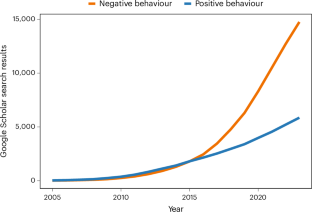
Many studies examine antisocial behaviours on social media—such as sharing misinformation or producing hate speech—but far fewer examine how platforms can incentivize more prosocial behaviour. We identify several ways in which social media platforms currently enable such behaviour, including (1) connecting new communities, (2) enabling collective problem-solving and (3) expanding the boundaries of philanthropy. However, we also discuss how some of the factors that enable prosocial behaviour can also empower malicious actors—as well as the challenge of creating prosocial behaviour that is sustainable and impactful offline. We then propose a research agenda to help scholars, policymakers and corporate leaders to identify the causal factors that shape prosocial behaviour on social media. This agenda focuses on (1) the size and shape of social networks, (2) platform affordances, (3) social norms and (4) how prosocial behaviour can be embedded within existing and future business models of social media.
This is a preview of subscription content, access via your institution
Access options
Access Nature and 54 other Nature Portfolio journals
Get Nature+, our best-value online-access subscription
$29.99 / 30 days
cancel any time
Subscribe to this journal
Receive 12 digital issues and online access to articles
$119.00 per year
only $9.92 per issue
Buy this article
- Purchase on SpringerLink
- Instant access to full article PDF
Prices may be subject to local taxes which are calculated during checkout

References
-
Brady, W. J., Wills, J. A., Jost, J. T., Tucker, J. A. & Bavel, J. J. V. Emotion shapes the diffusion of moralized content in social networks. Proc. Natl Acad. Sci. USA 114, 7313–7318 (2017).
-
Finkel, E. et al. Political sectarianism in America. Science 370, 533–536 (2020).
-
Rathje, S., Bavel, J. J. V. & Linden der van, S. Out-group animosity drives engagement on social media. Proc. Natl Acad. Sci. USA 118, e2024292118 (2021).
-
Auxier, B. 64% of Americans say social media have a mostly negative effect on the way things are going in the U.S. today. Pew Research https://www.pewresearch.org/short-reads/2020/10/15/64-of-americans-say-social-media-have-a-mostly-negative-effect-on-the-way-things-are-going-in-the-u-s-today/ (Pew Research Center, 2020).
-
Cameron, A. M. et al. Social media and organ donor registration: the Facebook effect. Am. J. Transplant. 13, 2059–2065 (2013).
-
Wahlquist, C. Inside the hyper-local world of Facebook’s ‘buy nothing’ groups. Guardian https://www.theguardian.com/australia-news/2021/jan/04/inside-the-hyper-local-world-of-facebooks-buy-nothing-groups (4 January 2021).
-
Malone, K. Change My View on Reddit helps people challenge their own opinions. NPR https://www.npr.org/2017/06/29/534916052/change-my-view-on-reddit-helps-people-challenge-their-own-opinions (29 June 2017).
-
VanderWeele, T. J., Mathur, M. B. & Chen, Y. Media portrayals and public health implications for suicide and other behaviors. JAMA Psychiatry 76, 891–892 (2019).
-
Eisenberg, N. & Fabes, R. in Handbook of Child Psychology, Vol. 3: Social, Emotional, and Personality Development (eds Damon, W. & Eisenberg, N.) 701–778 (Wiley, 1998).
-
Greener, S. & Crick, N. R. Normative beliefs about prosocial behavior in middle childhood: what does it mean to be nice? Soc. Dev. 8, 349–363 (1999).
-
Simpson, B. & Willer, R. Beyond altruism: sociological foundations of cooperation and prosocial behavior. Annu. Rev. Sociol. 41, 43–63 (2015).
-
Benkler, Y. The Wealth of Networks: How Social Production Transforms Markets and Freedom (Yale Univ. Press, 2007).
-
Castells, M. Networks of Outrage and Hope: Social Movements in the Internet Age (Polity, 2012).
-
Fuchs, C. Culture and Economy in the Age of Social Media (Routledge, 2015).
-
Lampe, C. & Resnick, P. Slash(dot) and burn: distributed moderation in a large online conversation space. In Proc. SIGCHI Conference on Human Factors in Computing Systems (eds Dykstra-Erickson, E. & Tscheligi, M.) 543–550 (Association for Computing Machinery, 2004).
-
Woelfer, J. P. & Hendry, D. G. Homeless young people on social network sites. In Proc. SIGCHI Conference on Human Factors in Computing Systems (eds Konstan, J. A. et al.) 2825–2834 (ACM, 2012).
-
Kreiss, D. in Media, Movements, and Political Change (eds Earl, J. & Rohlinger, A. D.) Vol. 33, 195–223 (Emerald Group, 2012).
-
Garcia, D., Mavrodiev, P. & Schweitzer, F. Social resilience in online communities. In Proc. 1st ACM Conference on Online Social Networks (eds Muthukrishnan, M. S. et al.) 29–50 (Association for Computing Machinery, 2013).
-
Frost, R. L. & Rickwood, D. J. A systematic review of the mental health outcomes associated with Facebook use. Comput. Hum. Behav. 76, 576–600 (2017).
-
Yang, Y., Davis, T. & Hindman, M. Visual misinformation on Facebook. J. Commun. 73, 316–328 (2023).
-
Budak, C., Nyhan, B., Rothschild, D. M., Thorson, E. & Watts, D. J. Misunderstanding the harms of online misinformation. Nature 630, 45–53 (2024).
-
Lauer, D. Facebook’s ethical failures are not accidental; they are part of the business model. AI Ethics 1, 395–403 (2021).
-
Bond, R. M. et al. A 61-million-person experiment in social influence and political mobilization. Nature 489, 295–298 (2012).
-
Jemielniak, D. Wikipedia: why is the common knowledge resource still neglected by academics? GigaScience 8, giz139 (2019).
-
Michelucci, P. & Dickinson, J. L. The power of crowds. Science 351, 32–33 (2016).
-
Wilkinson, D. M. & Huberman, B. A. Cooperation and quality in Wikipedia. In Proc. 2007 International Symposium on Wikis (eds Désilets, A. & Biddle, R.) 157–164 (ACM, 2007).
-
Temple, N. J. & Fraser, J. How accurate are Wikipedia articles in health, nutrition, and medicine? Can. J. Inf. Libr. Sci. 38, 37–52 (2014).
-
Brown, A. R. Wikipedia as a data source for political scientists: accuracy and completeness of coverage. Polit. Sci. Polit. 44, 339–343 (2011).
-
Kräenbring, J. et al. Accuracy and completeness of drug information in Wikipedia: a comparison with standard textbooks of pharmacology. PLoS ONE 9, e106930 (2014).
-
Bortone, R. & Pistecchia, A. in Dynamics and Policies of Prejudice from the Eighteenth to the Twenty-First Century (ed. Motta, G.) 431–444 (Cambridge Scholars, 2018).
-
Horowitz, J. M., Hurst, K. & Braga, D. The impact of videos of police violence against Black people. Pew Research https://www.pewresearch.org/social-trends/2023/06/14/the-impact-of-videos-of-police-violence-against-black-people/ (Pew Research Center, 2023).
-
Witcher, E. The role of social media in the emotional lives of people with vitiligo. Preprint at SocArXiv https://doi.org/10.31235/osf.io/n5krd (2019).
-
Bail, C. Combining natural language processing and network analysis to examine how advocacy organizations stimulate conversation on social media. Proc. Natl Acad. Sci. USA 113, 11823–11828 (2016).
-
Berger, M. N. et al. Social media’s role in support networks among LGBTQ adolescents: a qualitative study. Sex. Health 18, 421–431 (2021).
-
Andalibi, N., Haimson, O. L., Choudhury, M. D. & Forte, A. Understanding social media disclosures of sexual abuse. In Proc. 2016 CHI Conference on Human Factors in Computing Systems (eds Kaye, J. et al.) 3906–3918 (Association for Computing Machinery, 2016).
-
Andalibi, N., Haimson, O. L., Choudhury, M. D. & Forte, A. Social support, reciprocity, and anonymity in responses to sexual abuse disclosures on social media. ACM Trans. Comput. Hum. Interact. 25, 1–35 (2018).
-
De Choudhury, M. & De, S. Mental health discourse on Reddit: self-disclosure, social support, and anonymity. Proc. Int. AAAI Conf. Web Soc. Media 8, 71–80 (2014).
-
Pelleg, D., Yom-Tov, E. & Maarek, Y. Can you believe an anonymous contributor? On truthfulness in Yahoo! Answers. In 2012 International Conference on Privacy, Security, Risk and Trust and 2012 International Conference on Social Computing (eds Nijholt, A. et al.) 411–420 (IEEE, 2012).
-
Clark-Gordon, C. V., Bowman, N. D., Goodboy, A. K. & Wright, A. Anonymity and online self-disclosure: a meta-analysis. Commun. Rep. 32, 98–111 (2019).
-
González‐Bailón, S. & Lelkes, Y. Do social media undermine social cohesion? A critical review. Soc. Issues Policy Rev. 17, 155–180 (2023).
-
Howard, P. N. & Hussain, M. M. Democracy’s Fourth Wave? Digital Media and the Arab Spring (Oxford Univ. Press, 2013).
-
Kermani, H. & Hooman, N. Hashtag feminism in a blocked context: the mechanisms of unfolding and disrupting #rape on Persian Twitter. New Media Soc. 26, 4750–4784 (2024).
-
Jackson, S., Bailey, M. & Foucault Welles, B. #HashtagActivism: Networks of Race and Gender Justice (MIT Press, 2020).
-
Karimi, M. The Iranian Green Movement of 2009: Reverberating Echoes of Resistance (Lexington Books, 2018).
-
Strandberg, K. & Berg, J. Impact of temporality and identifiability in online deliberations on discussion quality: an experimental study. Javnost 22, 164–180 (2015).
-
Bunting, A. M. et al. Socially-supportive norms and mutual aid of people who use opioids: an analysis of Reddit during the initial COVID-19 pandemic. Drug Alcohol Depend. 222, 108672 (2021).
-
Iliffe, L. L. & Thompson, A. R. Investigating the beneficial experiences of online peer support for those affected by alopecia: an interpretative phenomenological analysis using online interviews. Br. J. Dermatol. 181, 992–998 (2019).
-
Sobieraj, S. Credible Threat: Attacks Against Women Online and the Future of Democracy (Oxford Univ. Press, 2020).
-
Wu, A. H. Gendered language on the economics job market rumors forum. In Papers and Proceedings of the One Hundred Thirtieth Annual Meeting of the American Economic Association (eds Johnson, W. R. & Markel, K.) Vol. 108, 175–179 (American Economic Association, 2018).
-
Huang, G. The effect of anonymity on conformity to group norms in online contexts: a meta-analysis. Int. J. Commun. 10, 398–415 (2016).
-
King, G., Pan, J. & Roberts, M. E. How the Chinese government fabricates social media posts for strategic distraction, not engaged argument. Am. Polit. Sci. Rev. 111, 484–501 (2017).
-
Pearce, K. E. Democratizing kompromat: the affordances of social media for state-sponsored harassment. Inf. Commun. Soc. 18, 1158–1174 (2015).
-
Lindsay, B. R. Social Media and Disasters: Current Uses, Future Options, and Policy Considerations (Congressional Research Service, 2011).
-
Akhgar, B., Fortune, D., Hayes, R. E., Guerra, B. & Manso, M. Social media in crisis events: open networks and collaboration supporting disaster response and recovery. In 2013 IEEE International Conference on Technologies for Homeland Security (HST) (eds Balenson, D. & Frye, E.) 760–765 (IEEE, 2013).
-
Bird, D., Ling, M. & Haynes, K. Flooding Facebook—the use of social media during the Queensland and Victorian floods. Australian J. Emerg. Manag. 27, 27–33 (2012).
-
Buntain, C., Golbeck, J., Liu, B. & LaFree, G. Evaluating public response to the Boston Marathon bombing and other acts of terrorism through Twitter. Proc. Int. AAAI Conf. Web Soc. Media 10, 555–558 (2021).
-
Kirby, R. H., Reams, M. & Lam, N. S.-N. The use of social media by emergency stakeholder groups: lessons learned from areas affected by Hurricanes Isaac and Sandy. J. Homel. Secur. Emerg. Manage. 20, 133–168 (2023).
-
Panagiotopoulos, P., Bigdeli, A. Z. & Sams, S. Citizen–government collaboration on social media: the case of Twitter in the 2011 riots in England. Gov. Inf. Q. 31, 349–357 (2014).
-
Gao, H., Barbier, G. & Goolsby, R. Harnessing the crowdsourcing power of social media for disaster relief. IEEE Intell. Syst. 26, 10–14 (2011).
-
Meier, P. Digital Humanitarians: How Big Data Is Changing the Face of Humanitarian Response (Routledge, 2015).
-
Broderick, R. & Darmanin, J. The ‘Yellow Vest’ riots in France are what happens when Facebook gets involved with local news. BuzzFeed News (5 December 2018).
-
Spence, R., Bifulco, A., Bradbury, P., Martellozzo, E. & DeMarco, J. The psychological impacts of content moderation on content moderators: a qualitative study. Cyberpsychology 17, 8 (2023).
-
Dubberley, S., Griffin, E. & Bal, H. M. Making Secondary Trauma a Primary Issue: A Study of Eyewitness Media and Vicarious Trauma on the Digital Frontline (Eyewitness Media Hub, 2015).
-
Bernholz, L. How We Give Now: A Philanthropic Guide for the Rest of Us (MIT Press, 2023).
-
Guo, C. & Saxton, G. D. Tweeting social change: how social media are changing nonprofit advocacy. Nonprofit Volunt. Sect. Q. 43, 57–79 (2014).
-
Yartey, F. N. A. Microfinance, digital media and social change: a visual analysis of Kiva.org. Commun. Soc. Change (2013).
-
Elmer, G. & Ward-Kimola, S. Crowdfunding (as) disinformation: ‘pitching’ 5G and election fraud campaigns on GoFundMe. Media Cult. Soc. 45, 578–594 (2023).
-
Snyder, J. & Cohen, I. G. Medical crowdfunding for unproven medical treatments: should GoFundMe become a gatekeeper? Hastings Cent. Rep. 49, 32–38 (2019).
-
Moqri, M. & Bandyopadhyay, S. in Internetworked World (eds Fan, M. et al.) Vol. 296, 162–169 (Springer International, 2017).
-
Saxton, G. D. & Wang, L. The social network effect: the determinants of giving through social media. Nonprofit Volunt. Sect. Q. 43, 850–868 (2014).
-
Witman, P. Social media for social value. Computer 46, 82–85 (2013).
-
Koohy, H. & Koohy, B. A lesson from the ice bucket challenge: using social networks to publicize science. Front. Genet. 5, 430 (2014).
-
Lewis, K., Gray, K. & Meierhenrich, J. The structure of online activism. Sociol. Sci. (2014).
-
Sohn, E. In 2014, millions of people doused themselves in icy water to raise money for ALS. Was it worth it? Nature 550, 113–114 (2017).
-
Kristofferson, K., White, K. & Peloza, J. The nature of slacktivism: how the social observability of an initial act of token support affects subsequent prosocial action. J. Consum. Res. 40, 1149–1166 (2014).
-
Fazio, A., Reggiani, T. & Scervini, F. Social media charity campaigns and pro-social behaviour: evidence from the Ice Bucket Challenge. J. Econ. Psychol. 96, 102624 (2023).
-
Herdağdelen, A., Adamic, L. & State, B. Community gifting groups on Facebook. J. Quant. Descrip. Digital Media 3, 1–32 (2023).
-
Almaatouq, A. et al. Beyond playing 20 Questions with nature: integrative experiment design in the social and behavioral sciences. Behav. Brain Sci. (2022).
-
Watts, D. J. & Strogatz, S. H. Collective dynamics of ‘small-world’ networks. Nature 393, 440–442 (1998).
-
Merton, R. K. The role-set: problems in sociological theory. Br. J. Sociol. 8, 106–120 (1957).
-
Blau, P. M. & Schwartz, J. E. Crosscutting Social Circles: Testing a Macrostructural Theory of Intergroup Relations (AP Professional, 1984).
-
Bail, C. Breaking the Social Media Prism: How to Make Our Platforms Less Polarizing (Princeton Univ. Press, 2021).
-
Kiesler, S., Kraut, R., Resnick, P. & Kittur, A. in Building Successful Online Communities: Evidence-Based Social Design (eds Kraut, R., & Resnick, P.) 125–178 (MIT Press, 2011).
-
Lampe, C., Zube, P., Lee, J., Park, C. H. & Johnston, E. Crowdsourcing civility: a natural experiment examining the effects of distributed moderation in online forums. Gov. Inf. Q. 31, 317–326 (2014).
-
Friedl, P. & Morgan, J. Decentralised content moderation. Internet Policy Rev. 13, 1–11 (2024).
-
Martin, T., Hofman, J. M., Sharma, A., Anderson, A. & Watts, D. J. Exploring limits to prediction in complex social systems. In Proc. 25th International Conference on World Wide Web (eds Bourdeau, J. et al.) 683–694 (International World Wide Web Conferences Steering Committee, 2016).
-
Matias, J. N. Preventing harassment and increasing group participation through social norms in 2,190 online science discussions. Proc. Natl Acad. Sci. USA 116, 9785–9789 (2019).
-
Garcia, D. & Rimé, B. Collective emotions and social resilience in the digital traces after a terrorist attack. Psychol. Sci. 30, 617–628 (2019).
-
Reilly, P. & Vicari, S. Organizational hashtags during times of crisis: analyzing the broadcasting and gatekeeping dynamics of #PorteOuverte during the November 2015 Paris terror attacks. Soc. Media Soc. 7, 205630512199578 (2021).
-
Mensah, H., Xiao, L. & Soundarajan, S. Characterizing susceptible users on Reddit’s ChangeMyView. In Proc. 10th International Conference on Social Media and Society (eds Gruzd, A. et al.) 102–107 (ACM, 2019).
-
Kriplean, T., Beschastnikh, I. & McDonald, D. W. Articulations of wikiwork: uncovering valued work in Wikipedia through barnstars. In Proc. 2008 ACM Conference on Computer Supported Cooperative Work (eds Begole, B. & McDonald, D. W.) 47–56 (ACM, 2008).
-
Anderson, A., Huttenlocher, D., Kleinberg, J. & Leskovec, J. Discovering value from community activity on focused question answering sites: a case study of Stack Overflow. In Proc. 18th ACM SIGKDD International Conference on Knowledge Discovery and Data Mining (eds Yang, Q. et al.) 850–858 (Association for Computing Machinery, 2012).
-
Brady, W. J., McLoughlin, K., Doan, T. N. & Crockett, M. J. How social learning amplifies moral outrage expression in online social networks. Sci. Adv. 7, eabe5641 (2021).
-
Kraut, R. E. & Resnick, P. Building Successful Online Communities: Evidence-Based Social Design (MIT Press, 2011).
-
Zuckerman, E. The case for digital public infrastructure. Preprint at Columbia Academic Commons https://doi.org/10.7916/d8-chxd-jw34 (2020).
-
Orben, A. The Sisyphean cycle of technology panics. Perspect. Psychol. Sci. 15, 1143–1290 (2020).
-
Whittaker, M. The steep cost of capture. Interactions 28, 50–55 (2021).
-
Wagner, M. W. Independence by permission. Science 381, 388–391 (2023).
-
Rathje, S., Robertson, C., Brady, W. J. & Bavel, J. J. V. People think that social media platforms do (but should not) amplify divisive content. Perspect. Psychol. Sci. 19, 781–795 (2023).
Acknowledgements
We thank S. Gonzalez-Bailon, A. Almaatouq, D. Garcia, M. DeChoudhury, T. Althoff, S. Mullainathan, C. Tan, I. Rahwanfor, A. Amatz, K. Knowlton, D. Adjodah and E. Sugarman for providing useful feedback in the early stages of the project and for supporting our search for academic articles focusing on prosocial outcomes facilitated by social media.
Author information
Authors and Affiliations
Contributions
All authors contributed to the research design, implementation, data analysis and writing.
Corresponding authors
Ethics declarations
Competing interests
The authors declare the following competing interests: D.W.’s research group has received an unrestricted gift from Google. C.B.’s research group has received unrestricted gifts from Google, Facebook and Twitter. Each of these funders had no role in the decision to publish or preparation of the manuscript.
Peer review
Peer review information
Nature Human Behaviour thanks David Garcia and the other, anonymous, reviewer(s) for their contribution to the peer review of this work.
Additional information
Publisher’s note Springer Nature remains neutral with regard to jurisdictional claims in published maps and institutional affiliations.
Rights and permissions
Springer Nature or its licensor (e.g. a society or other partner) holds exclusive rights to this article under a publishing agreement with the author(s) or other rightsholder(s); author self-archiving of the accepted manuscript version of this article is solely governed by the terms of such publishing agreement and applicable law.
About this article

Cite this article
Dörr, T., Nagpal, T., Watts, D. et al. A research agenda for encouraging prosocial behaviour on social media.
Nat Hum Behav (2025). https://doi.org/10.1038/s41562-025-02102-y
-
Received:
-
Accepted:
-
Published:
-
DOI: https://doi.org/10.1038/s41562-025-02102-y
This post was originally published on this site be sure to check out more of their content