

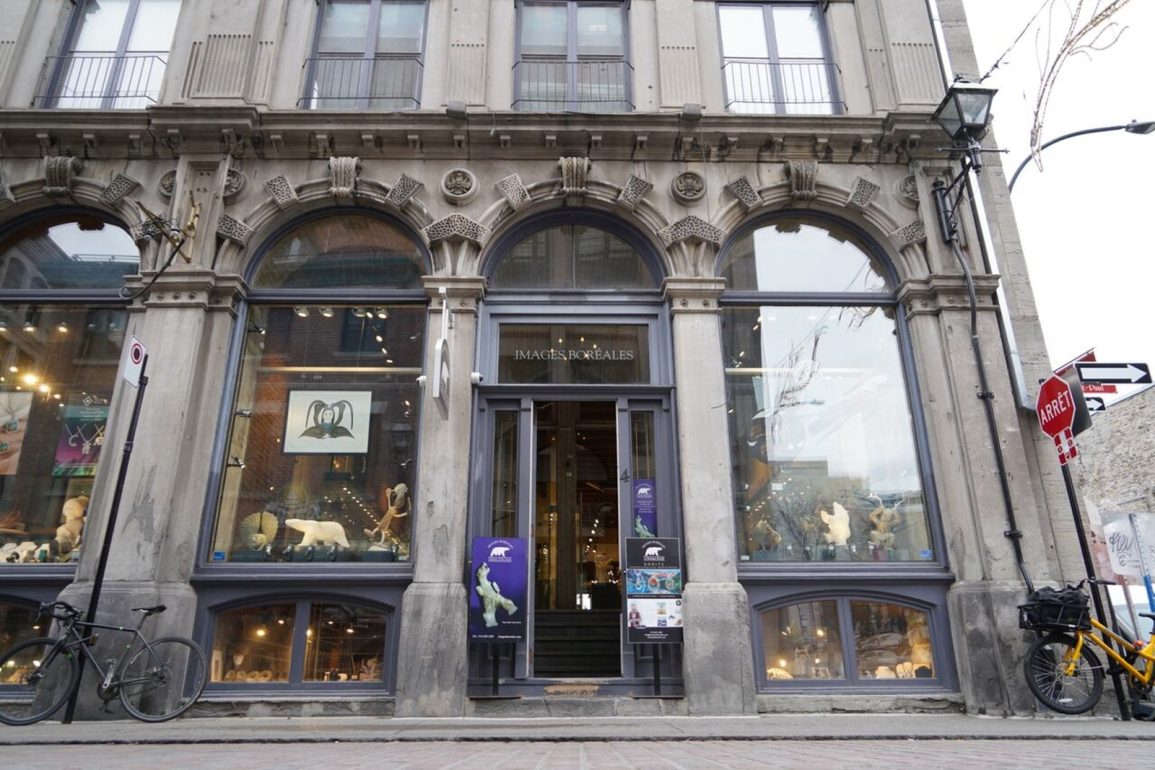
A Montreal Inuit art gallery and its director have now paid $75,000 in penalties for selling sperm whale ivory carvings to Americans and backing them up with fake Igloo Tags and fake certificates of authenticity.
Fake paperwork, real fines. An Old Montreal gallery that sells Inuit art just found out how expensive a phony authenticity tag can get.
According to the Montreal Gazette, Imene Mansour, director of the Images Boréales gallery, has been fined $8,000 for selling illegal ivory carvings, bringing the total penalties in the case to $75,000. Environment and Climate Change Canada announced it on Nov. 23.
What the court ordered
On Nov. 19, the Court of Québec ordered Mansour, who lives in Laval, to pay $8,000 in fines, donate $2,000 to the Makivvik Organization and complete 100 hours of community service. She had pleaded guilty back on April 28 to two counts under Canada’s Wild Animal and Plant Protection and Regulation of International and Interprovincial Trade Act (the federal law that enforces CITES, the international endangered-species trade treaty).
The gallery company, Images Boréales inc., was fined $65,000 after pleading guilty to one count under the same law. In total, $73,000 will go to the federal Environmental Damages Fund, and the court ordered that the company’s $65,000 be used for projects that benefit Inuit communities in Canada.
How a border stop started it all
Per the federal announcement, which Courrier Laval‘s newsroom also reported, investigators opened the case in August 2021 after the U.S. Fish and Wildlife Service tipped them off that an American had imported sperm whale ivory items bought in Canada. The investigation found that on July 25, 2021, the gallery and Mansour sold three sperm whale ivory sculptures to people living in the United States.
CBC News‘ Matthew Lapierre laid out the U.S. side of the story back in 2023. That same day, July 25, 2021, an American doctor named Pedro Huertas tried to cross into Vermont at the Highgate Springs border crossing and told a border guard he was bringing one $2,000 stone statue. A search of his vehicle turned up nine bubble-wrapped packages. Three of the statues were tupilaks carved from sperm whale teeth, and another was made from a walrus tusk.
Huertas wanted his carvings back. A few days later he handed authorities documents, including certificates of authenticity, claiming the pieces were decades old. According to U.S. court documents cited by CBC, those papers were drawn up at his request by the gallery where he bought the carvings: Images Boréales. Huertas pleaded guilty in October 2023 to a misdemeanor charge of knowingly importing parts of an endangered species, agreed to a $50,000 fine and forfeited the four carvings.
Fake Igloo Tags
Here’s the part every artist should pay attention to. Canadian investigators found that Mansour intentionally gave false and misleading information by producing fake Igloo Tag labels and fake certificates of authenticity from the gallery, an offence under section 11 of the law.
The Igloo Tag is the internationally recognized symbol of authenticity for Inuit art. It’s managed by the Inuit Art Foundation to help protect the Inuit art market. The tag meant to protect the artists was faked to move a sale.
Why the ivory rules exist
The sperm whale is listed in Appendix I of CITES, the category for the most endangered species the treaty covers, where commercial international trade is generally banned. Under Canadian law, owning sperm whale ivory to sell or distribute it is an offence, though the ban doesn’t apply if the specimen was harvested before 1975, was legally imported or is sold in line with applicable conservation laws. That pre-1975 exception is exactly why a certificate saying a carving is “decades old” matters so much.
The artists caught in the middle
CBC’s reporting showed how messy this is for Inuit carvers who follow the rules. Ruben Anton Komangapik, an Inuk hunter and artist who carves old whale bone, told CBC export restrictions make his work hard to sell. “It’s really difficult because being an artist, you’re living pretty much on a piece-to-piece situation,” he said.
RJ Ramrattan, general manager of the Inuit art co-op Canadian Arctic Producers, called selling bone and ivory pieces a “nightmare.” “They love the bone, they love the whale bone, they love the walrus ivory … but they can’t buy it,” he said of his U.S. clients. And John Houston of Houston North Gallery warned that when a gallery gets around the export rules, it could bring more scrutiny on the whole sector and ultimately hurt the industry.
The takeaway
Your paperwork is part of your product. Certificates of authenticity, provenance notes and labels like the Igloo Tag exist to protect artists and buyers, and faking them can turn one sale into years of legal trouble. If you work with bone, ivory, feathers, shell or other animal materials, learn the rules for every place you ship before you list the piece, because a buyer across the border may not be allowed to own it. One dealer’s shortcut can make life harder for every artist working in the same material. And if you buy Inuit art, look for the real tag from a seller you trust.
Image: CBC News