



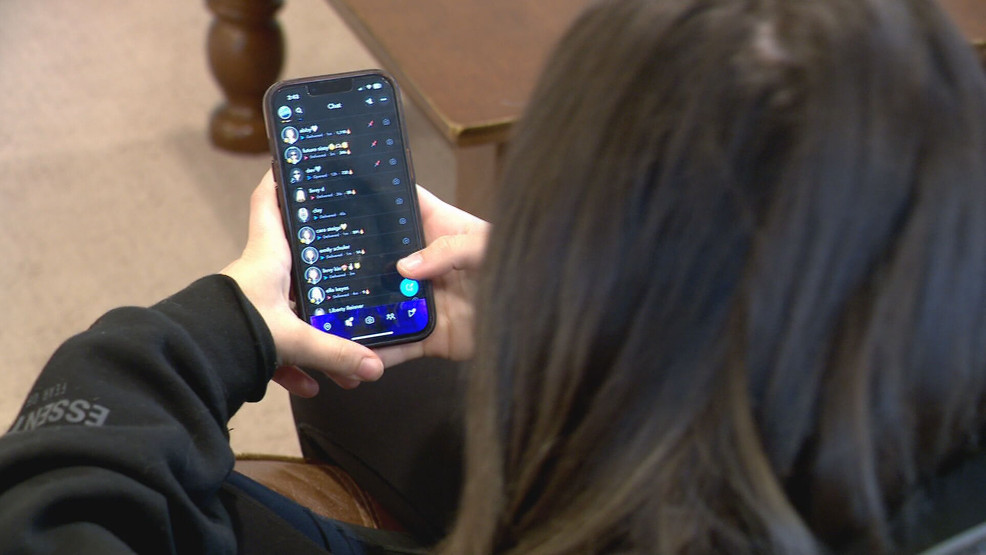
SYRACUSE, N.Y. — For 17-year-old Sarah Chandler, her cell phone has almost become a part of her. The Fayetteville-Manlius High School senior admits it is the first thing she looks at in the morning, and she doesn’t leave home without it, “I’m always checking it.”
Social media has become part of her DNA. “Snapchat, Instagram, Tick Tock, sometimes Twitter. Really just any social media,” she said. Chandler is not alone.
A new report released this past fall by Common Sense Media finds about half of 11- to 17-year-olds get at least 237 notifications on their phones every day. About 25% of them pop up during the school day, and 5% of the pings happen at night. Some of them get nearly 5,000 notifications in a single day — mostly linked to alerts from friends on social media.
Chandler said she spends so much time on the platforms because she fears missing out and always wants to be in the loop about what’s going on, admitting that they’re “addicting.”
A social media phenomenon called “streaks” gets people to use apps to send pictures back and forth or level up in a game. “[I] definitely feel compelled to check them every single day all the time,” Chandler said. As long as you send a picture or play the game once a day, you keep your streak, otherwise, you have to start from scratch.
“There’s not really a point to it I guess. I guess it makes you want to be on the app more.”
And that is exactly what’s happening according to Dr. Christopher Lucas, the vice chair of psychiatry at Upstate University Hospital, “I think what’s different about the streak is that your performance is on display to others so there can be a real pressure to compete with others.”
Dr. Lucas says tech companies deliberately try to engage kids on the platforms. Some promise rewards, but Dr. Lucas said they can cause distress among some children if they don’t complete a task.
“Every time those things happen, you get a buzz of dopamine in your brain which is the reward chemical and that can be the same as eating a cookie or smoking a cigarette. It’s the same mechanism. And after a while, your brain attenuates to that so that you need more and more in order to get the same positive effect.”
Dr. Lucas said social media can be all-consuming. He advises parents to be aware of what their kids are doing online.
This genie is not going back in the bottle. These apps are going to be here. It’s just a matter about using them cautiously.
Chandler said she currently has streaks going with about 30 friends. If she loses a streak, the app will remind her, displaying a timer and telling her it’s time to send a picture before the time is up.
Social media and gaming apps are training kids’ developing brains to need regular positive reinforcement according to Dr. Lucas, an example of this is Chandler’s three-year-long streak on Snapchat with one of her friends.
Asked whether she thinks children would be better off without social media, Chandler said she does.
Meta, the owner of Facebook and Instagram, is being sued by three dozen states including New York for knowingly using features to hook children into its platforms, even as the company claimed its social media sites were safe for young people. According to the lawsuit, Meta violated consumer protection laws by “harnessing technologies to entice, engage and ultimately ensnare youth and teens.” The lawsuit claims Meta has repeatedly misled the public about the substantial dangers of its social media platforms.
According to the 233-page lawsuit, the company was motivated by profit, saying Meta “designed psychologically manipulative product features to induce young users’ compulsive and extended use” of platforms like Instagram. The company’s algorithms were designed to push children and teenagers into rabbit holes of toxic and harmful content, with features like “infinite scroll” and persistent alerts used to hook young users.
After the complaint was filed, Meta released a statement saying it has released more than 30 tools to make its apps safer for teens. “We’re disappointed that instead of working productively with companies across the industry to create clear, age-appropriate standards for the many apps teens use, the attorneys general have chosen this path,” a Meta spokesperson said.
CNY Central reached out to Snapchat for comment but has not yet heard back.
This post was originally published on this site be sure to check out more of their content