


By Marianna Spring, Disinformation and social media correspondent
 BBC
At 15, Tolu isn’t old enough to vote in this election. But, one night from her bedroom in London, she posted a video on TikTok criticising politicians’ anti-immigration rhetoric. She woke up to find it had reached tens of thousands of people, more than many posts from the major political parties.
“The post was blowing up really quickly,” she says. “I was shocked.”
Miles away in Somerset, with political views on the other side of the spectrum, another 16-year-old, Will, was having a similar experience. He had shared clips of politicians he agrees with, highlighting concerns over knife crime and supporting Brexit, and discovered they were racking up hundreds of thousands of views.
“I find it incredibly interesting that most of the time I’m the one who is breaking news to people and not the mainstream media,” Will tells me. Unlike Tolu, who posts her views from a personal account alongside takes on music and fashion, Will has created his own logo and posts exclusively about politics.
These are just two of dozens of accidental influencers, with a range of political views, to have emerged this general election across the social media sites. Some of their amateur content is getting as much traction as the parties’ own posts – and more than some of their online ads.
Plucked from obscurity by the social media sites’ algorithms and pushed into millions of people’s feeds, the accidental influencers’ content can reach an audience who are disengaged from mainstream political commentary.
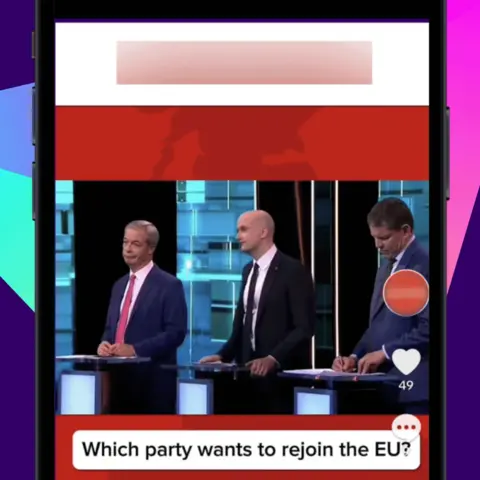
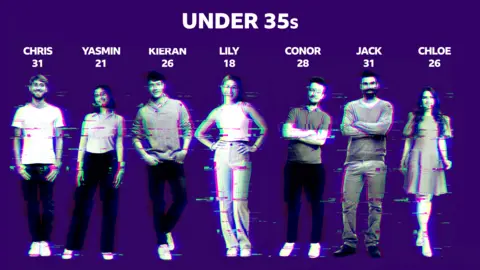
Their videos have appeared on the feeds of the younger characters among my Undercover Voters – 24 fictional people with private online profiles and no friends. I created them to investigate what content the algorithms are promoting during the election.
About 90% of the political posts on the feeds of the Undercover Voters aged under 35 are not from the parties themselves but from fellow social media users sharing political content.
Dozens of the accidental influencers I have identified – aged between 16 and 31 – have received on average about half a million views for each of their posts. Several have had close to a million views on individual videos – and collectively they have racked up more than 15 million.
Giving young people a platform can encourage them to voice their opinions and take part in the democratic process – and lots of these profiles are sharing reliable updates and hot takes. But with great virality comes great responsibility – some other accounts like this have shared misleading claims, as well as finding themselves a target for threats and abuse.
While most of these accidental influencer profiles I have spotted have no political affiliations, 21-year-old Kate who runs a left-leaning political account does tell me she has been in contact with the Labour Party about her profile. But she says she is not paid and the party has no control over what she posts.
This is the first general election she can vote in, but she has been posting about politics for several years. She says she has racked up 2.1 million likes and more than 18 million views – more than most of the parties’ official TikToks.
“In the past, I’ve had people comment they didn’t know something I’ve included and now they wouldn’t vote Tory,” she tells me.
The ability to influence other voters, though, comes with risk. Unlike media outlets, which are subject to regulation, there is little oversight of these posts which can reach millions of people.
Some of the other profiles which have gone unexpectedly viral have shared misleading posts mixed in with reliable updates and opinions.
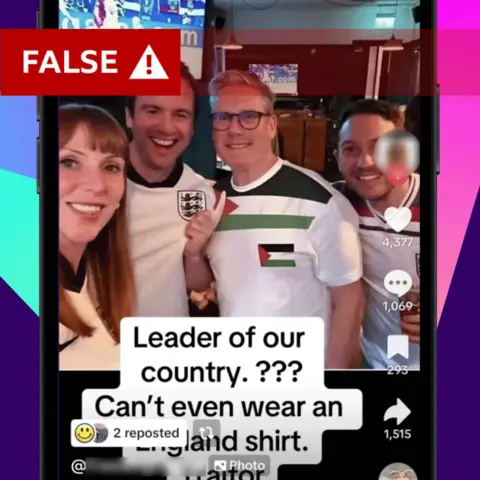
One posted a doctored image falsely suggesting Labour leader Sir Keir Starmer wore a white T-shirt with the Palestinian flag to watch an England match in Euro 2024, calling him a traitor and provoking abusive comments.
Another shared a conspiracy theory falsely suggesting that a milkshake thrown at Nigel Farage while he was out campaigning had actually been staged by his own political party.
Other accidental influencer profiles have used graphics of real polls to make misleading predictions about the election outcome – and some have posted incorrect claims about the positions of different political parties on issues such as immigration and Brexit.
Georgina, 18, a student in Edinburgh, says it was “quite overwhelming” when her post urging young people to vote Labour, not Green, and giving her opinion that Sir Keir could be replaced as leader after the election, racked up 100,000 views. She thinks many people – like her – are not prepared for going viral during an election campaign.
“If you post with the idea that your post could be seen by millions, then you’d probably be a lot more careful about what you’re saying,” she says.
“I was concerned that maybe I didn’t provide enough context and official information.”
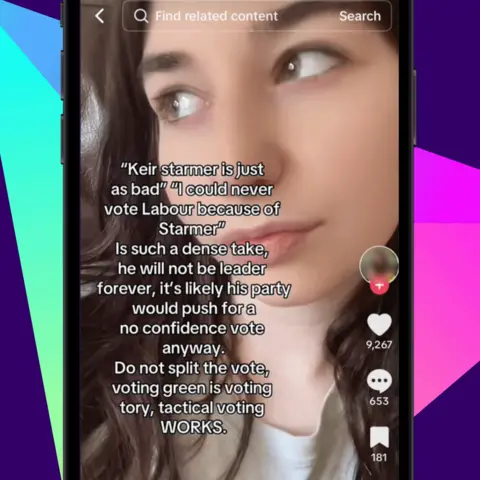
Some of these accidental influencers tell me they are putting lots of effort into researching their own posts and ensuring they are accurate. Several also say, though, that they are finding it hard to work out what to share, because they are unsure what to trust on their own feeds.
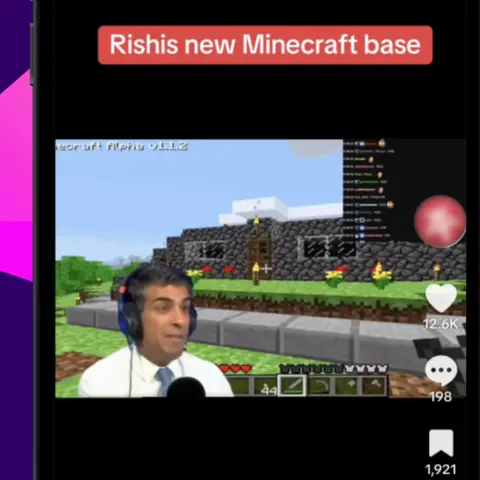
They say opinions can sound like facts and several tell me they have seen a lot of AI-generated content about the election – predominantly parody clips.
That includes faked satirical clips that purport to show Sir Keir Starmer, Rishi Sunak and Nigel Farage “live streaming” the video game Minecraft. Other altered images the influencers have come across include a faked image of Rishi Sunak at a Morrisons supermarket made to look like the sign behind him reads “moron”, with his head obscuring part of the brand name.
Several people told me that while some of these fakes are obvious, there are others that “blur the line between fact and fiction”.
According to a TikTok spokesperson, it has increased its investment “in efforts to ensure reliable information can be found on TikTok”, launching a “UK Election Centre with a fact-checking expert” and adopting an “industry-leading AI labelling technology”. It said also does not allow misinformation about the election or bullying and harassment.
An X spokesperson previously told the BBC: “X has in place a range of policies and features to protect the conversation surrounding elections.”
A spokesperson for Meta, which owns Instagram and Facebook, has said they have a “UK-specific Elections Operations Centre” to identify threats and misinformation.
Following my earlier investigations into misinformation promoted to voters, and deepfaked clips used to smear politicians, sites have also taken action by removing accounts and content.

This post was originally published on this site be sure to check out more of their content