

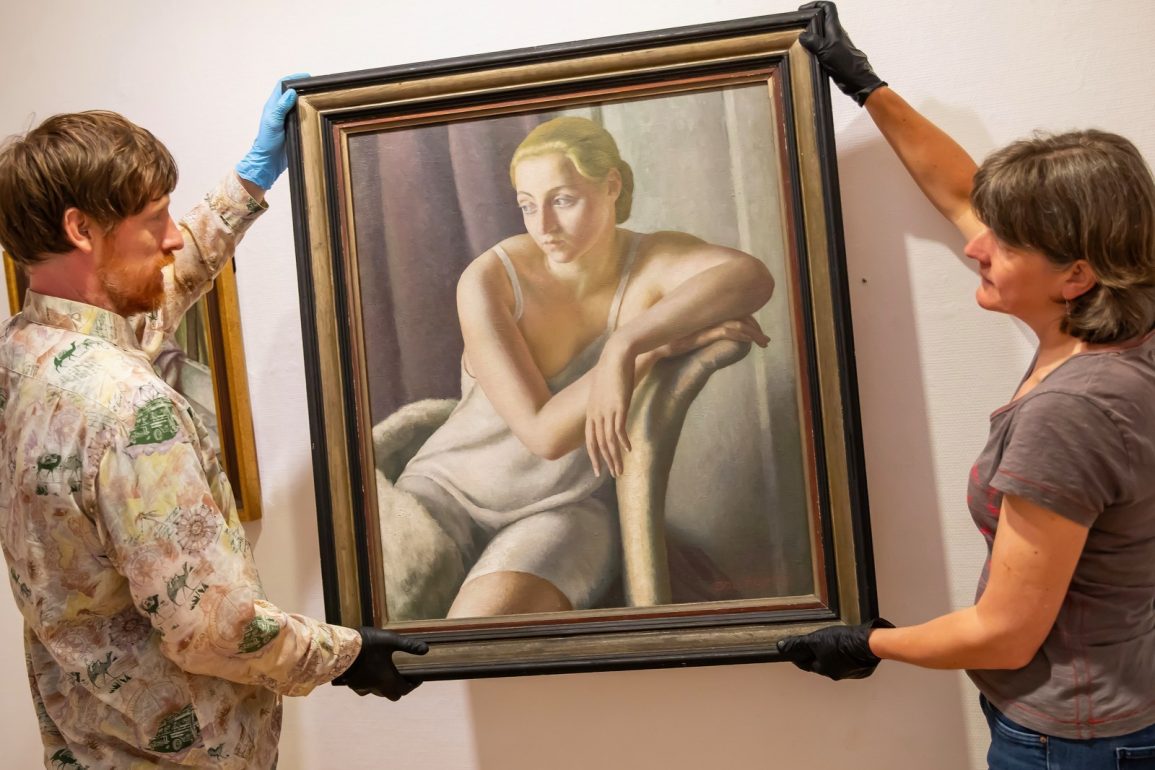
A touring show of more than 60 works by British women artists, from Laura Knight to Tracey Emin, pulled in more than 15,000 visitors in Penzance and opens in Worcester on Jan. 16.
Art schools once kept women out of life-drawing classes, so some of them just painted each other in private. Now a few of those paintings are on a road trip across Britain, and the next stop is Worcester.
According to Worcester Citizen‘s Amy Weatherall, Making Her Mark: A Celebration of Women in Art runs at Worcester City Art Gallery & Museum from Jan. 16 to June 13, 2027. The show brings together more than 60 paintings, sculptures, photographs and other works spanning more than 150 years, pulled from three collections. It arrives after a summer at Penlee House Gallery & Museum in Penzance, where more than 15,000 people saw it, and it heads to Kirkcaldy Galleries in Fife in June 2027.
Three museums, one idea
The show started with a problem a lot of regional museums share. According to The Guardian‘s Steven Morris, Penlee House’s collection tends to be dominated by male artists. “We do have some women artists in our collections but not as many as maybe we should,” Penlee curator Katie Herbert said. So Penzance, Worcester and Kirkcaldy each put in more than 20 works.
According to Worcester News‘ Miranda Norris, the tour is part of Art Fund’s £5.36 million Going Places programme, and many of the works have never been shown outside their home museums. According to Voice Newspapers‘ Kirstie Newton, Making Her Mark is the first of 12 major touring shows Going Places plans over the next five years.
What’s on the walls
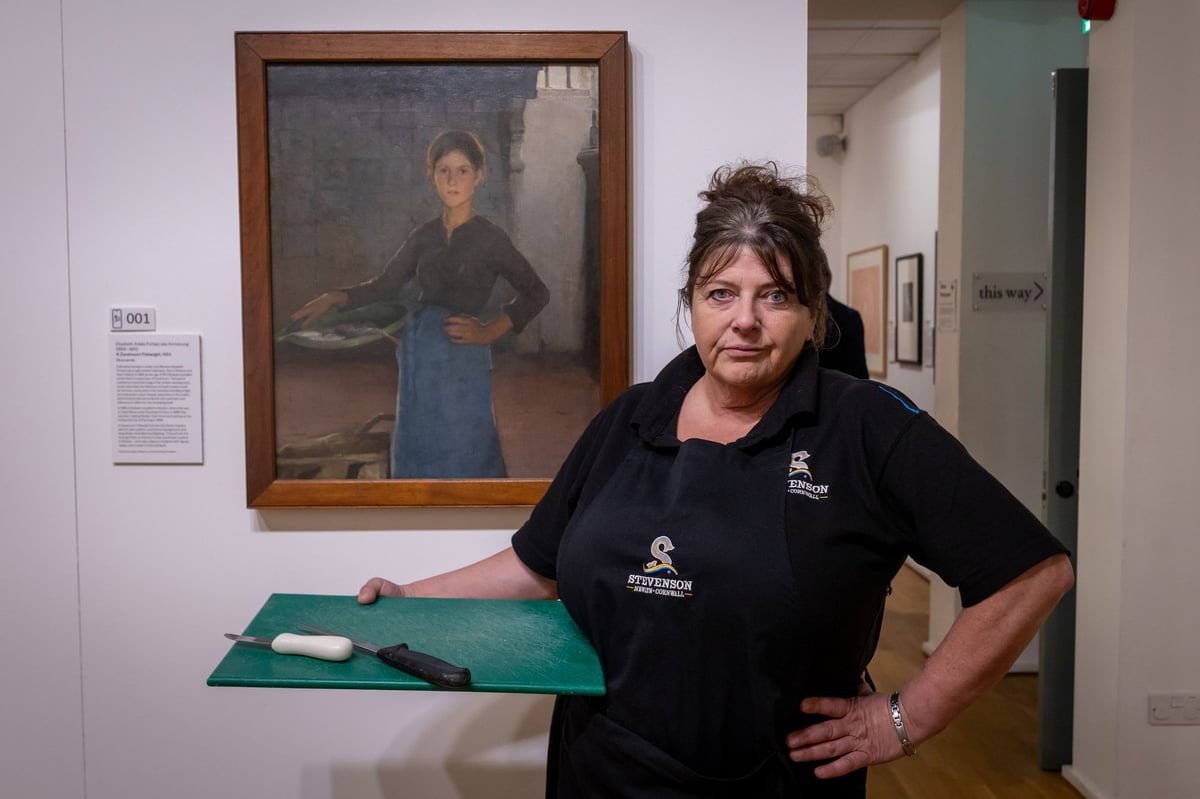
The big names are here, from Knight and Hepworth to Rego, Barns-Graham and Emin. Worcester Citizen reported that Worcester’s own collection is sending Rego’s Little Miss Muffet (1989), from a nursery rhyme series she made for her granddaughter, and Emin’s I Loved My Innocence (2019).
In Penzance, an Emin got prime position above a marble fireplace, though Herbert admitted to The Guardian she’d worried it might shock regular visitors. “We may never see a Tracey Emin here again,” she said.
One of the best stories belongs to Joan Eardley’s Breaking Wave, from around 1960. When storms were forecast, Eardley would travel from Glasgow to Catterline on the Scottish coast, carry large boards down steep cliff paths and tie them down with ropes and stones before painting on the shoreline, Worcester Citizen reported. Grains of sand and bits of debris are still stuck in the paint.
There’s also Lys Hansen’s Features, Fingers, Foot, which shows the artist’s son clinging to and smothering her. The Guardian reported it represents the rage she felt at being steered toward domestic life.
The barriers, by the dates
According to The Birmingham Press‘ newsdesk, it took until 1936 for Laura Knight to become the first woman elected an academician at the Royal Academy, and until 2011 for the academy to appoint its first female professors, Tracey Emin and Fiona Rae. Worcester Citizen noted that Forbes’ Museum Interior shows what women did when shut out of life classes: they studied busts and statues instead.
Strength in numbers
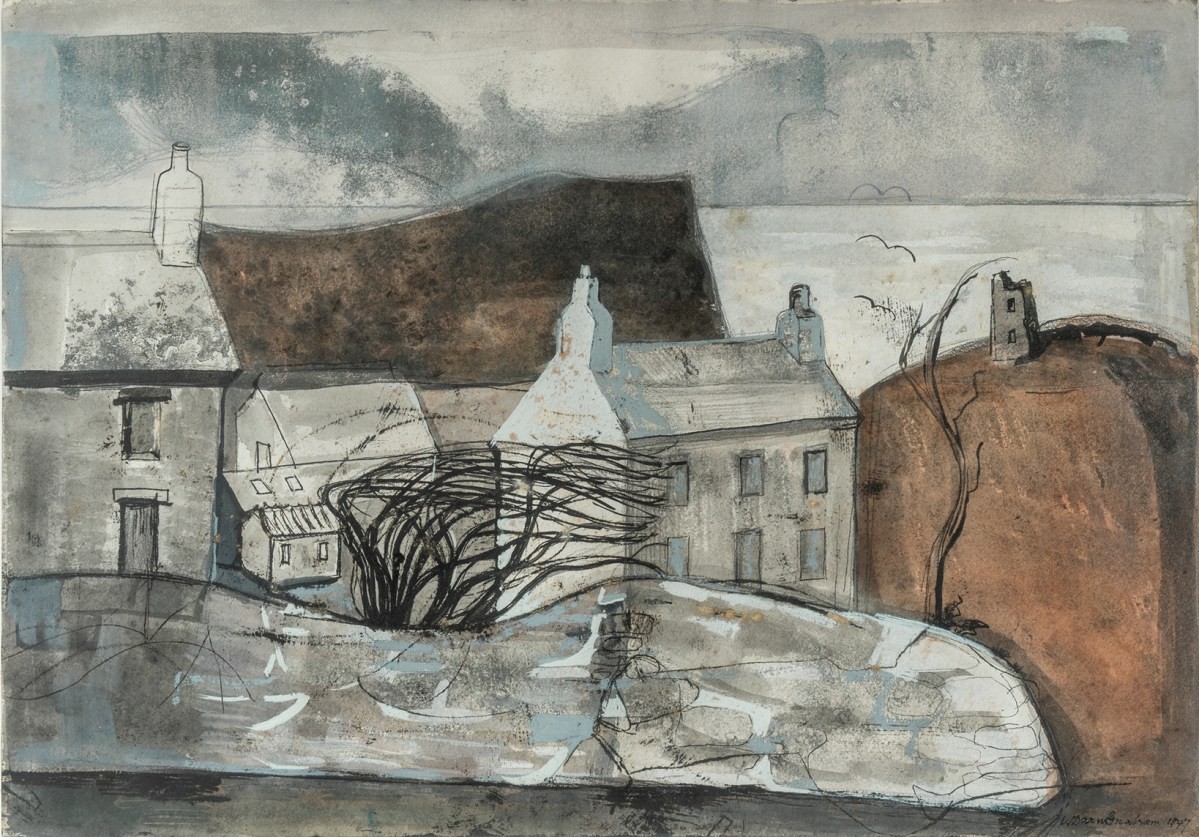
The show makes the case that women got around the “solitary male genius” myth by working together. The Birmingham Press reported that from the late 1800s, the Newlyn School, Lamorna Colony and later the St Ives Modernists in Cornwall gave women space to work and exhibit, “asserting identities beyond wife, mother, model, or muse.” Barns-Graham’s Gurnards Head, No.2 (1947) comes out of that world, painted after she moved from St Andrews to Cornwall and worked alongside the Newlyn and St Ives crowd, per Worcester Citizen.
Local names share the walls with the stars. Worcester News reported the show includes Worcester artists Corinne Eastwood and Bridget Macdonald. Eastwood’s photo series Rokka Nixi (2024) documents traditional Romani cultural practices; the title means “Say Nothing,” a phrase her father used to keep her from talking to outsiders, Worcester Citizen reported.
New artists get wall space too
Care-experienced young people in all three towns made their own work in response to the show, and it tours alongside the masterpieces. “The most inspiring part of the project was watching the young people grow in confidence, rediscover their creativity and begin to see themselves as artists,” artist Nicola Prestage, who worked with the Worcester group, told Worcester Citizen.
Artist Kate Turner, who led the Penzance group, told The Guardian the fight isn’t over: “There’s still a gender pay gap for women in the arts. Misogyny can still be very present in wider society. Representation of women artists has definitely improved, but I think there’s still lots to talk about.”
The takeaway
The women in this show didn’t wait for the academies to let them in. They painted each other, joined colonies and built their own scenes, and that’s still the play for independent artists. Find your people, share studios, show together. Notice how this tour happened, too: three museums that couldn’t tell the story alone pooled what they had and drew 15,000 people in one stop. A group show with a clear theme can open doors a solo pitch can’t. And with local artists like Eastwood and Macdonald hanging next to Emin, it’s worth knowing what your hometown museum collects.
Image: The Guardian