
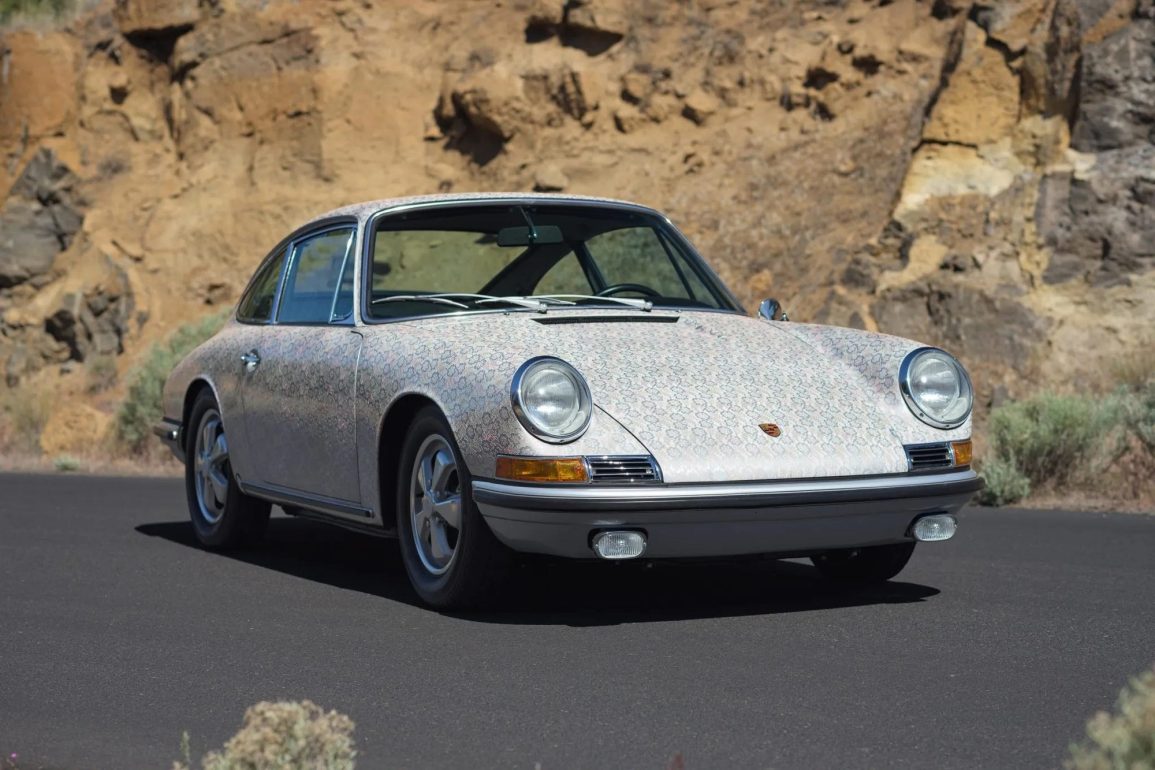
Four decades after she covered a 1967 Porsche 911S in lace to needle a boys’-club car culture, artist Phyllis Yes bought it back for $250,000 and put it to work raising money for women’s health.
Some artists chase the sale. Phyllis Yes chased her own work back down. According to KOIN‘s Kaitlin Flanigan, the Oregon artist’s lace-covered Porsche, which she named Por-She, was set as the centerpiece of “DRIVEN: Women Who Take the Wheel,” a fundraiser at Porsche Studio Portland on Saturday, Nov. 21, with money going to OHSU’s Center for Women’s Health.
The idea goes back to 1984. “I knew a couple of women whose husbands wouldn’t let them drive the Porsche,” Yes told KOIN. “Then I started seeing Porsche ads with men at the wheel, women always in the passenger seat and I thought, ‘This is a good topic to talk about gender and why do we do what we do as human beings.'”
The world’s fastest doily
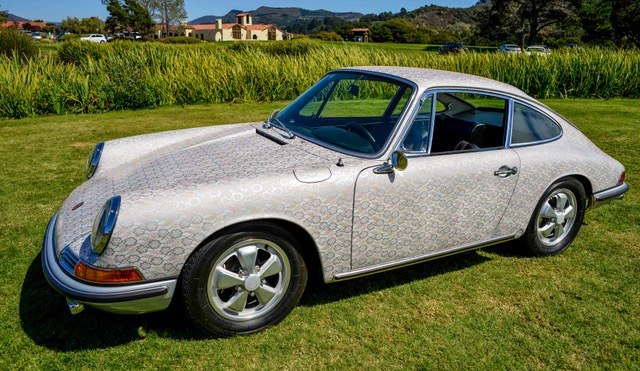
The car itself is a 1967 Porsche 911S painted in a lace pattern in 1984. According to Car and Driver‘s Brendan McAleer, the Wall Street Journal called it the world’s fastest doily when it was unveiled. Per Northwest Examiner‘s Allan Classen, the New York Times called it a “gender bender.”
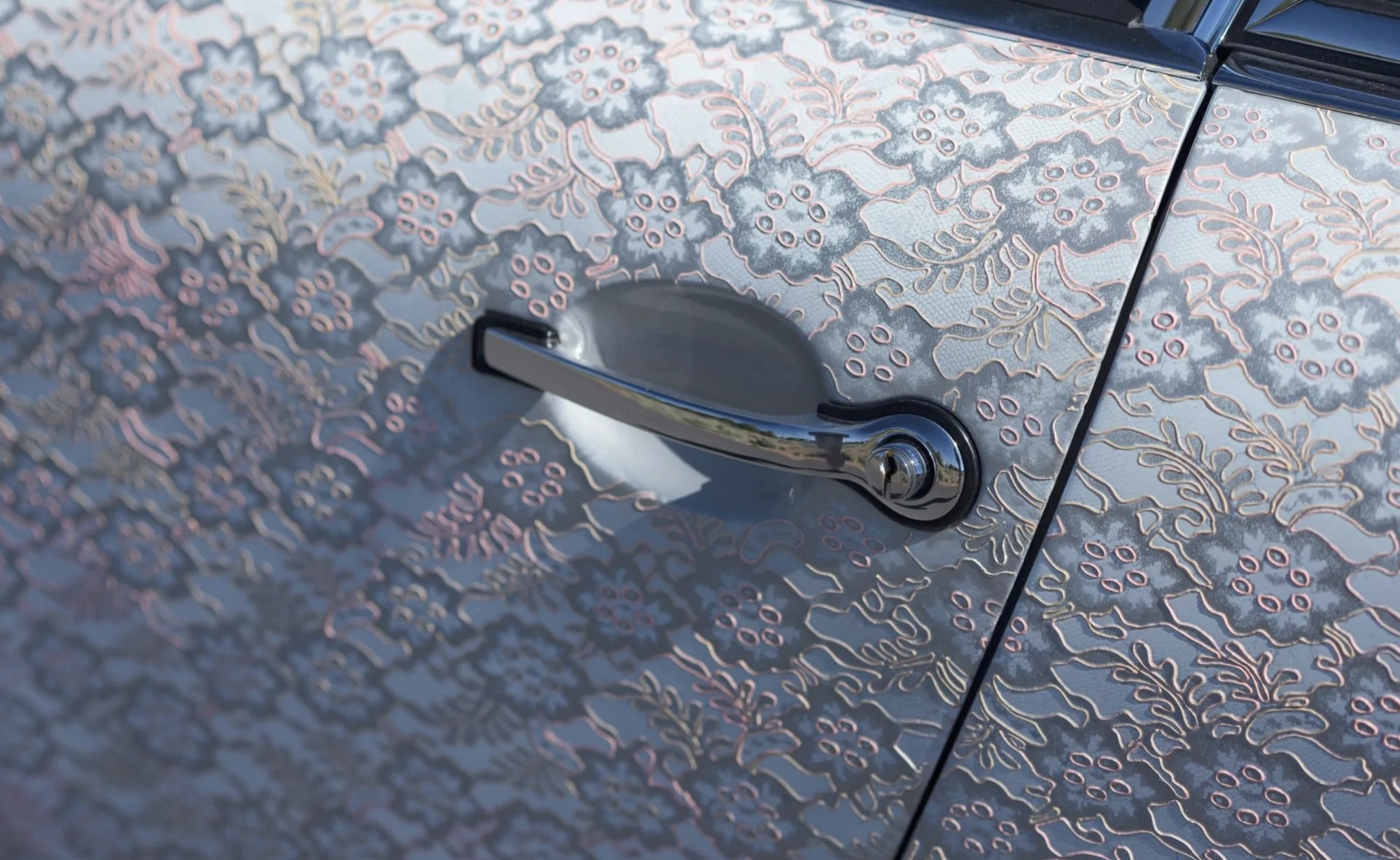
It was real labor. According to autoevolution‘s Elena Luchian, Yes bought the car in silver in the mid-1980s and shipped it to Oregon. She and two assistants laid antique lace over the body, airbrushed the pattern in white, pulled the lace off, then squeezed acrylic paint straight from tubes to build up the rosettes. The whole thing was sealed in pearlescent polyurethane. Autoevolution put the job at two months and 600 hours; Northwest Examiner says Yes spent 1,500 hours covering the car in its pink and flesh-toned rosettes. Either way, McAleer wrote, it took “hundreds and hundreds of hours” of paint by hand.
Por-She debuted at a New York City gallery and then toured the U.S. in 1985, autoevolution reported. Car and Driver said it worked as a rolling exhibit through the mid-1980s before retiring to Yes’s studio.
Sold it, then couldn’t sleep
In 2010 Yes sold the car. Car and Driver reported that the new owner restored it carefully, without touching the paint, and that Yes came back to touch up the artwork herself. In 2013 it won the People’s Choice Award at the Legends of the Autobahn show in Monterey, California.
Then this year it came up for auction on Bring a Trailer. Autoevolution reported that Yes bid $167,000 in the closing minutes, got topped by $3,000, then came back a minute later with $250,000, which ended it. Minutes after that, she posted that she was the artist who painted the car. “I bought the car back because I couldn’t sleep thinking that the paint might be taken off,” she wrote in the listing’s comments. Her plan, autoevolution reported, is to donate it to a museum “for all to enjoy.”
“It’s a car, but it’s art,” McAleer wrote. “And once again, it belongs to her.”
A whole career of side doors
Car and Driver reported that Yes was born Phyllis Danker in Minnesota in 1941 and picked her last name for fun, and that she has worked as an artist, playwright and educator. She once gave a Colt 1911 pistol the same lace treatment. Classen reported she taught at Lewis & Clark College from 1977 to 2005, wrote her first play, “Good Morning, Miss America,” in 2016, premiered it at Portland’s CoHo Theatre, and took it off-Broadway in New York in 2019.
Art that raises money
Northwest Examiner reported that DRIVEN tickets started at $295, with a portion of proceeds going to the OHSU Center for Women’s Health Circle of Giving. Yes told KOIN she wanted to do it because women’s health still needs funding.
Dr. Maria Rodriguez, the OB-GYN who directs the center, tied the art straight to the cause. “What I like about PorShe is that Phyllis asks the question: Who is this designed for and who is it being kept from? And the honest answer in medicine is that for far too long, women have been excluded from the trials that matter and it’s directly harming their health today,” she told KOIN. According to Hoodline‘s Lucas Wright, OHSU says the Circle of Giving has put nearly $3 million into 27 women’s health research projects since 2006.
The takeaway
Yes made a piece in 1984 that asked a simple question, who gets to drive?, and it’s still opening doors more than 40 years later: an award, auction headlines, a museum plan and a fundraiser. A few lessons for independent artists. Pick a subject you actually care about, because a strong point of view keeps a work relevant long after the trend passes. Don’t be afraid of an odd canvas: a car, a pistol, a stage play. Keep tabs on your work after it sells, since your name and your story travel with it. And when the chance comes, put your art to work for something bigger. Causes, galleries and press all love a piece with a story behind it, and the artist who made it is the best person to tell that story.
Image: Car and Driver