



Since ON is a new concept and its diagnostic criteria and treatment are unclear, it is crucial to determine the influential factors for ON tendency. The mean Orto-11 scores in the studies conducted in Turkey were similar to our findings, while the mean of the studies conducted with Orto-15 was higher, resulting from the higher maximum score of the scale [4, 6, 9, 12, 19, 20, 32,33,34,35]. Several studies showed an ON prevalence among university students between 56.9 and 83% [11, 12] and 43.6–45.5% in medical school and nursing students [9, 11, 19, 32]. As expected, ND students among our participants had a greater tendency for ON compared with the other departments (not the ones from Non-ND Health departments). Studies in the literature examined characteristics of ON among doctors/medical students, nurses/nursing students, and dieticians/ND students [4, 9, 13, 19, 32]. However, we could not find a study that evaluated ON tendency characteristics among dentists/dentistry students, pharmacists/pharmacy students, and physiotherapists/physiotherapy and rehabilitation students; we found that ON prevalence among those is also remarkably high. While comparing ON tendency prevalence and mean scores of the studies, it is essential to note that different scales (Orto-11 & Orto-15) and cut-off scores are used, which may affect the results.
There are conflicting results in the literature regarding influential factors for ON tendency, including having a chronic disease [33, 36], dieting [6, 10, 11, 18, 32, 33, 37], BMI [3, 4, 6, 7, 9, 16, 32,33,34, 38], sex [3, 7, 9,10,11,12, 16, 19, 20, 25, 32, 33, 39,40,41,42], marital status [3, 4, 16, 20, 43], age [3, 4, 7, 9, 16, 20, 32, 34, 35, 37, 42, 44], department [4, 6, 7, 12, 13, 15, 34, 45, 46], and class of the students [3, 4, 7, 11, 16, 32,33,34, 41, 43, 46, 47], the status of cooking [6, 33], and smoking [9, 11, 33]. However, similar to our findings, studies revealed that receiving MNT [3, 4], and having higher PA [8, 11, 33] positively correlated with increased ON tendency. However, alcohol consumption was found to be negatively correlated with increased ON tendency [33], while we could not find significant differences (Tables 1 and 2).
Regarding the result of the study between ON tendency and dieting and BMI, it is unclear whether individuals’ diet is affected by health concerns and physical appearance or their interest in healthy eating after dieting history. We recommend questioning this paradox in further studies. Moreover, these conflicting results may be caused by dieting without the consultancy of a professional. Individuals may restrict themselves while dieting, which may result in unintended consequences. It is also believed that individuals who diet may become more authoritarian over time, which may result in increased ON tendency or having obsessive symptoms, a feature of ON [18].
Similarly, the conflicting results on BMI may result from individuals having concerns about their health and trying to eat healthy to create a change, which also results in obsessions over time. With these findings, we interpreted that ON tendency can be higher among those who are overweight and obese, and the underlying motivation of those can be increased health concerns with the rise in their BMI and risk of having morbidities. However, the underlying motivation of those must be clarified in the literature. On the other hand, having a disease that requires MNT and receiving MNT, which may require restrictions on certain kinds of food for consumption, offering meal consumption regularly and some guidance on nutrition, may tend to increase ON tendency parallel with the rise in health concerns, awareness on nutrition or foods (Table 1). When characteristics of ON are considered, it is not surprising that individuals receiving MNT have an increased ON tendency compared to others. It might be a result of concerns about the desire to be healthy. This situation may lead to a rise in these individuals’ awareness of nutrition, whether in a healthy way or not, and a rise in concerns about their health.
With the change in the living style of males and the rise in the importance given to physical appearance and health status, males are thought to be risky for developing ON also [40]. Besides the greater ratio of female participants in our study compared to males, our result can be affected by the high level of education (compared to the studies conducted with the general population), and the sociocultural and economic status of the participants. Additionally, there is also a fact that males today care about their physical appearance and health status as much as females do.
Since Ünalan et al. found that students who live in the dormitory have an increased risk of developing ED [8], we examined the effect of the living environment and the person living with them (Table 1). According to the characteristics of ON, we expected to observe a difference among those who shop and cook meals by themselves since individuals with ON have ritualized habits and are perfectionists in their foods and meals (Table 1). However, shopping by themselves and cooking their meals are not the only way to have healthy food now; they can order them via applications. That choice also depends on their ability and availability for supermarket shopping and cooking. For a clear conclusion, these variables should be examined in detail. Our participants’ living places and the people they lived with changed during the hybrid education system, so their answers might have been affected while the data were collected. Since parents or peers can influence students’ nutrition, this issue should be examined.
When the motivation of individuals with ON is considered, which is improving or maintaining their health status, PA results are expected [16] (Table 1). PA is one of the ways to improve and maintain health. Participants with increased PA (above the recommendations) had increased ON tendency.
Today, while SM has many benefits, it can also be harmful in many ways, including psychiatric disorders, ED, and so on [8, 25, 26, 48]. Surprisingly, it was found that people trust SM content, which can be used to be informed on health issues [26]. Healthy eating, recipes, and weight loss are topics that people are primarily interested in. Thankfully, according to a study, media positively affected 64.7% of the participants’ nutritional habits regarding water intake, fruit consumption, and packaged food consumption [26]. As the media is a source of information and has become the most effective advertising tool, it affects the purchasing behavior of individuals. Similarly, it was observed that they shop and try green tea, whole wheat products, and chia seeds with the influence of SM [26]. On the other hand, it was found that university students follow health-related issues on SM, and their awareness about diet, nutrients, and healthy eating increased [25, 26]. It was found that 20% of males and 38.9% of females food choices have been influenced by TV programs on healthy eating among medical school students [32]. Although the effect of SM use on ED and eating habits is revealed by studies [26, 48,49,50,51,52,53], there are limited studies in the literature that examine its effect on ON tendency, which previously showed a positive correlation similar to our results [12, 27, 37, 42, 54, 55] (Table 3). As SM has become more popular, product ads have increasingly become a part of it. Naturally, high use of SM exposes people to uncontrolled content about healthy foods, nutrition facts, ingredients, the concept of “a fit body”, recommendations about diseases and nutrition, and so on. Moreover, having advice about what to eat and not eating can be unconsciously effective in shopping choices. Besides, there is a paradox because it is unclear whether individuals with ON tendencies might be more likely to be influenced by SM or whether their tendency results from excess SM use and exposure to these kinds of contents.
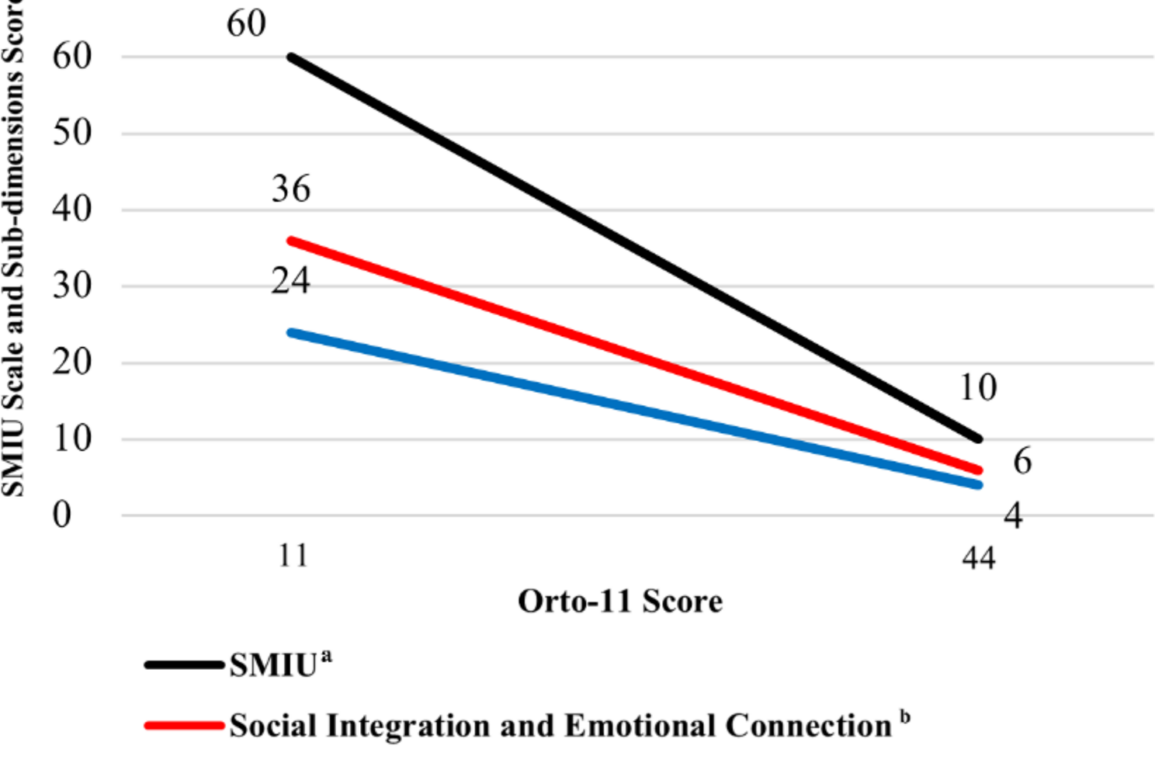
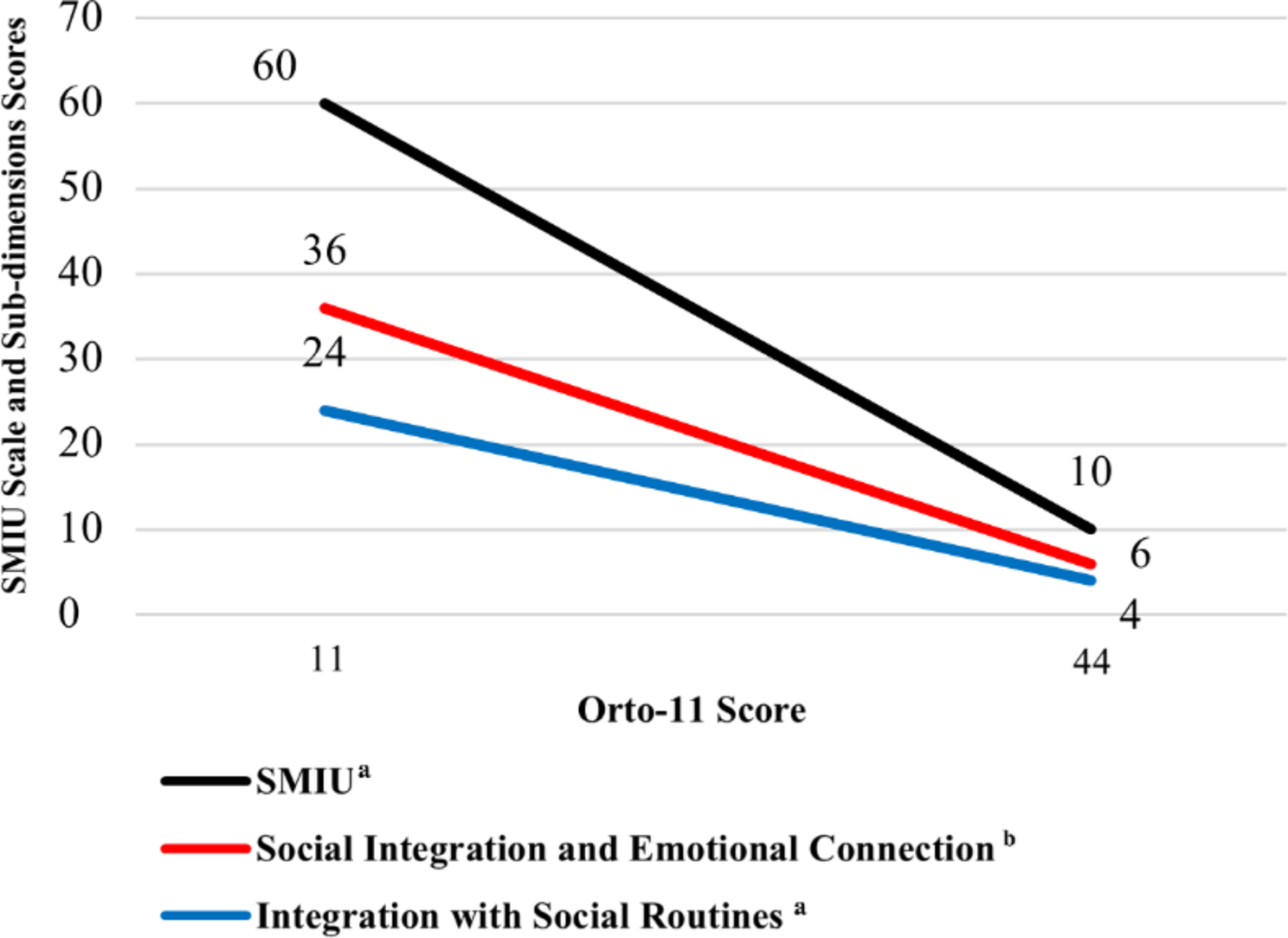
Although the SMIU score and ON tendency were positively correlated (Fig. 1), no significant correlation was found between the total duration of SM use and ON tendency. Focusing on the type of platform, which is preferred predominantly, can be the primary determinant factor (Table 3; Fig. 2). Similar to the existing studies in the literature [27, 37, 42, 54], increased Instagram use led to a higher ON tendency. According to Turner and Lefevre, several reasons make Instagram an influential factor for ON tendency [37]. Firstly, it has an image-based structure aimed at the image superiority effect, which attracts people to remember images rather than words. Secondly, it was mentioned that individuals try to adapt their nutrition through the accounts of some people they are interested in, and finally, Instagram celebrities are considered experts even if they are not qualified to tell someone what to cook or what not to drink [37]. Like Instagram, students’ Pinterest and TikTok use also correlated with increased ON tendency. Other than Instagram, explanations of Turner and Lefevre can be proper for Pinterest and TikTok since these platforms have an image-based structure, and celebrities can quickly contact hundreds of users through these platforms [37]. Other platforms did not seem influential on ON tendency except for these SM platforms, resulting from their text-shaped content. In contrast to our result, Twitter use was found to have a weak protective association with ON tendency [37], but excess Facebook use was not correlated with ON tendency [52, 53].
Following someone (whether a nutrition expert or not) on SM to have nutritional information can contribute to ON tendency, which is also found by Turner and Lefevre [37] (Table 4). Participants can be influenced by whom they follow, and the ON tendency increases with these people’s exposure to the contents of nutritional information. Although it is expected that participants prefer to follow dieticians to have nutritional information, it is a surprising result that people who are not experts in the field of nutrition are being followed by many individuals for the same purpose (Table 4; Fig. 3). Moreover, it is yet to be known whether family members/friends are being followed because they have identities such as dietitians or doctors. Although it is found that participants who use SM as a source of information and participants who are following a weight loss diet have a higher ON tendency (Table 1), we could not find any study conducted in the literature to discuss. While SM use has been linked to triggering many different mechanisms, such as social appearance anxiety, body image, self-anxiety, and eating attitude in individuals, a change in eating attitude might be the mechanism that affects individuals with ON [56]. Because it is contradicted that physical appearance is not at the forefront in individuals with ON [16].
Not the duration but the type of SM platforms, which are visual-based, are more likely to be striking. Furthermore, using these platforms to have nutritional information can also affect negatively and people they follow may be the reason for this change. The use of SM, the aim of using SM, and the people they follow, rather than the duration, plays a significant role in the ON tendency. However, it is unclear whether people with health concerns or who want to maintain their health status already use SM for this aim or whether these contents trigger them and result in increased ON tendency. Besides the contents in the media, the high rate of SM use and consequences from exposure to these health and nutrition-related contents should not be underestimated, and protective interventions should be planned. Though controlling contents in SM is impossible, lectures about media awareness and nutrition knowledge to all students can be planned as an intervention. Moreover, the curriculum can offer psychology-based courses or approaches to protect ND students from various ED and ON. Since receiving MNT and diet restrictions also led to an increase in ON tendency, the psychological aspect of the MNT should always be considered during the care process.
Strength & limitations
The strength of this study is that it is one of the few studies in the literature investigating the effect of SM on ON tendency.
Since the study was conducted with the students, the results do not represent the general population; a study with the general population will help to make a clear conclusion on chronic disease, gender, age, marital status, educational level, and income issues. The other limitation is that we collected all data by self-report. Foremost, the Orto-11 scale does not have a fixed cut-off point, which causes it to vary in the sample group. Besides, there are conflicting results in the literature for the validity and reliability of tools to determine ON is a matter of debate [57, 58].
This post was originally published on this site be sure to check out more of their content