


Blur, the trading platform that once ruled Ethereum NFTs and squeezed creator royalties, has turned off its website, and the art side of crypto is figuring out what comes next.
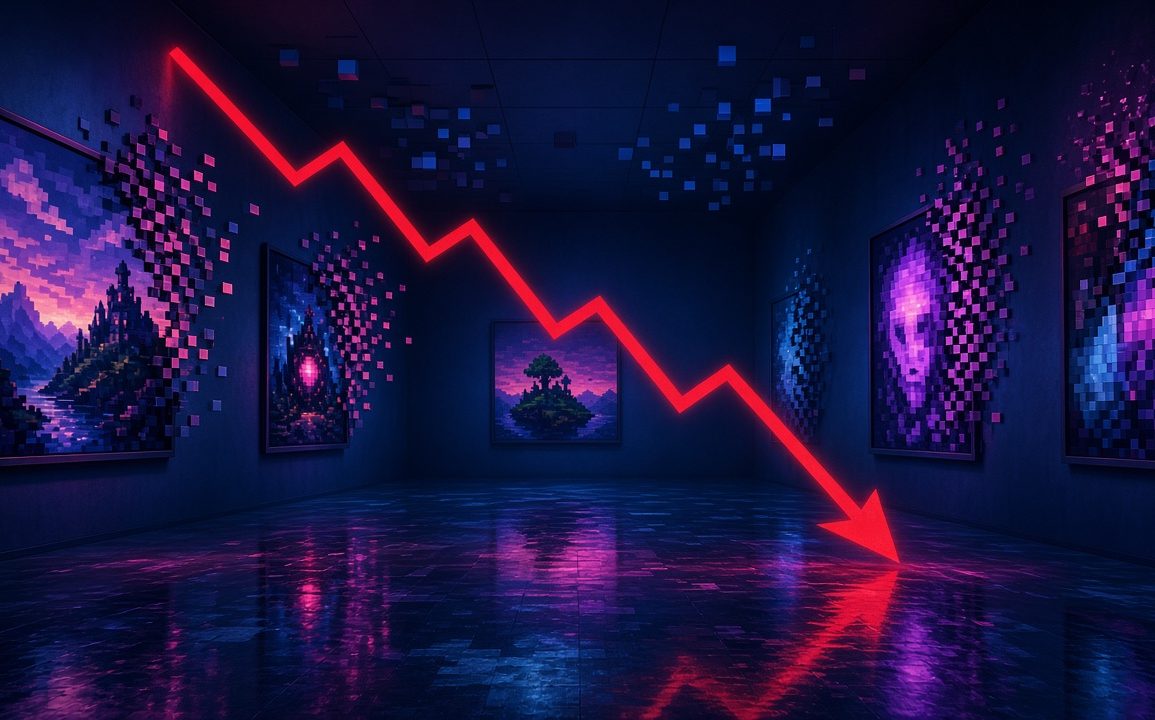
The fastest NFT marketplace in the game just went dark. According to CNBC‘s Mike Winters, Blur, once the largest marketplace for Ethereum-based NFTs, shut down its website last Thursday, Nov. 12. Winters reported that weekly NFT trading volume has fallen more than 99% since August 2021, and that several major NFT marketplaces have closed.
It is a long way down from the peak. CNBC noted that weekly trading volume across major blockchains climbed from about $4.4 million in late 2020 to $3.2 billion in August 2021, citing CryptoSlam data published by The Block. That was the year Beeple’s digital artwork fetched $69.3 million at Christie’s and Jack Dorsey sold an NFT of his first tweet for $2.9 million.
From 70% of the market to almost nothing
Blur’s own numbers tell the story. According to CoinDesk‘s Shaurya Malwa, Blur launched in 2022 and took on then-leader OpenSea by offering professional traders faster transactions, low fees and token rewards. That strategy helped it grab more than 70% of Ethereum NFT trading volume in March 2023, when activity on the platform hit about $1.43 billion, per DefiLlama data. By March 2026, monthly volume had dropped below $7 million, a fall of more than 99.5%.
The marketplace also charged traders nothing. CoinDesk reported that Token Terminal records $0 in protocol revenue for Blur over the past three years, despite billions of dollars in trades, though that figure doesn’t show whether Blur made money from lending or other activities. Blur hasn’t publicly blamed its shutdown on operating losses.
The closure covers only the website. Blur’s smart contracts keep running on Ethereum, and BLUR token holders still control the fee switch, the mechanism that lets them vote on whether the marketplace starts charging fees. Blend, Blur’s NFT lending service, stopped matching new loans on the same day, and borrowers had until then to repay or let their loans default.
The royalty fight artists remember
For creators, Blur’s legacy is personal. According to The Block‘s Jason Shubnell, Blur’s low creator-royalty policy intensified competition among NFT marketplaces and put pressure on creator revenues, including those of Yuga Labs, the company behind Bored Ape Yacht Club. Critics say its incentive-driven approach encouraged airdrop farming and suspected wash trading while squeezing royalties.
The Block reported that founder Tieshun “Pacman” Roquerre said in early 2023 that he wanted to build the “Binance of NFTs.” His Ethereum Layer 2 network, Blast, announced its own wind-down shortly before Blur did. When the shutdown news hit, the BLUR token fell more than 20% to around $0.015. It traded above $5 in early 2023.
CoinDesk added that the trading figures alone don’t show how much of Blur’s activity came from real buyers rather than traders chasing rewards.
Why the bubble popped
CNBC’s experts pointed to a simple problem: owning a token isn’t the same as wanting one. “Blockchain could establish who owns the token, but it couldn’t guarantee that anyone would really value the ownership at the end of the day,” Evan Mills, a financial advisor at Scholar Advising, told the outlet. Martin Mulyadi of Shenandoah University put it bluntly: “Most NFTs paid nothing, so the only way to make money was finding a next buyer at a higher price. When the buyers stopped coming, there was nothing holding up the price.”
CNBC also cited IntoTheBlock data showing roughly 500 new NFT collections were being created every day at the height of the boom in 2022. That’s a lot of supply chasing a crowd that was mostly there to flip.
Buyers are still showing up
The market isn’t dead, just a lot smaller. According to crypto.news‘s Lawrence Mondal, NFT sales rose 3.88% to $33 million in the seven days through Nov. 21, per CryptoSlam. Buyer addresses jumped 60.89% to 109,319, though one person can trade through several wallets. The average sale came in around $57.
Ethereum led with $12.91 million in sales. The top collection was Courtyard, a Polygon platform, with $6.35 million, while CryptoSlam flagged $17.55 million of Polygon trades as wash volume. Art-adjacent names still move: an Async Art piece sold for about $210,870 in USDC.
Artists in the space have seen this coming. Back in 2023, generative artist Casey Reas, co-founder of the online gallery Feral File, told ArtReview‘s J.J. Charlesworth that “while the market for NFTs at large has collapsed, there’s still a lot of momentum there in the wider digital art community.” His prescription was “just adjusting expectations a little bit.”
The takeaway
Platforms built for traders don’t stick around for artists. Blur won the market by making flipping cheap and royalties optional, and when the flippers left, so did the volume. If you make digital work, don’t build your income on one marketplace’s incentives or its royalty promises. Keep your own collector list, sell where buyers actually care about the art, price for real people instead of a hype cycle, and remember that a token proves who owns your work, not that anyone wants it. That part is still your job.
Image: AI-generated illustration.