


New pricing data on the world’s top art fairs shows where galleries bring their most expensive work, and why the art market’s real problem isn’t too few artists but too few buyers.
Want to know where the art market’s money really lives? Skip the celebrity sightings at the opening. Look at the price tags.
In a new analysis for Observer, art market economist Magnus Resch used data from Magnus, the art pricing app he founded, to compare what galleries brought to four big fairs: Art Basel in Basel, Art Basel Paris, Art Basel Miami Beach and Frieze London. Rather than compare simple averages, his team measured each gallery against itself, looking at the median asking price of the work a gallery like Gagosian took to each fair. The idea is that every booth is a business decision about where a gallery thinks its buyers are.
Basel still gets the big-ticket work
Basel is still where galleries bring their priciest art. Paris caught up fast after Art Basel launched its Paris fair in 2022, and by 2025 the price gap between the two had shrunk to just 4 percent. Resch says that catch-up has since stalled.
The top end tells the story. Across five years of data, among galleries that showed at all three European fairs in the same year, 12 percent of priced works at Basel were offered above $1 million. In Paris it was 8 percent. In London it was 3.4 percent.
London slipped, Miami held on
In 2025, galleries showing at both Art Basel Paris and Frieze London brought work priced 51 percent higher to Paris. Resch points to Paris’s cultural pull and its luxury companies, plus the extra paperwork Brexit added for moving art between Britain and Europe. But he doesn’t call London’s lower prices a weakness. Frieze shows more younger galleries, and its friendlier price points may draw collectors hunting for emerging artists.
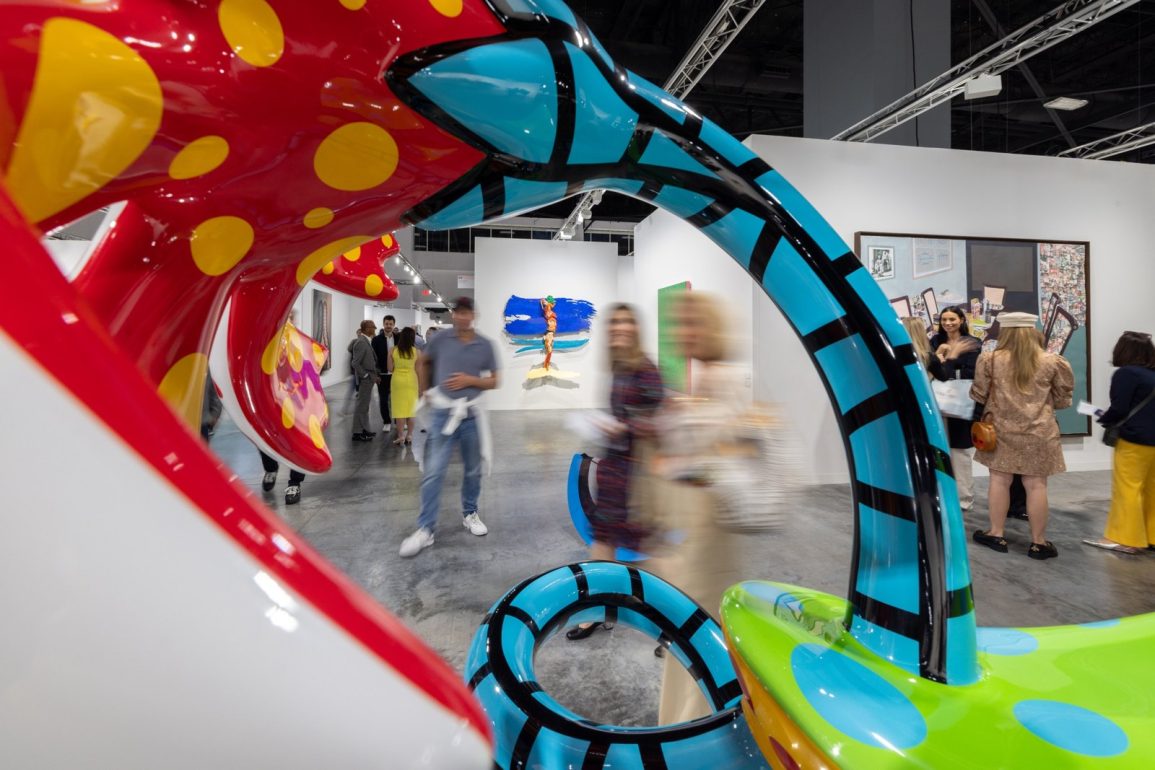
Miami surprised him. Comparing 2022 through 2025, galleries at both Paris and Miami brought work priced 4 percent higher to Miami, while Basel held a 17 percent premium over Miami. The U.S. is the world’s largest national art market, and Miami lets younger European galleries test American buyers without paying to open a space in New York or Los Angeles. Resch is careful to note that asking prices aren’t sales prices. They show where dealers believe buyers are, not where the most money actually changes hands.
The real shortage is buyers
Resch, who teaches a class on the art market at Yale, says the industry’s biggest money problem isn’t a shortage of artists or of people who like art. It’s a shortage of people who actually buy it. Plenty of Miami’s December crowd already spends big on watches, cars, fashion and design, he wrote, but has never bought a piece of contemporary art.
He put numbers on that gap in a recent interview with NZZ Folio‘s Flurin Clalüna. About 80,000 people visit Art Basel Miami Beach, he said, but fewer than 800 buy anything. Worldwide, only about 6,000 people spend more than €100,000 a year on art, year after year for at least five years. And when his team priced every work at Art Basel in Basel this year, 60 percent of the total value sat with just 5 of the 290 galleries, whose booths were right next to each other. “That is the epicenter,” he said. The farther a gallery is from it, the harder it gets, even though a worse spot costs the same as the best one.
Fairs are redrawing the map
Fairs have noticed. According to ARTnews‘ Maximilíano Durón, Art Basel Miami Beach, which runs Dec. 4 to 6, is spreading several blue-chip galleries more evenly across the convention center this year so collectors walk more of the floor and pass midsize and emerging galleries on the way. Hauser & Wirth, David Zwirner and Lisson Gallery are among those moving from one corner of the hall to another.
“The worst thing you can hear, and dealers say it all the time: ‘My client couldn’t find me,'” fair director Bridget Finn told ARTnews. Frieze London tried its own version starting in 2024, moving blue-chip exhibitors to the back of its tent so visitors had to pass smaller galleries to reach them. “Mid-career galleries are the lifeblood of our show,” Finn said.
The takeaway
Most independent artists will never hang in Basel, and that’s fine. The lesson is about where buyers come from. Resch’s numbers say the market has plenty of art and plenty of lookers, but not enough people willing to pay. The folks who buy sneakers, watches and design but have never bought art are your growth market, so talk to them in plain language. Show your prices, too. Resch told NZZ Folio that the art world’s habit of hiding prices keeps a lot of people from buying at all. Think about placement the way the fairs do: get your work where the foot traffic already is, online and off. And be picky. Resch said an artist’s first five to ten shows strongly shape a career, and he tells his students not to take every gallery offer that comes along and to put any deal they do take in a written contract. Your network sets your price, so build it on purpose.
Image: Observer