
Art Basel Miami Beach is trimming its main floor this year, but its digital art section is getting more room, and the artists who came up selling NFTs are showing up with thread, paint, trading cards and only the occasional token.
Art Basel Miami Beach is getting smaller, and digital art is one of the few things getting bigger. According to NFT Culture‘s Natalee, Zero 10, Art Basel’s section for art of the digital era, brings 19 projects from 21 galleries and platforms to the Miami Beach Convention Center. Public days run Friday, Dec. 4 through Sunday, Dec. 6, with VIP preview days on Dec. 2 and 3. The twist: Zero 10 isn’t billed as an NFT section, and most of what’s in it is physical, from textiles and robots to paintings and plotter drawings.
Less floor, more digital
When the exhibitor list came out, ARTnews‘ Maximilíano Durón reported that the fair was cutting its main Galleries section to 204 exhibitors from 226, dropping its Meridians section for large-scale works, and using about 12 percent less floor space in the convention center. Last year Zero 10 shared the south end of the building with Meridians. This year it gets that space to itself.
“The market correction over the last few years has caused some reactionary planning across the board. We are not working that way,” fair director Bridget Finn told ARTnews.
According to Art Miami Magazine, the full fair brings 272 exhibitors from more than 40 countries and territories. Zero 10 is curated by Karen Archey with Eli Scheinman and covers generative art, artificial intelligence and computational work. It also adds a history lesson: the Institute for Studies on Latin American Art is presenting ARTE Y CIBERNÉTICA, a look at early computer art in Latin America.
Code in, thread out
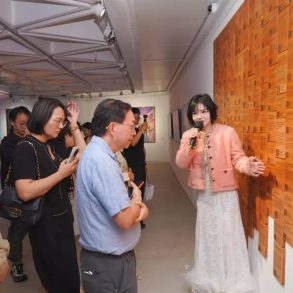
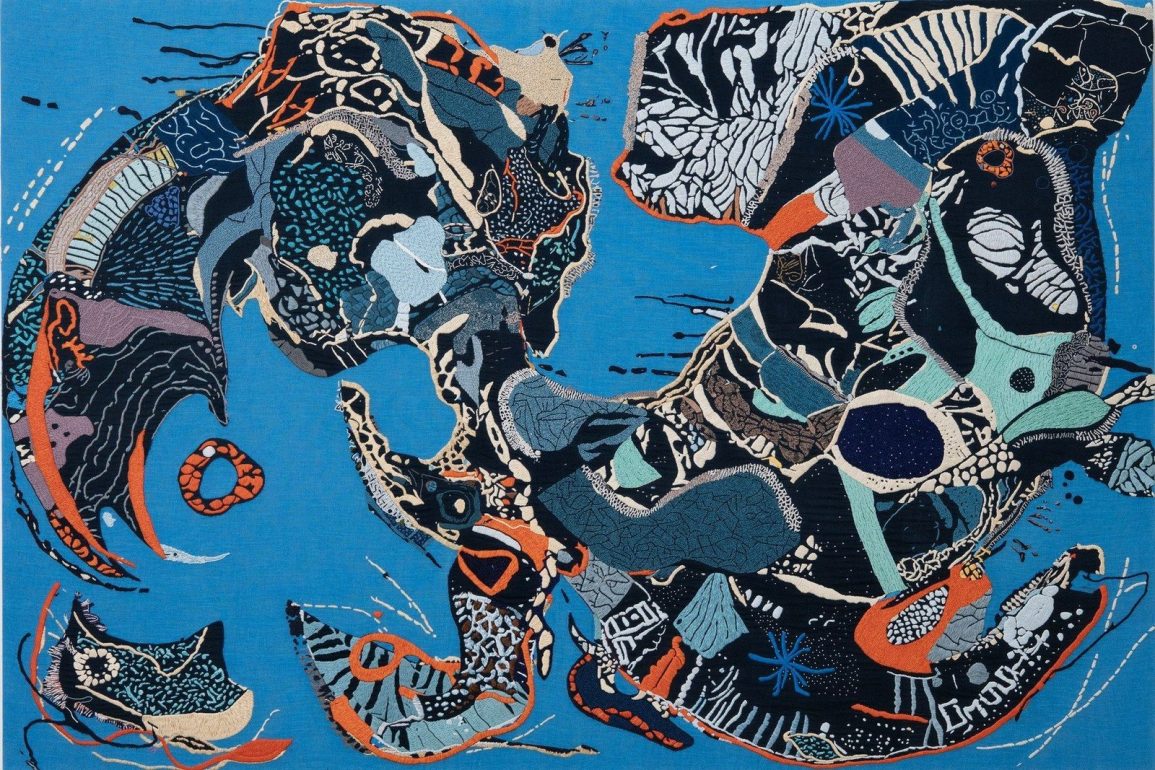
The clearest example of where crypto art has gone is Emily Xie. According to CATALOGUE, her best-known on-chain work, Memories of Qilin, dropped on Art Blocks in 2022 as an edition of 1,024 generative works on Ethereum. For Miami, Art Blocks is showing her new series Tensile Forms: four large hand-embroidered works and six smaller machine-embroidered pieces called Tensile Constructs, with more Constructs to be minted live at the booth and online during the fair, so you can collect one without flying to Miami.
Every piece starts with an algorithm Xie wrote. For the big works, her finished digital collage goes to an embroidery studio in India where artisans stitch it entirely by hand, CATALOGUE reported. For the Constructs, the code goes straight to an embroidery machine, and each one, in Xie’s words, “comes with a corresponding token.” She’s also not shy about her tools. “I am not the type of generative artist who refuses to use AI,” she told Art Blocks. “It’s a tool.”
The NFT veterans, all grown up
Xie isn’t alone. NFT Culture singled out several artists in the section whose careers have roots on the blockchain. Mitchell F. Chan is known for one of the earliest NFT artworks, from 2017. Robert Alice made Portraits of a Mind in 2019, 40 paintings, each with a matching NFT, that together carry the digits of Bitcoin’s original code. Sarah Meyohas launched Bitchcoin, an artist’s token backed by her photographs, back in 2015. Her Zero 10 piece with Boesky Gallery isn’t a token at all, but a glass tank of magnetic liquid that shapes a sound environment.
The younger crowd is in the mix too. In a story on Art Basel’s own site, Aimee Dawson wrote that the pseudonymous artist Evil Biscuit, born in 1996, will show a new body of paintings and trading cards inspired by gaming, memes and NFTs, made with Los Angeles artist Parker Ito. Generative artist Luke Shannon, born in 2000, is bringing an interactive piece that asks fairgoers to hand over their phones so their algorithms can be steered toward topics like health or dating.
Why the fair cares
Art Basel’s story pointed to its own survey with UBS: 54% of the wealthy collectors surveyed had at least one digital artwork, and Gen Z collectors were the most likely to have started with a digital work. The section also has new leadership. Nicole Sales Giles joined Art Basel in September as Zero 10’s first global head, and NFT Culture noted she previously ran digital art at Christie’s New York.
Not everything around the fair is about the art, though. NFT Culture counted 155 events on one community calendar for Miami Art Week, and said many are token and networking parties rather than art.
The takeaway
For independent digital artists, the message from Miami is clear: the token alone isn’t the product anymore. The artists who made it into this section turned their code into objects people can hang, touch or walk around, and used the blockchain as a receipt, not the whole show. Every one of these projects also came in through a gallery or platform, so building those relationships still matters. If you work in code or digital media, think about a physical version of your best piece, keep your on-chain history clean and easy to find, and treat the party circuit as networking, not a substitute for the work. You don’t need a booth at Art Basel to borrow the playbook.
Image: Emily Xie, courtesy the artist and Art Blocks, via CATALOGUE