


Christie’s 21st Century Evening Sale brought in $145.9 million in New York, but dealers said ambitious estimates were punished while a $30,000 painting by Julia Jo stole the night.
The money showed up. The excitement mostly didn’t. According to ARTnews’s Brian Boucher and Harrison Jacobs, Christie’s closed New York’s fall auction week on Nov. 19 with $145.9 million from a 56-lot sale of 21st-century art, after works by Jeff Koons and Ed Ruscha estimated at up to $11 million combined were withdrawn. The house sold 51 lots, a 91 percent sell-through rate, but the $117.7 million hammer total fell well short of the $126 million to $192 million estimate.
The headline number still looked healthy. According to Artnet News’s Richard Whiddington, the total was up 18 percent from the same sale last year and was the house’s best in the category since 2021. According to Observer’s Elisa Carollo, the sale was 92 percent sold by value.
A Basquiat that barely cleared
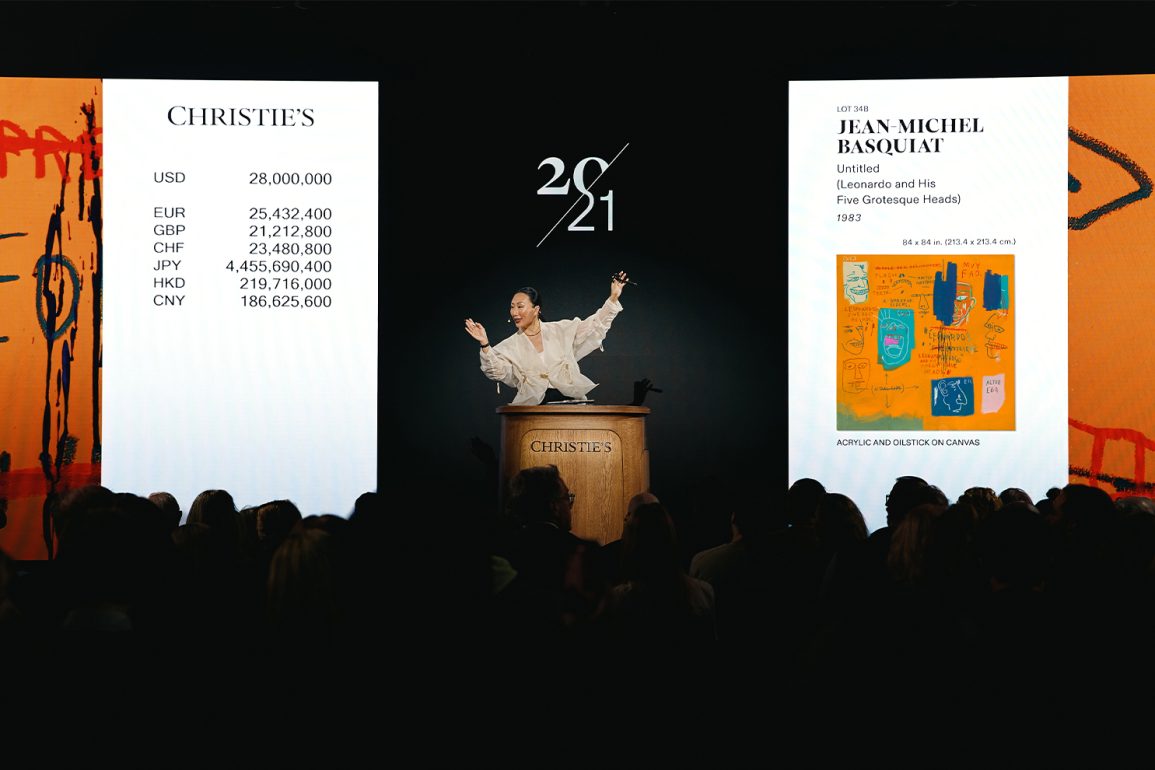
The top lot was Jean-Michel Basquiat’s 1983 Untitled (Leonardo and His Five Grotesque Heads). Auctioneer Yü-Ge Wang opened at $23 million, and ARTnews reported that for a few long moments it seemed no one would bid before Christie’s Ana Maria Celis won it over Alex Rotter. It hammered at $28 million, just under the $30 million low estimate, and sold for $32.9 million with fees. The sources tell it a little differently: Observer said the opening drew several phone bids right away, and Artnet put the price at $32.8 million and called the sale swift. They also differ on the painting’s last sale at Sotheby’s London in 2005, which Artnet put at £736,000 (then $1.3 million) and Observer at $1.16 million. Either way, the seller did very well.
Big names, high estimates, soft bidding
Twenty works from the collection of Antonio Homem Sonnabend brought $41.9 million, but ARTnews counted 10 of the 20 hammering below estimate. Roy Lichtenstein’s Large Spool sold for $8.6 million against a $10 million low estimate (Observer reported $8.7 million). Andy Warhol’s Campbell’s Soup Can (Turkey Noodle) did better at $9 million with fees, which Artnet noted topped its $8 million high estimate, though Observer pointed out that the hammer price landed within the estimate. Ten works from the late Agnes Gund’s collection made $25.7 million, led by a $7.1 million Vija Celmins, while Jim Nutt’s Loom set a record for the artist at $1.1 million. A 1990 Gerhard Richter from dealer Marian Goodman’s collection drew no bids, and a Yayoi Kusama pumpkin and a William Eggleston portfolio also went unsold.
According to Il Sole 24 Ore’s Giovanni Gasparini, almost every major lot carried a guarantee, from a third party or from Christie’s itself. He also noted that only about a fifth of the works in a sale billed as “21st Century” were actually made this millennium.
Dealers in the room didn’t hold back. “The estimates were too high for this market,” Jeanne Greenberg Rohatyn told ARTnews. “We need to readjust, and the houses need to be at the forefront of managing expectations.” Marianne Boesky put it more simply: “The lots that were estimated too high were punished, and those estimated low were rewarded.” Alex Glauber of the Association of Professional Art Advisors told Artnet the sale was “tepid but well managed by the house.” Rebecca Fine of Metis Fine Art Finance told Observer that on lots that failed, bidding stalled at about three-quarters of the low estimate. “The market is clearly liquid for well-priced material,” she said, “but clearing an ambitious estimate takes a real discount.”
The $30,000 painting that stole the night
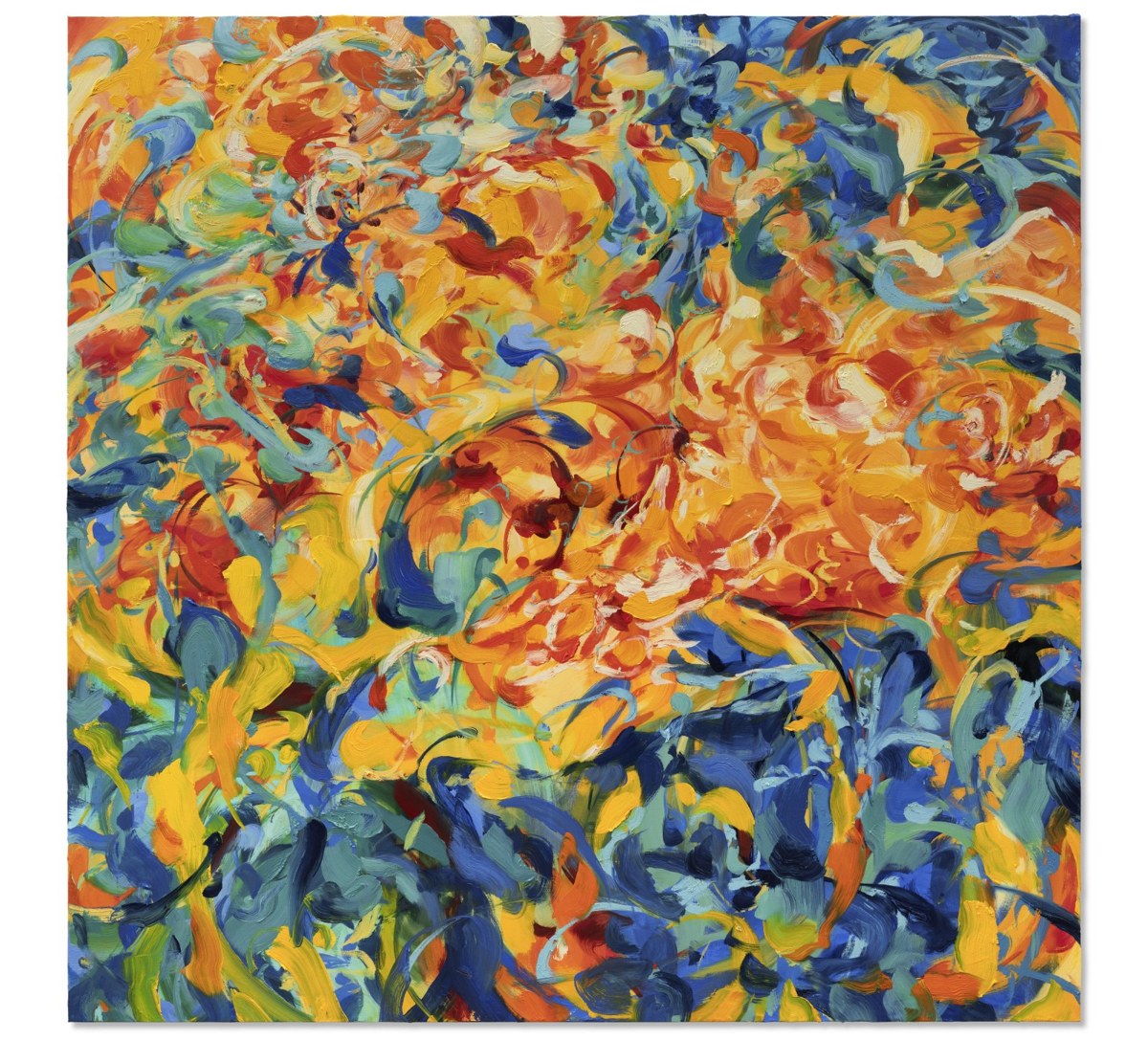
The last lot gave the room its only real rush. Julia Jo’s One Fell Swoop (2026), estimated at $30,000 to $50,000 and sold to benefit the Coalition for the Homeless, hammered at $320,000, or $409,600 with fees, an auction record for the Brooklyn-based artist, born in 1991. Artnet called it perhaps the most dogged bidding of the night. Observer reported that the result had been building: days earlier at the ADAA fair, the gallery Charles Moffett sold all four of her new abstractions for $30,000 to $40,000 each, and her show earlier this year sold out. Younger artists with real demand on the primary market did well elsewhere, too. Antonio Santín set a record at $486,400, and Joseph Yaeger, who Observer said has a waiting list for new work, brought $332,800 against a $180,000 high estimate.
The takeaway
The lesson from the top of the market works at every price point: price for the people actually in the room. Overreaching estimates stalled, while modest ones invited competition. For independent artists, that means setting prices you can back up with sales history, raising them steadily after a sellout instead of in one big jump, and treating a waiting list as your best evidence. Jo’s record didn’t come from nowhere. It came from sold-out shows and fair sales at prices collectors felt good about, and when a work finally went to open bidding, the demand was already there.
Image: ARTnews