

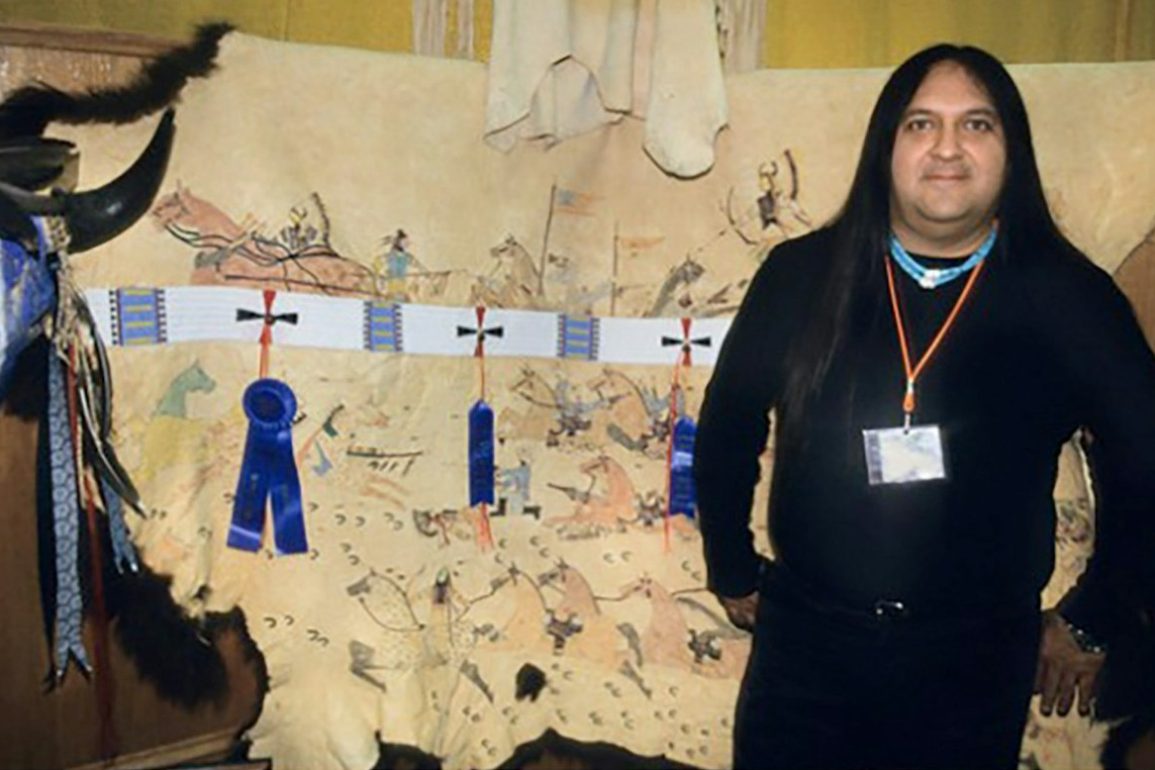
A Jackson, Wyoming, gallery owner who sold art as “Joseph Skywolf” has pleaded guilty to a federal felony for passing off fake work as Native-made, and real Native artists say the damage runs deeper than one storefront.
The story was the product. According to Cowboy State Daily‘s Emma Jane Jackson, Jose Martinez, who did business as Joseph Skywolf of Skywolf’s Gallery in Jackson, pleaded guilty on Nov. 3 to one felony count of violating the Indian Arts and Crafts Act. He sold counterfeit headdresses, jewelry, paintings and beaded hides from his Jackson storefront, from a mobile gallery, and at Indian art markets and craft fairs. He was sentenced to 24 months of supervised probation and ordered to pay $14,100 in restitution.
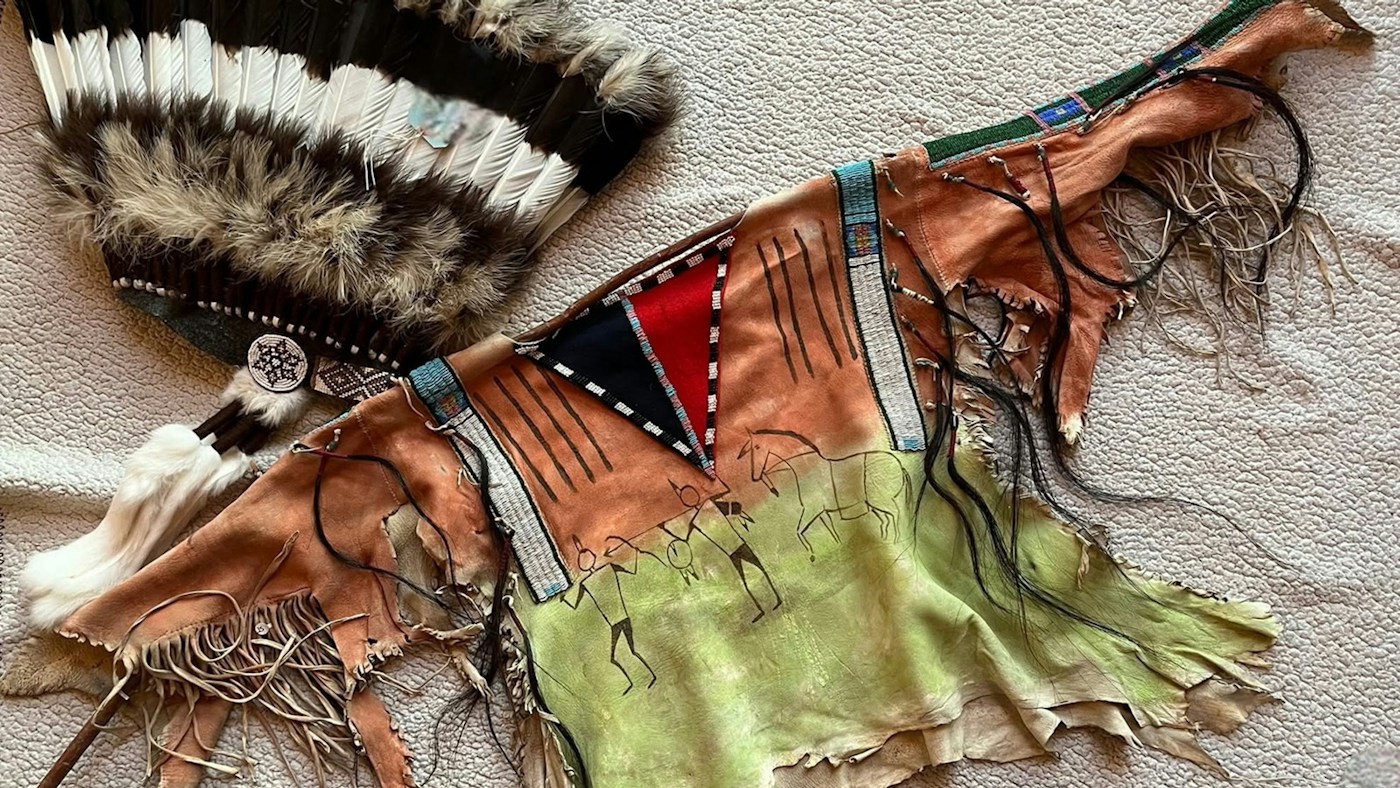
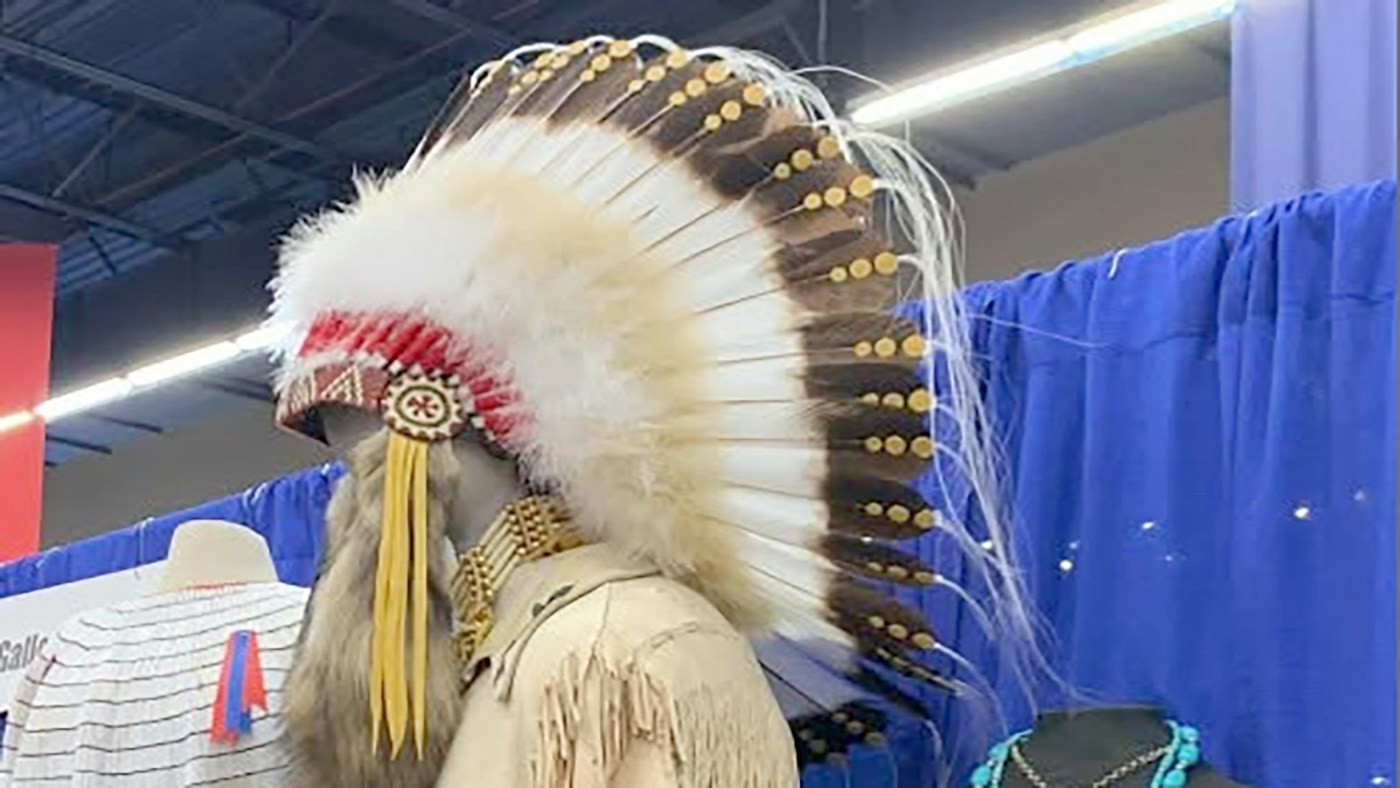
According to ARTnews‘s Andy Battaglia, the federal case centers on sales in 2023 and 2024. The U.S. Department of the Interior said Martinez “offered or displayed for sale various kinds of artwork, such as headdresses, jewelry, paintings, and beaded tanned hides, that he falsely represented as made by an Indian or by a specific Indian Tribe.”
A felony, but no prison
Martinez entered his plea in federal court in Nevada, where Chief U.S. District Judge Andrew P. Gordon handed down the sentence. According to The Mary Sue‘s Kelsey Knowles, a federal grand jury indicted him on one count in 2025, when prosecutors described him as a 61-year-old Las Vegas resident. His plea canceled a scheduled jury trial. The court went with probation and restitution, so he stays out of prison.
The U.S. Fish and Wildlife Service’s Indian Arts and Crafts investigative unit worked the case with federal prosecutors in Nevada, and investigators bought a war shirt, headdress and jewelry claimed to be made by Skywolf covertly.
Meridith Stanton, director of the Interior Department’s Indian Arts and Crafts Board, said Martinez falsely claimed to be “Chiricahua Apache, Apache, Navajo, and Native American” while selling the work, and that he “undercut authentic Indian artists and Indian economies, culture, and traditions.” Her warning to anyone else trying it: “wherever you are we will diligently work to find you and prosecute you under the Indian Arts and Crafts Act.”
Years of the same pitch
The persona wasn’t new. Cowboy State Daily reported that state business filings show Martinez ran the Jackson storefront from 2005 to 2015, and that a 2008 Chron profile presented him as a Chiricahua Apache artist who grew up in Arizona. He claimed a cradleboard he beaded at age 10 ended up in the Smithsonian and that his work was shown at museums in Scotland and Japan. “Everything I know about my craft I have learned from the elders of my family,” he told Chron. He later moved to Las Vegas.
“True Indigenous artists cannot get ahead”
For working Native artists, this isn’t an abstract fraud case. Northern Arapaho beadwork artist Mirae Yellow Bird told Cowboy State Daily she works four jobs, and beadwork sits “on the back burner because I can’t get people to pay for the work that I do.”
“People in Jackson can afford what our work is really worth,” she said. “For him to have a storefront for 10 years just blows my mind. It’s infuriating.” “Our art is so appropriated and the market is so saturated with fake art,” she said.
Charlene Sleeper, a Billings-based artist who is Crow and Southern Cheyenne, said the identity question is “a little more nuanced and complex,” since Martinez may well have Indigenous ancestry, but isn’t in a federally recognized tribe. Both artists said that doesn’t change the harm. “He should have used his own heritage and his own culture and his own last name,” Yellow Bird said.
What the law actually says
The Indian Arts and Crafts Act dates to 1990 and is a truth-in-advertising law. As The Mary Sue explained, it bans selling art or crafts in a way that falsely suggests a Native person or tribe made them, and it defines an Indian as a member of a federally or officially state-recognized tribe, or someone a tribe has certified as an Indian artisan. Claiming heritage isn’t enough. A first offense involving goods worth $1,000 or more can carry up to five years in prison and a $250,000 fine for an individual, and businesses can be fined up to $1 million.
The law doesn’t stop anyone from making beadwork or dreamcatchers. It stops sellers from labeling that work Native-made when it isn’t. Enforcement leans heavily on tips, Cowboy State Daily noted, and The Mary Sue noted that a separate investigation into a Washington artist began with a single complaint to the board.
The takeaway
Your story sells your art, so it has to be true. Buyers pay for who made the work, and lying about that isn’t marketing. With Native art, it’s a federal crime. If you work in Indigenous traditions without tribal membership or certification, say exactly what you are and skip “Native-made” language. If you are a Native artist, know your rights under the Act: get documentation, and report fakes to the Indian Arts and Crafts Board, because one tip can start a case. Every fake sale is money taken from a real artist.
Image: Cowboy State Daily