


A Nigerian-born couple in St. Louis rebuilt their art print marketplace after learning that “nice” doesn’t pay, and the artists on it keep 55 percent of the profit.
Compliments don’t pay rent. Anthony and Afoma Ezeokoye learned that the hard way.
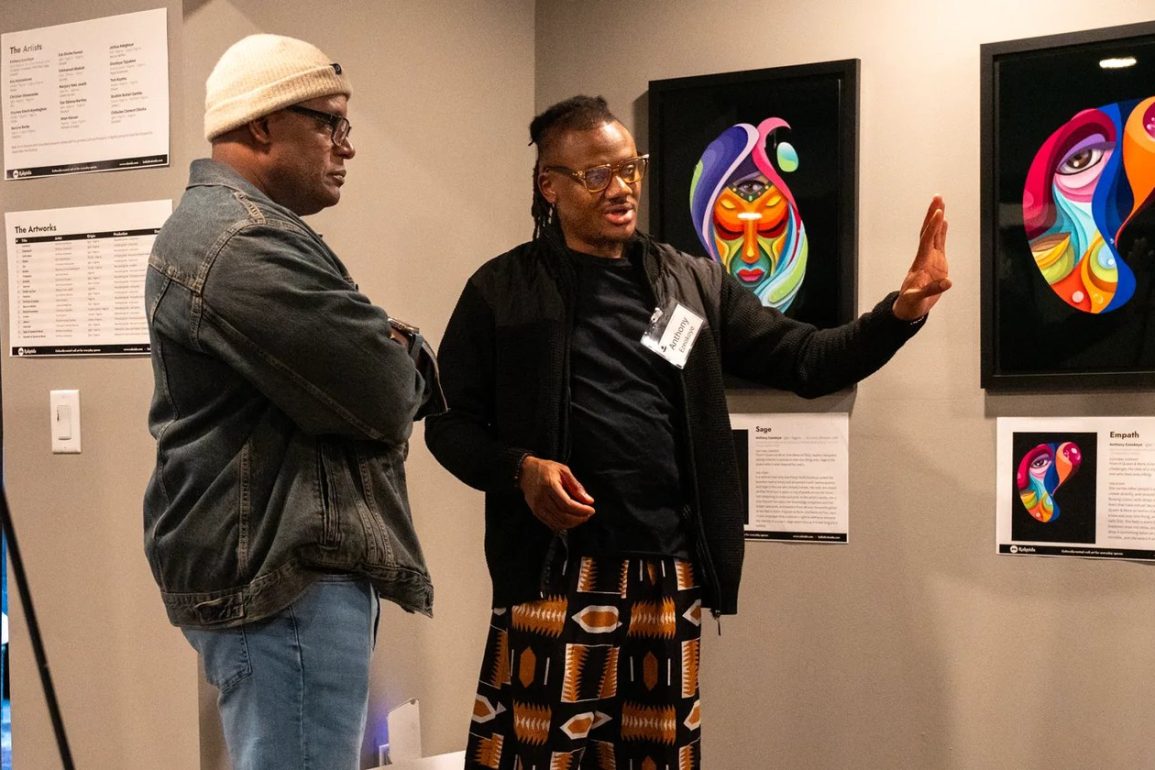
According to St. Louis Magazine‘s Eric Schmid, the couple behind Raknida, an online marketplace for prints by artists from underrepresented backgrounds, just relaunched their platform with one goal: making sales. “One of the challenges that we kept experiencing was that a lot of people would go through the website and then they’d say the website is nice. So that meant that we were not selling,” Afoma said.
Anthony told the magazine the old site spent too much time on the company’s story and not enough on who the art was for. The new version gets right to it, pitching “culturally rooted, museum-quality art prints for home and workspaces.”
From Lagos to St. Louis
The Ezeokoyes moved to St. Louis from Lagos, Nigeria, two years ago. St. Louis Magazine describes Afoma as a well-regarded voiceover artist and Anthony as a digital artist, architect and creative director.
Getting there took two tries. According to Techpoint Africa‘s Bolu Abiodun, Raknida won a $100,000 grant from Arch Grants, a St. Louis nonprofit startup competition, in November 2024. It was one of 20 winners out of 574 applicants, and the only company in the group not from the U.S. The couple had applied in 2023 and nearly made the final stage. “It was a stiff competition,” Anthony said.
The money came with strings. According to EQ‘s Jonathan Allen, Arch Grants handed out $1.7 million across that 2024 group, and every winner pledged to base its business in St. Louis for at least a year. Techpoint reported that Raknida planned to move 51 percent of its operations to the city.
Back to school, top of the class
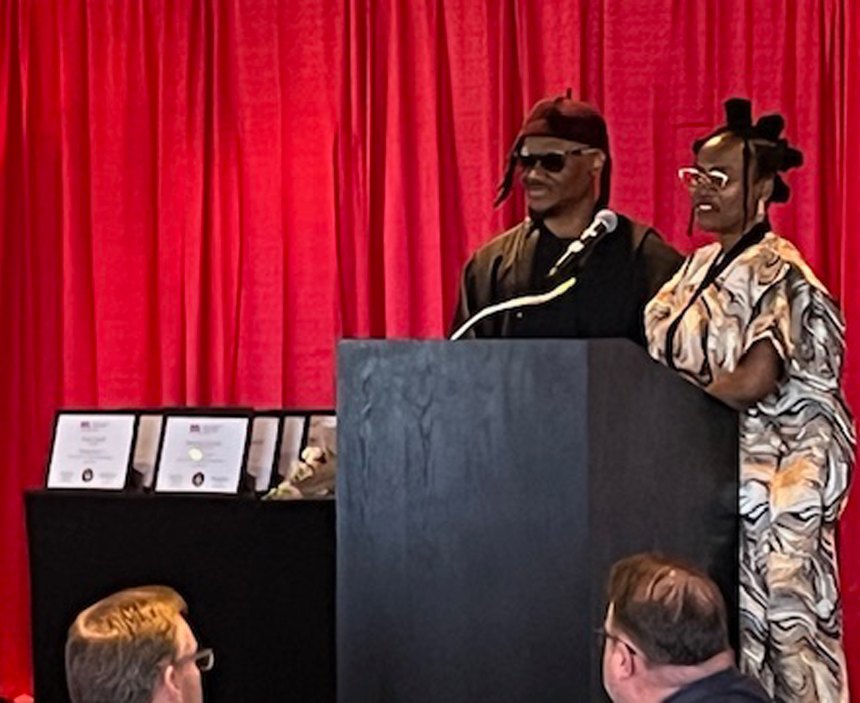
The couple joined the University of Missouri–St. Louis’s Anchor Accelerator, and according to UMSL Daily‘s Dave Benson, they were named the program’s first-ever honorary valedictorians in May. Founders in the 12-week program got a $10,000 capital investment, coaching, mentors and student interns, and built a five-year financial forecast.
“They took us through the rigors of understanding what operations should be like, legal [considerations] accounting, bringing together a team,” Anthony told St. Louis Magazine. He said it helped them rework the website to turn visitors into buyers.
How the money moves
Here’s the part artists will care about. St. Louis Magazine reported that Raknida sends 55 percent of the profits from each print sale back to the artist who made it. Afoma compares it to musicians earning royalties every time a song gets played.
“Part of what we are offering as a value to the artist is that they can just focus on creating the art and putting it on the platform, and then we take care of everything else to make sure that the artwork sells,” she said.
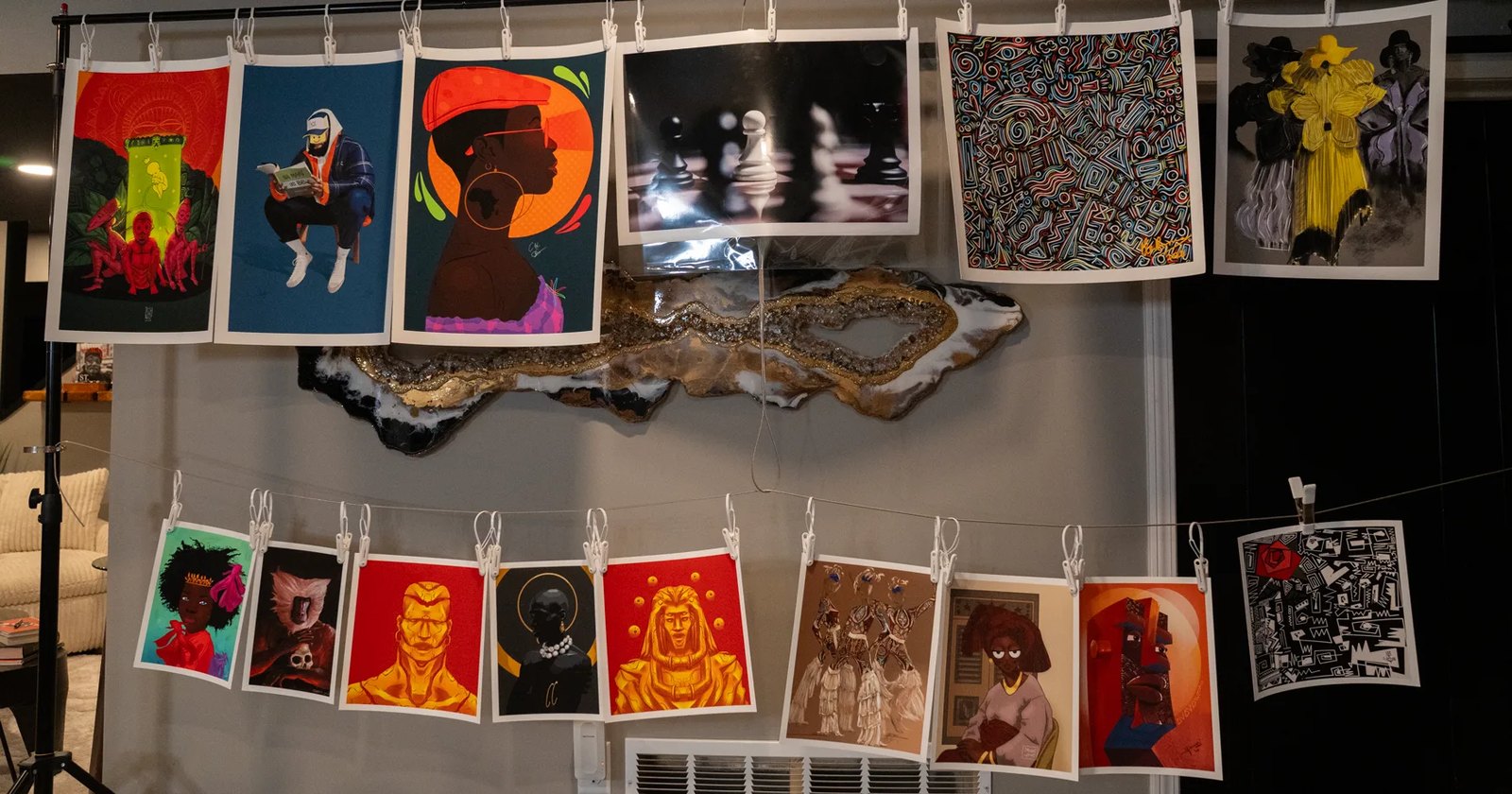
Prints come in limited runs, starting as low as $45 and climbing into the hundreds depending on the work and how established the artist is. Original pieces can run into the thousands. The site now carries work from 29 artists, most of them from Africa, plus one Croatian creator, and the couple plan open calls for more, including St. Louis artists.
They also chose to be a business, not a charity, on purpose. “It’s extremely important that artists are actually getting paid, and that’s even the reason why we are going for the for-profit angle, not non-profit,” Afoma said.
Every print comes with a story
Raknida’s selling point is context. Each purchase comes with what Afoma calls a “cultural passport,” covering the story of the artwork, the artist and the culture behind it, which buyers can hang next to the piece. St. Louis Magazine noted that it helps buyers trust that the work is real as people grow more wary of AI-generated art.
“Art rarely makes sense without context, and the fact that an artwork has context shouldn’t mean that it should be exorbitantly priced,” Anthony said.
The bigger buyer
The couple aren’t just chasing one-off shoppers. Anthony, an architect by training, built tools for interior designers who buy art for whole buildings. Designers can pick pieces and download a PDF or spreadsheet listing each work, its artist, the room it’s meant for and pricing. He told the magazine that a development’s art budget can run into the tens or even hundreds of thousands of dollars, and that conversations with local firms such as eddy Designs, Jacobs and CannonDesign have been positive.
The takeaway
If people keep calling your website “nice” but nobody buys, the site isn’t working. Raknida’s fix was simple: stop leading with your backstory and tell buyers what the art is and who it’s for. Then let the story close the sale: write one up for every piece, because buyers worried about AI want to know a real person made it. Look past single buyers too. Designers, offices and developers buy in bulk and come back. And when a platform offers to handle printing and marketing, find out exactly what share you keep before you sign. Raknida puts its number out front at 55 percent. Make every platform you use show you its number.
Image: St. Louis Magazine