


Spotify says it has pulled tens of millions of “slop and spam” tracks while it gets ready to charge fans extra to make AI remixes of real artists’ songs, and SoundCloud is opening its doors to AI-made uploads.
Spotify is throwing AI music out the front door and building a paid entrance around the back. According to WIRED Middle East‘s Megan Tomos, the streamer marked a year of its artist-protection push in October with a progress report saying it had pulled more than 50 million “AI slop” tracks from its recommendations. Before the month was out, the Financial Times reported that Spotify is preparing its own AI remix service for the first quarter of 2027. Spotify told WIRED Middle East it had nothing to share about that report.
“While the platform is busy clearing the shelves of synthetic tracks, it is also exploring how to turn AI-generated music into a new commercial proposition,” Tomos wrote.
The cleanup
The numbers are big. According to Rolling Stone‘s Larisha Paul, Spotify removed more than 75 million tracks outright for “serious or repeated violations” of its rules, on top of the 50 million filtered out of recommendations. “We looked closely at the tracks listeners were skipping, ignoring, or telling us they didn’t want to hear,” Spotify said. “A clear pattern emerged: these tracks were consistently ones identified as slop or spam.”
The company says it catches them with a mix of listener feedback, upload patterns, metadata and several third-party AI detection tools, and it hunts for tricks like mass uploads, duplicates, spammy playlist networks and “artificially short tracks.” Paul reported that 300,000 artists are now verified with a badge showing a “real, identifiable person” is behind the music, while profiles Spotify flags as “AI Personas” get a separate badge and are kept out of editorial and algorithmic recommendations by default. A beta called Artist Profile Protection lets artists review releases delivered under their name to fight impersonation and stream farming.
According to Gizmodo‘s Bruce Gil, the target is the scheme where people generate hundreds or thousands of AI songs, upload them and use bots to play them for fraudulent royalties. Gil noted that Spotify already requires 1,000 streams a year before a track earns recorded-music royalties, a rule meant to make mass uploading less profitable.
The product
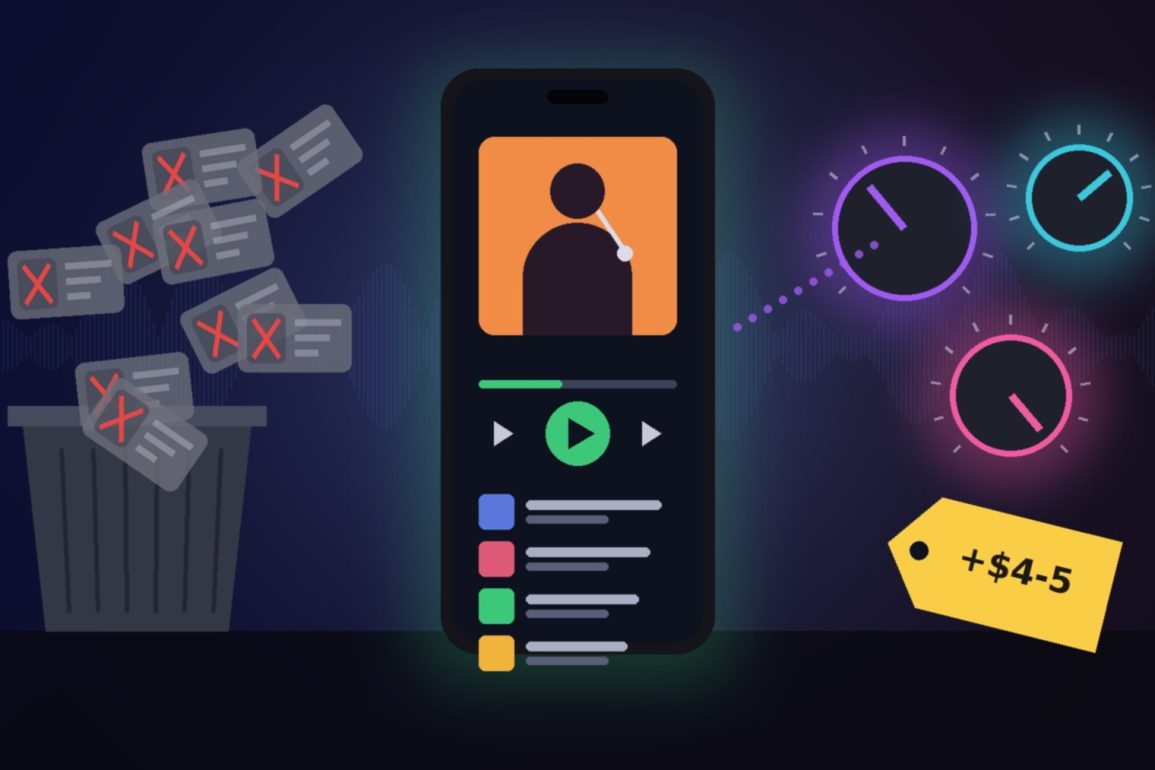
Now the other side. According to Music Business Worldwide‘s Mandy Dalugdug, the FT reported that Spotify is weighing $4 to $5 a month, on top of a regular subscription, for a tool that lets paying users make AI versions of songs by artists who opted in. Think a folk song turned into a dance track. The FT’s sources said neither timing nor price is final, and the reveal could land around the Grammys in February.
Under the plan, royalties from fan remixes would go to the artists behind the original songs, and remix plays would count toward the originals on Spotify’s charts. Universal, Merlin, Kobalt and Believe, including its self-release platform TuneCore, have signed licensing deals. Sony and Warner were still negotiating, per the FT. Artists still get the final say even if their label has signed, and one source said today’s big stars have been harder to sign up than veteran acts.
Co-CEO Gustav Söderström has pitched it as a payday for older catalogs. “If one of your fans creates a remix of your song, that actually increases the share of the streaming pool that you get,” he said in September.
SoundCloud opens the door
Spotify isn’t the only one. According to The Next Web‘s Ana-Maria Stanciuc, SoundCloud now lets creators publish tracks made in ElevenLabs’ ElevenMusic app straight to the platform. Those tracks carry a label naming ElevenMusic as the source, and SoundCloud bans AI content that misleads listeners about where it came from, including music that impersonates other artists. SoundCloud Artist Pro members get three months of ElevenMusic Pro free, a $9.99-a-month plan that can generate up to 1,000 songs a month.
Tomos reported that SoundCloud now works with more than 10 approved AI partners. “Technology should enhance human creativity, not replace it,” SoundCloud’s Devi Mahadevia told WIRED Middle East.
Who checks the labels?
Mostly, nobody. Tomos reported that Apple’s “Made With AI” tags are declared by whoever delivers the music, with no independent checks by the platform so far, and that Apple told Billboard more than a third of the music submitted to it each month is fully AI-generated. Paul noted that Spotify’s and Apple’s labeling has relied largely on honesty from artists and distributors.
The takeaway
The streamers aren’t against AI music. They’re against AI music they can’t control or cash in on. For independent artists, that changes the game. Get verified on every platform you’re on, and if you can get into tools like Artist Profile Protection, use them, because impersonation is the new bootleg. Stay off anything that looks like spam: mass uploads, near-duplicate tracks, artificially short songs and sketchy playlist networks are exactly what the filters hunt. And when the remix opt-in hits your distributor or label, read the terms before you click yes. A fan remix can put your song in front of new ears and send money back to you, but it’s your voice and your catalog on the table. Know what you’re licensing and who gets paid.
Image: AI-generated illustration.