The artist who drew The Walking Dead comics put his zombies on pizza boxes for a Shrewsbury takeaway that now fills the shop his grandmother opened in 1943.
Zombies sell comics. Turns out they can sell pizza too.
According to BBC News‘ Genevieve Tudor and Andy Giddings, Charlie Adlard, the artist who drew The Walking Dead comics that the hit TV series was based on, has designed the pizza boxes for a new takeaway in Shrewsbury, England. The takeaway is run by Dough and Oil, a pizza restaurant that already had a spot elsewhere in town, and it operates out of a building Adlard knows well. His family ran a tobacconist shop there for decades.
“Me doing some artwork for a pizza box was the obvious sort of thing to connect the two,” Adlard told the BBC.
A zombie joke, not a horror show
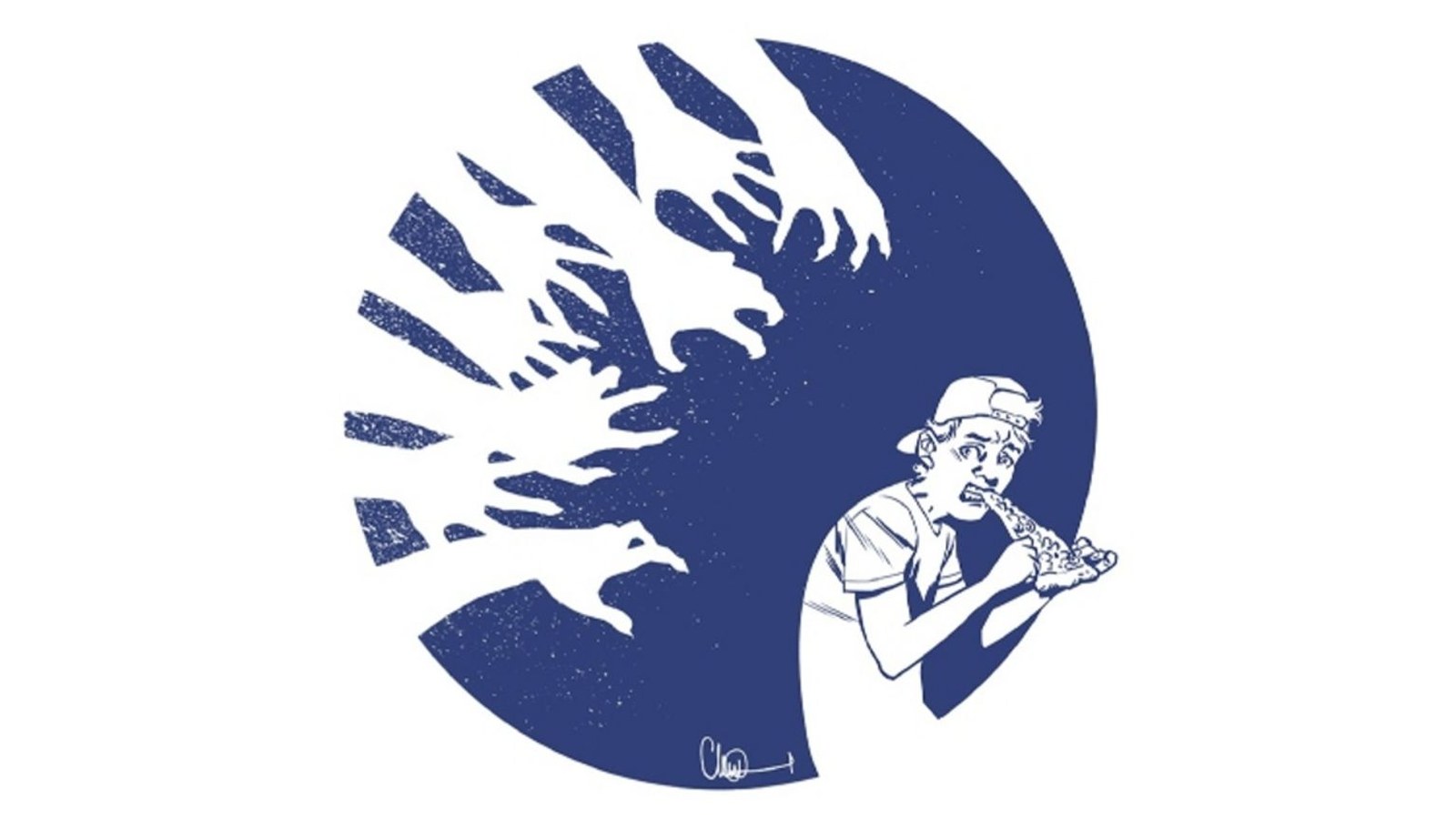
Adlard based the design on art published in the 50th issue of the comic. It shows a guy eating a slice in the corner while the hands of the undead grab for it. Adlard described it as “a guy eating a pizza in the corner. giving it the Scooby Doo face.”
He said it made sense to keep it “slightly comical rather than horror.” His reasoning was pure business sense: “You don’t want to scare your pizza customers away do you?”
The restaurant is treating the box as more than packaging. When it unveiled the design, Dough and Oil wrote on Instagram that customers shouldn’t throw the box away when the last slice is gone: “It’s original artwork made in your town, with a story that started in this very shop.”
Grandma’s shop
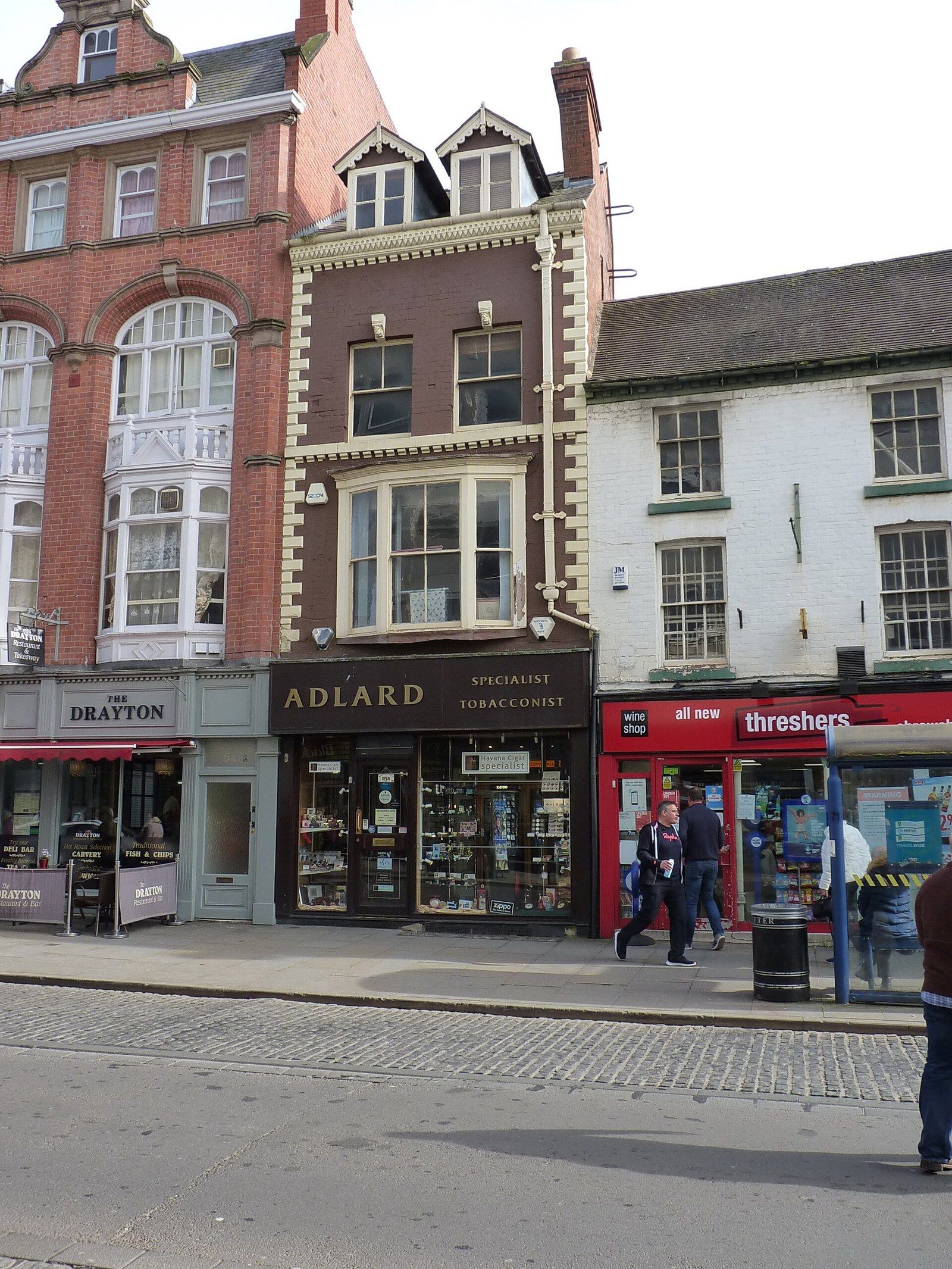
The real hook is the building. Adlard & Son was opened by Adlard’s grandmother in 1943. He told the BBC she was a “very powerful lady” who always smoked from a cigarette holder, and that back then it was unusual for a woman to own a business. “You didn’t meddle with her,” he said.
According to the Shropshire Star‘s Mark Andrews, Adlard’s father, John, took the shop over in 1949 after coming home from National Service. In its heyday the shop drew famous customers including George C. Scott, Billy Connolly, Robert Hardy and George Cole. Adlard also remembered a little early hustle: “I remember when I had toys I had grown out of, my dad would put them in the window with a ‘for sale’ sign on them, and he would get good money from them.”
His first art gig was in that same window. Adlard told the BBC his father had him letter the shop’s signs. “I didn’t do drawings or anything, but I was always obviously the best letterer in the family,” he said. “Then I escaped to art college and he couldn’t get me anymore.”
The kicker? The son of a tobacconist has never smoked. He tried one or two cigarettes at school, “but hated it and that’s it.”
From smoke shop to slice bar
The shop closed in 2021 after 77 years. The Shropshire Star reported at the time that a decline in the tobacco trade, the growth of online shopping and the pandemic finished it off. Graham Price, who started there as a teenage assistant in 1987 and ended up running it, told the paper that fewer people were smoking and margins on cigarettes and rolling tobacco were “very small anyway.”
Dough and Oil didn’t get in easily. According to the Shropshire Star’s Dominic Robertson, the restaurant’s first planning application for the takeaway was withdrawn after council officers raised concerns about the kitchen’s extraction system and whether noise and smells would bother neighbors. A second application with a redesigned system was approved in September 2025, which brought the listed building back into use for the first time since Adlard’s closed.
Once the restaurant bought the place, it invited Adlard back for a look around. He told the BBC he was surprised by the work done on the cellar, now a storeroom and office, which he remembered as “the worst, most dank, horrible, creepy place you could possibly imagine.” The owners also asked him to donate a photo of his father standing outside the shop’s doorway to hang inside, which he called “a nice touch.”
The job isn’t done
Adlard plans to make a full-color version of the pizza box image to hang on the takeaway’s wall. “Hopefully I’ll be able to go in there and play the ‘do you know who I am?’ card for a long time coming,” he said.
The takeaway
You don’t need a hit TV show to pull this off. Adlard landed a fun job because he had a story nobody else could tell: his family’s name was on that building for 77 years. Look at your own roots. The barbershop, corner store or church you grew up in is a pitch waiting to happen, and local businesses love art that connects them to the neighborhood. Notice how he worked, too. He reworked art he’d already made instead of starting from zero, and he shaped it for the client’s customers, funny instead of scary, because it had to sell pizza. Then he turned one design into a second piece for the wall. One job, two pieces, and his work in front of every customer who orders a pie. That’s how a small collab turns into a calling card.
Image: BBC News