


Canada just put a 5% artist resale royalty into its budget bill, and if it passes, painters, printmakers and sculptors would finally get paid when their work flips at auction or through a dealer.
You sell a canvas for $2,000. Ten years later it goes to auction for $50,000. Under the law in Canada right now, you get nothing from that second sale. That could be about to change.
According to a November 27 breakdown from the law firm Dentons, the federal government has proposed amending the Copyright Act to create an artist resale right. Visual artists, and later their heirs, would collect a royalty each time an eligible work is resold on the Canadian art market. Law professor Michael Geist pointed out on X that the measure isn’t a standalone copyright bill. It sits in Division 50 of Bill C-43, a roughly 500-page budget implementation act.
The numbers
Dentons reported that the royalty would be 5% of the final sale price or a cap set by regulation, whichever is lower. If no cap gets set, the default is CA$25,000. So once a piece sells for CA$500,000 or more, the payment tops out at the cap.
The artist doesn’t have to chase anyone for it. The duty to report the sale and pay the royalty falls on “art market professionals,” meaning galleries, auction houses, dealers, advisors and brokers. It doesn’t fall on artists or on collectors selling on their own. According to Dentons, online platforms that arrange sales may count too. Liability is joint and several, so every professional involved in a sale is on the hook. A collecting body can take them to court for up to five times an unpaid royalty.
And artists can’t sign the right away. It cannot be waived or assigned. Dentons noted that any contract clause trying to make an artist give it up would be ineffective.
What counts and what doesn’t
Covered works include any artistic work still in copyright, except architecture. Prints, casts and editions count as long as they’re among the first 100 made, made by the artist, and numbered, signed or otherwise marked by the artist.
A sale only qualifies if it happens in Canada, follows a public offer to sell, involves an art market professional, isn’t the first transfer of ownership, and meets a minimum price that hasn’t been set yet. Private sales between individuals with no dealer involved don’t count. There’s also a carve-out for dealers: if a gallery buys work straight from an artist and resells it for less than CA$15,000 within three years, no royalty is owed.
Plenty is still blank. Geist noted that the bill doesn’t set the minimum sale price, how the price is calculated, which foreign artists qualify, who collects the money, or a start date. All of that is left to regulations.
Promised before, and it stalled
Artists have heard this one before. According to The Art Newspaper‘s Hadani Ditmars, the 2025 budget also promised a resale right, and the legislation never materialized. More than 100 countries have resale right laws, Ditmars reported, but neither Canada nor the United States has one.
Not everyone is cheering without reservations. Vancouver photo-conceptualist Ian Wallace told The Art Newspaper he’s “obviously for anything that supports the artist,” but he can “see some more bureaucratic and financial complications coming up with the artist’s resale right.” He added that it’s “more of a problem for collectors and institutions than artists.”
Before this week’s bill, the details were thin. Art in Context‘s Isabella Meyer reported on November 10 that Budget 2026 left the royalty rate, the minimum resale price, the collection system and the start date unstated. The budget’s impact annex did say royalties would reach artists and their heirs for the whole copyright term, and it raised possible exemptions for certain intermediary sales of Inuit art. C-43 now fills in the 5% and the CA$25,000 default cap. Most of the rest is still up to the regulators.
The $24 owl
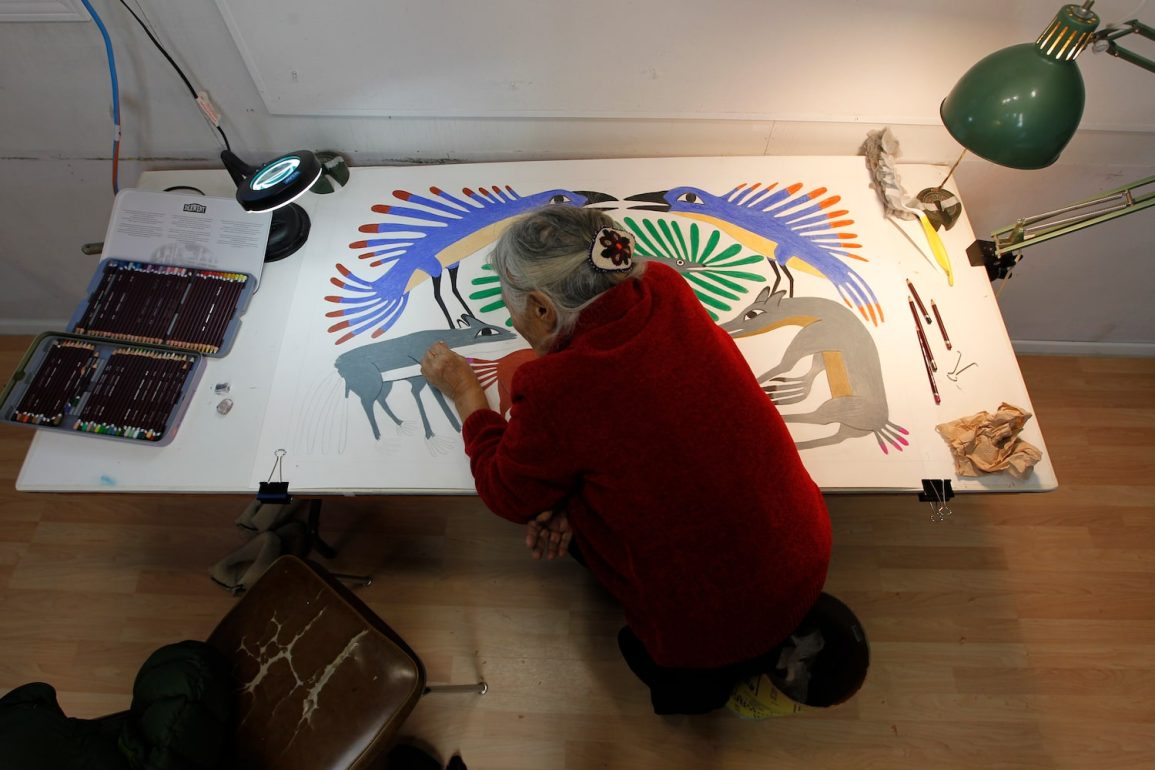
For a sense of what’s at stake, look at the example that keeps coming up. According to The Globe and Mail‘s Marie Woolf, writing last year when the right was first promised, the late Inuk artist Kenojuak Ashevak sold a work called Enchanted Owl in 1960 for $24. It later sold at a Canadian auction house for $240,000.
CARFAC, the national artists’ group, estimated at the time that a resale right could mean an extra $3 million to $5 million a year for Canadian artists, the Globe reported. “Many people think that well-known artists are thriving financially, but that’s not always the case,” April Britski, CARFAC’s national executive director at the time, said. “Half of all visual artists earn only $20,000 a year.”
The takeaway
Even if you’re not Canadian, this is worth watching, because the bill’s prescribed-country setup suggests foreign artists from reciprocal countries could qualify, Dentons said. Either way, the lesson is the same: your work can keep making money long after you sell it, and somebody is going to track that money. Make sure it’s you. Number and sign your editions. Keep records of who bought what and for how much. If you’re in Canada, Dentons recommends naming who gets your resale royalty in your will, and keeping an eye out for the collecting body once it’s set up. And never sign anything that pretends you’ve given this right away. Under this bill, you can’t.
Image: The Globe and Mail