



Warner Music Group just had its best year ever, with YouTube alone paying it more than $1 billion, and it got there with about 800 fewer people on payroll.
Record revenue. A billion-dollar check from YouTube. Fewer staffers. AI money on the way. Warner Music Group’s year-end numbers are a playbook for how the music business works in 2026, and if you sell your own music, you should study it.
According to Music Business Worldwide‘s Tim Ingham, who dug through the annual report (10-K) Warner filed with the SEC, the major label brought in a record $7.437 billion in its 2026 fiscal year, which ended Sept. 30. That’s up 8.9% at constant currency. Subscription streaming revenue from recorded music, the number investors watch most, rose 12.4% to $3.017 billion.
YouTube crossed the billion-dollar line
Every year Warner has to name any customer that makes up at least 10% of its revenue. This year there were three: Spotify at 21%, YouTube at 14% and Apple at 10%. By MBW’s math, that puts YouTube’s contribution at about $1.04 billion, the first time it has topped $1 billion for Warner. It also grew fastest, up around 29% from roughly $805 million a year earlier, compared with about 16% growth from Spotify and a basically flat Apple.
Ingham also flagged how much Warner now leans on those three. Together they made up about 45% of its total revenue, the highest combined share Warner has disclosed since YouTube first passed the 10% mark in fiscal 2021.
Fewer people, more money
Warner had about 4,700 employees at the end of September, down from about 5,500 a year earlier, MBW reported. That’s its smallest year-end headcount since 2018. Revenue per employee came to about $1.58 million, up from roughly $955,000 in fiscal 2022.
CEO Robert Kyncl didn’t sugarcoat it on the Nov. 19 earnings call. “I made some really tough decisions, and it’s moved us from being a holding company mindset to an operating company mindset,” he said, per MBW. “We were previously set up for a physical business, and we strategically realigned it for the digital world.”
According to Billboard‘s Elizabeth Dilts Marshall, the restructuring plan cut annual costs by $300 million through executive changes, layoffs and reduced expenses. Billboard said higher subscription prices at Apple Music and other streamers, plus Warner’s purchase of digital distributor Revelator, helped push revenue up.
Where did some of the savings go? MBW reported Warner’s A&R costs, which include royalties paid to artists, producers and songwriters plus the cost of signing artists and making records, rose 11% to $2.6 billion.
The hits behind the numbers
HITS Daily Double reported that Madonna, Number_i, Charli xcx, Bruno Mars and Linkin Park were big sellers in the fourth quarter, with Alex Warren, Sombr and Teddy Swims standing out for the full year. Acting CFO Lou Dickler broke down the quarter’s 15% subscription streaming growth on the call: subscriber gains of 6% to 7%, about 4.5% from price increases and about 1% from market share gains. Warner’s 10-K says more than half its recorded music revenue is generated outside the U.S., and MBW found international markets drove around 83% of that division’s growth between fiscal 2022 and 2026.
Here comes the AI money
Warner signed a licensing deal with AI music generator Suno in November 2025. “Our artists and songwriters will be getting paid by an AI tool for the first time in history—a watershed moment for the industry,” Kyncl said, according to HITS. He said the Suno deal should bring in material revenue in fiscal 2027 but gave no forecast.
According to The AI Musicpreneur‘s Christopher Wieduwilt, Kyncl told analysts Suno has “well over 2 million paying subscribers.” Asked how he pitches AI to artists who oppose it, he said, “rule number one, you can’t force anyone to do anything.” Wieduwilt pointed out the catch: Warner hasn’t said what share of that AI money actually goes to its artists and songwriters.
Selling to itself
One more detail from the 10-K: Warner and Bain Capital run a 50/50 joint venture that buys music rights, and MBW reported it paid $233 million for recorded music catalog rights bought from Warner itself. The filing doesn’t name the recordings or artists involved. If that venture is ever sold or goes public, Bain gets its money back plus an 8% annual return before Warner sees a dime.
The takeaway
Follow the money. YouTube is now a billion-dollar payer for one label, so treat it like a real income stream, not just a place to drop videos. Make sure your distributor is collecting on every use of your music there. Three platforms carry almost half of a major’s revenue, which is a reminder to build income you control too: direct sales, merch, shows and your own fan list. Most of the growth is coming from outside the U.S., so don’t ignore listeners overseas. Labels are running leaner, which means even signed artists are doing more of their own hustle. And with AI licensing money starting to flow, do what Wieduwilt suggests for signed artists: ask in writing what percentage of AI income your contract pays you and where it shows up on your statement. In any deal, know who owns your songs and who gets paid first.
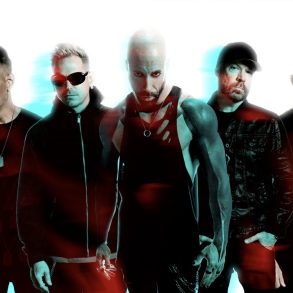
Image: Busition via Wikimedia Commons (CC BY-SA 4.0)